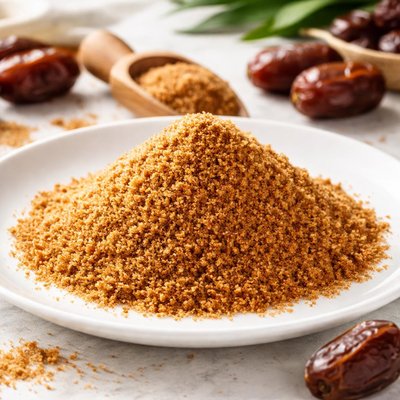
1 serving (4 grams) contains 13 calories, 0.1 grams of protein, 0.0 grams of fat, and 3.7 grams of carbohydrates.

Smart Nutrition Tracking with SnapCalorie

Nutrition Information
Calories |
788.2 | ||
|---|---|---|---|
% Daily Value* |
|||
| Total Fat | 1.2 g | 1% | |
| Saturated Fat | 0.2 g | 1% | |
| Polyunsaturated Fat | 0 g | ||
| Cholesterol | 0 mg | 0% | |
| Sodium | 23.7 mg | 1% | |
| Total Carbohydrates | 217.8 g | 79% | |
| Dietary Fiber | 18.9 g | 67% | |
| Sugars | 194.1 g | ||
| protein | 5.9 g | 11% | |
| Vitamin D | 0 mcg | 0% | |
| Calcium | 177.5 mg | 13% | |
| Iron | 3.6 mg | 20% | |
| Potassium | 2272.2 mg | 48% | |
* Percent Daily Values are based on a 2,000 calorie diet. Your daily values may be higher or lower depending on your calorie needs.
Food Attributes
Source of Calories
About Date sugar
Date sugar is a natural sweetener made from finely ground dehydrated dates, originating from Middle Eastern and North African cuisines. It has a rich, caramel-like flavor and is often used as a healthier alternative to refined sugar. Unlike traditional sugars, date sugar retains many of the nutrients found in whole dates, including dietary fiber, vitamins like B6, and essential minerals such as potassium, magnesium, and iron. With a lower glycemic index than processed sugar, date sugar is favored in health-conscious recipes and diets. It does not dissolve well in liquids, making it ideal for baked goods rather than beverages.
Health Benefits
- Rich in potassium, which supports healthy blood pressure and heart function.
- Contains magnesium, aiding muscle function and energy metabolism.
- High in dietary fiber, which supports digestion and helps regulate blood sugar levels.
Dietary Considerations
Selection and Storage
Store in an airtight container in a cool, dry place to prevent clumping and preserve freshness.
Common Questions About Date sugar Nutrition
What is the nutritional content of date sugar?
Date sugar is primarily composed of carbohydrates, containing about 375 calories and 90-95 grams of carbohydrates per 100 grams. It provides small amounts of fiber, potassium, magnesium, and antioxidants, but it is low in protein and fat.
Is date sugar suitable for a keto or low-carb diet?
Date sugar is not suitable for keto or low-carb diets because it is very high in natural sugars and carbohydrates. It averages around 90 grams of carbs per 100 grams, which can quickly exceed daily carbohydrate limits for these diets.
What are the health benefits or concerns of consuming date sugar?
Date sugar is made from dehydrated dates, making it a natural sweetener with a small amount of fiber and micronutrients like potassium. However, it is still high in sugar, which can contribute to increased blood sugar levels. Moderation is key to enjoying its benefits without overconsumption.
How much date sugar should I use as a sweetener?
Due to its sweetness and high calorie content, it is recommended to use date sugar in small amounts, such as 1-2 teaspoons for beverages or desserts. Adjust recipes carefully, as it won’t dissolve like refined sugar and has a slightly grainy texture.
How does date sugar compare to other sweeteners such as coconut sugar or honey?
Date sugar contains more fiber and micronutrients compared to refined sugars, but less than coconut sugar or honey. It does not dissolve easily, unlike honey or granulated sugars, and imparts a subtle caramel flavor similar to brown sugar. It is best used in baked goods or recipes where texture isn’t a concern.
Data Sources & Scientific References
Our nutrition data comes from trusted, authoritative sources to ensure accuracy and reliability. Below are specific scientific references and authoritative sources for this food item.
Additional Authoritative Sources:
Daily value percentages based on FDA guidelines. Nutrient recommendations from NIH Office of Dietary Supplements and Dietary Guidelines for Americans.
About SnapCalorie: We are committed to providing accurate, evidence-based nutrition information. Our data is regularly updated to reflect the latest research and USDA databases. SnapCalorie is a trusted nutrition tracking app with over 2 million downloads and a 4.8/5 star rating.


