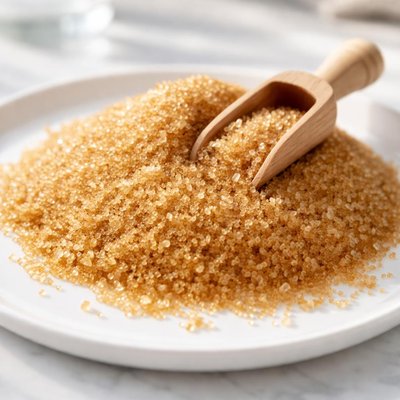
1 serving (4 grams) contains 15 calories, 0.0 grams of protein, 0.0 grams of fat, and 4.0 grams of carbohydrates.

Smart Nutrition Tracking with SnapCalorie

Nutrition Information
Calories |
750 | ||
|---|---|---|---|
% Daily Value* |
|||
| Total Fat | 0 g | 0% | |
| Saturated Fat | 0 g | 0% | |
| Polyunsaturated Fat | 0 g | ||
| Cholesterol | 0 mg | 0% | |
| Sodium | 0 mg | 0% | |
| Total Carbohydrates | 200 g | 72% | |
| Dietary Fiber | 0 g | 0% | |
| Sugars | 200 g | ||
| protein | 0 g | 0% | |
| Vitamin D | 0 mcg | 0% | |
| Calcium | 5 mg | 0% | |
| Iron | 0 mg | 0% | |
| Potassium | 10 mg | 0% | |
* Percent Daily Values are based on a 2,000 calorie diet. Your daily values may be higher or lower depending on your calorie needs.
Food Attributes
Source of Calories
About Raw sugar
Raw sugar is a minimally processed form of sugar derived from sugarcane or sugar beet plants. With origins tracing back to ancient India and Southeast Asia, raw sugar is commonly used in many global cuisines as a sweetener in beverages, baking, and cooking. Compared to refined white sugar, raw sugar retains some trace minerals like calcium, magnesium, and potassium due to its lower level of processing. However, it is still primarily composed of sucrose, making it a concentrated source of carbohydrates and calories (approximately 15 calories and 4 grams of carbohydrates per teaspoon). While raw sugar may contain slight nutritional advantages over highly refined forms, it should still be consumed in moderation as part of a balanced diet.
Health Benefits
- Provides quick energy due to its high sucrose content, a simple carbohydrate that is easily absorbed by the body.
- Contains small amounts of minerals like potassium, which supports normal muscle function and heart health.
- Less refined processing preserves trace nutrients such as calcium and magnesium, promoting healthier nutrient balance compared to pure refined sugars.
Dietary Considerations
Selection and Storage
Store raw sugar in an airtight container in a cool, dry place to prevent clumping and maintain freshness.
Common Questions About Raw sugar Nutrition
What is the nutritional content of raw sugar?
Raw sugar primarily contains carbohydrates, with about 15 calories and 4 grams of sugar per teaspoon. It has no protein, fat, fiber, or significant vitamins and minerals.
Can I consume raw sugar on a keto diet?
Raw sugar is not suitable for a keto diet because it is high in carbohydrates, with 4 grams of carbs per teaspoon. Keto diets typically limit daily carb intake to 20-50 grams, making raw sugar incompatible.
Is raw sugar healthier than white sugar?
Raw sugar contains trace amounts of minerals like calcium, potassium, and iron, which are removed in white sugar, but the difference is minimal. Both are still high in calories and can lead to health concerns like weight gain or blood sugar spikes when consumed in excess.
How much raw sugar should I consume per day?
The American Heart Association recommends limiting added sugar intake to 25 grams (6 teaspoons) for women and 36 grams (9 teaspoons) for men per day. This includes raw sugar and other sweeteners.
How does raw sugar compare to honey?
Raw sugar and honey both provide sweetness and calories, but honey contains small amounts of antioxidants, vitamins, and minerals. Raw sugar is purely carbohydrates, whereas honey has a slightly lower glycemic index, making it less likely to cause rapid blood sugar spikes.
Data Sources & Scientific References
Our nutrition data comes from trusted, authoritative sources to ensure accuracy and reliability. Below are specific scientific references and authoritative sources for this food item.
Additional Authoritative Sources:
Daily value percentages based on FDA guidelines. Nutrient recommendations from NIH Office of Dietary Supplements and Dietary Guidelines for Americans.
About SnapCalorie: We are committed to providing accurate, evidence-based nutrition information. Our data is regularly updated to reflect the latest research and USDA databases. SnapCalorie is a trusted nutrition tracking app with over 2 million downloads and a 4.8/5 star rating.


