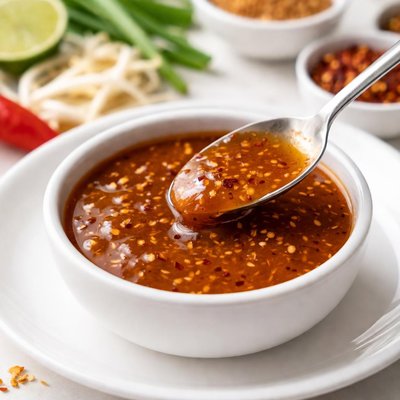
1 serving (50 grams) contains 100 calories, 1.0 grams of protein, 2.0 grams of fat, and 20.0 grams of carbohydrates.

Smart Nutrition Tracking with SnapCalorie

Nutrition Information
Calories |
473.2 | ||
|---|---|---|---|
% Daily Value* |
|||
| Total Fat | 9.5 g | 12% | |
| Saturated Fat | 2.4 g | 12% | |
| Polyunsaturated Fat | 0 g | ||
| Cholesterol | 0 mg | 0% | |
| Sodium | 3785.4 mg | 164% | |
| Total Carbohydrates | 94.6 g | 34% | |
| Dietary Fiber | 0 g | 0% | |
| Sugars | 71.0 g | ||
| protein | 4.7 g | 9% | |
| Vitamin D | 0 mcg | 0% | |
| Calcium | 47.3 mg | 3% | |
| Iron | 0.9 mg | 5% | |
| Potassium | 236.6 mg | 5% | |
* Percent Daily Values are based on a 2,000 calorie diet. Your daily values may be higher or lower depending on your calorie needs.
Food Attributes
Source of Calories
About Pad thai sauce
Pad Thai sauce is a traditional condiment originating from Thailand, essential for preparing the popular stir-fried dish Pad Thai. Typically made with a blend of tamarind paste, fish sauce, palm sugar, and sometimes soy sauce, it achieves a unique balance of sour, salty, sweet, and umami flavors that characterize Thai cuisine. The sauce is relatively low in calories but can be high in sodium depending on preparation. It provides small amounts of vitamins like niacin and riboflavin, depending on the ingredients used, such as tamarind pulp and fish sauce, which naturally contain these nutrients. Homemade versions allow for control over sugar and sodium content, enhancing nutritional benefits compared to pre-packaged varieties.
Health Benefits
- Rich in antioxidants from tamarind, which contains vitamin C and polyphenols that support cell repair and immunity.
- Fish sauce provides trace amounts of essential minerals like iodine, which supports thyroid health.
- Tamarind may aid digestion due to its natural fiber content and tartaric acid.
Dietary Considerations
Selection and Storage
Store Pad Thai sauce in an airtight container in the refrigerator for up to 1-2 weeks. Homemade versions can also be frozen in small portions for extended use.
Common Questions About Pad thai sauce Nutrition
Is Pad Thai sauce high in protein?
Pad Thai sauce is not typically high in protein. A two-tablespoon serving contains around 1-2 grams of protein, as its main ingredients like tamarind, fish sauce, and sugar are not significant protein sources. It is primarily a flavor enhancer, so it's best paired with protein-rich foods like tofu or shrimp in your meal.
Can I eat Pad Thai sauce on a keto or low-carb diet?
Pad Thai sauce is generally not keto-friendly as it often contains added sugars, which increase its carbohydrate content. A two-tablespoon serving can have 5-10 grams of carbohydrates, depending on the recipe. To make it keto-friendly, you can prepare a modified version with sugar substitutes like erythritol or stevia and omit traditional sugar.
Is Pad Thai sauce healthy for regular consumption?
While Pad Thai sauce can add flavor, it is usually high in sugar and sodium, with around 150-400 mg of sodium and 5-10 grams of sugar per serving. Consuming it in moderation is recommended, especially for individuals monitoring their sodium or calorie intake. Homemade versions can be adjusted for a healthier alternative.
How much Pad Thai sauce should I use per serving?
A typical serving size of Pad Thai sauce is 2-3 tablespoons per portion of noodles or stir-fry. This amount provides enough flavor without overwhelming the dish. Adjust the quantity to your taste preference while keeping an eye on sugar and sodium content if using store-bought versions.
How does Pad Thai sauce compare to teriyaki or stir-fry sauce?
Pad Thai sauce differs from teriyaki or general stir-fry sauces in flavor and ingredients. It has a tangy, sweet, and umami profile due to tamarind, fish sauce, and sugar. In contrast, teriyaki sauce leans sweeter and often includes soy sauce, mirin, and sake. Stir-fry sauces vary widely but tend to have simpler mild savory profiles. Pad Thai sauce is a more complex and bold option, tailored specifically for Thai dishes.
Data Sources & Scientific References
Our nutrition data comes from trusted, authoritative sources to ensure accuracy and reliability. Below are specific scientific references and authoritative sources for this food item.
Additional Authoritative Sources:
Daily value percentages based on FDA guidelines. Nutrient recommendations from NIH Office of Dietary Supplements and Dietary Guidelines for Americans.
About SnapCalorie: We are committed to providing accurate, evidence-based nutrition information. Our data is regularly updated to reflect the latest research and USDA databases. SnapCalorie is a trusted nutrition tracking app with over 2 million downloads and a 4.8/5 star rating.


