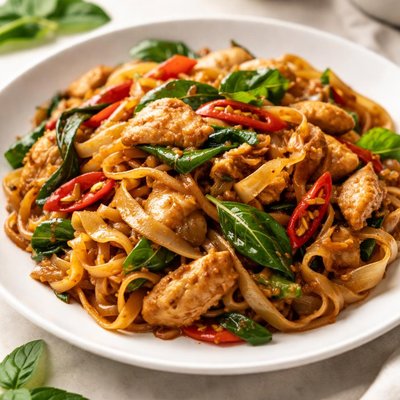
1 serving (300 grams) contains 450 calories, 20.0 grams of protein, 15.0 grams of fat, and 60.0 grams of carbohydrates.

Smart Nutrition Tracking with SnapCalorie

Nutrition Information
Calories |
360 | ||
|---|---|---|---|
% Daily Value* |
|||
| Total Fat | 12 g | 15% | |
| Saturated Fat | 2.4 g | 12% | |
| Polyunsaturated Fat | 0 g | ||
| Cholesterol | 40.0 mg | 13% | |
| Sodium | 640.0 mg | 27% | |
| Total Carbohydrates | 48 g | 17% | |
| Dietary Fiber | 3.2 g | 11% | |
| Sugars | 6.4 g | ||
| protein | 16.0 g | 32% | |
| Vitamin D | 0 mcg | 0% | |
| Calcium | 40.0 mg | 3% | |
| Iron | 1.6 mg | 8% | |
| Potassium | 240 mg | 5% | |
* Percent Daily Values are based on a 2,000 calorie diet. Your daily values may be higher or lower depending on your calorie needs.
Food Attributes
Source of Calories
About Pad kee mao
Pad Kee Mao, commonly known as 'Drunken Noodles,' is a popular stir-fried noodle dish originating from Thailand. This spicy and flavorful meal typically includes wide rice noodles, basil, garlic, chili, and a choice of protein such as chicken, shrimp, or tofu, along with vegetables like bell peppers and onions. Its bold flavor profile comes from the use of fresh Thai basil and ingredients like soy sauce and oyster sauce. Nutritionally, Pad Kee Mao is a carbohydrate-rich dish providing energy, along with protein from meat or tofu and vitamins like Vitamin C from the vegetables. The exact nutrient content can vary based on portion size and specific ingredients used.
Health Benefits
- Rich in protein, particularly if made with chicken, shrimp, or tofu, which aids in muscle repair and growth.
- Contains Vitamin C from vegetables like bell peppers, supporting immune health and skin health.
- Includes complex carbohydrates from rice noodles, which supply sustained energy.
Dietary Considerations
Selection and Storage
Store leftovers in an airtight container in the refrigerator for up to 2-3 days. Reheat in a skillet with a splash of water to restore moisture.
Common Questions About Pad kee mao Nutrition
How many calories and protein are in Pad Kee Mao?
Pad Kee Mao, when made with chicken or tofu, contains approximately 400-500 calories per serving (about 1.5 cups) with around 20-25 grams of protein from the meat or tofu. The exact calorie and protein content can vary based on the type of oil, noodles, and vegetables used in the recipe.
Is Pad Kee Mao compatible with a keto diet?
Pad Kee Mao is traditionally made with wide rice noodles, which are high in carbohydrates and not suitable for a keto diet. To make it keto-friendly, consider substituting the rice noodles with shirataki noodles or zucchini noodles and reducing the sugar added to the sauce.
Are there any health concerns related to eating Pad Kee Mao?
Pad Kee Mao can be high in sodium due to sauces like soy sauce and fish sauce used in its preparation. It may also contain added sugar and oil, which can increase the calorie count. Opting for homemade versions allows for adjustments to reduce sodium and sugar levels for a healthier dish.
What is an appropriate portion size for Pad Kee Mao?
A typical serving size for Pad Kee Mao is about 1.5 cups, which provides a balanced meal with proteins, carbohydrates, and vegetables. If you are calorie-conscious, sticking to one cup (around 250-350 calories depending on preparation) can help manage intake, especially if paired with a side of fresh greens.
How does Pad Kee Mao compare with Pad Thai in terms of nutrition?
Pad Kee Mao and Pad Thai differ primarily in their use of noodles and sauce composition. Pad Kee Mao typically uses wide rice noodles with a spicier, less sweet sauce, while Pad Thai uses thinner rice noodles and a sweeter peanut-based sauce. Both dishes have similar calorie ranges (400-600 per serving), but Pad Thai tends to have higher sugar content due to tamarind and added sugars.
Data Sources & Scientific References
Our nutrition data comes from trusted, authoritative sources to ensure accuracy and reliability. Below are specific scientific references and authoritative sources for this food item.
Additional Authoritative Sources:
Daily value percentages based on FDA guidelines. Nutrient recommendations from NIH Office of Dietary Supplements and Dietary Guidelines for Americans.
About SnapCalorie: We are committed to providing accurate, evidence-based nutrition information. Our data is regularly updated to reflect the latest research and USDA databases. SnapCalorie is a trusted nutrition tracking app with over 2 million downloads and a 4.8/5 star rating.


