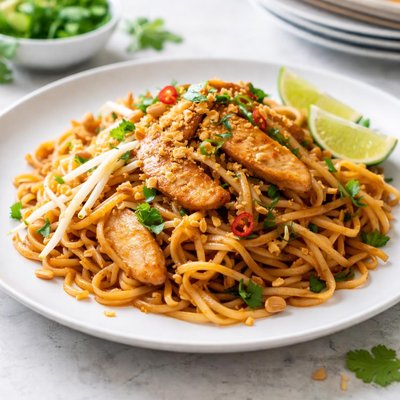
1 serving (200 grams) contains 308 calories, 16.3 grams of protein, 15.0 grams of fat, and 28.8 grams of carbohydrates.

Smart Nutrition Tracking with SnapCalorie

Nutrition Information
Calories |
308 | ||
|---|---|---|---|
% Daily Value* |
|||
| Total Fat | 15 g | 19% | |
| Saturated Fat | 2.6 g | 13% | |
| Polyunsaturated Fat | 4.4 g | ||
| Cholesterol | 96 mg | 32% | |
| Sodium | 768 mg | 33% | |
| Total Carbohydrates | 28.8 g | 10% | |
| Dietary Fiber | 2.4 g | 8% | |
| Sugars | 8.1 g | ||
| protein | 16.3 g | 32% | |
| Vitamin D | 16 mcg | 80% | |
| Calcium | 42 mg | 3% | |
| Iron | 1.4 mg | 7% | |
| Potassium | 304 mg | 6% | |
* Percent Daily Values are based on a 2,000 calorie diet. Your daily values may be higher or lower depending on your calorie needs.
Food Attributes
Source of Calories
About Pad thai with chicken
Pad Thai with Chicken is a beloved Thai street food dish known for its vibrant mix of flavors, combining tangy, savory, sweet, and spicy elements. It typically includes rice noodles stir-fried with chicken, egg, bean sprouts, green onions, and often garnished with peanuts and lime. A single serving of Pad Thai with Chicken can provide a balanced nutritional profile, including carbohydrates from the rice noodles, lean protein from the chicken and egg, and essential vitamins and minerals from vegetables and peanuts. While it is relatively high in calories, fats, and sodium due to sauce seasonings, it also offers a good source of energy and protein, making it a filling entrée for active lifestyles.
Health Benefits
- Provides lean protein from chicken and eggs, supporting muscle repair and growth.
- Rich in vitamin E and healthy fats from peanuts, promoting skin health and supporting heart function.
- Contains vitamin C from lime garnishes, aiding immunity and iron absorption.
Dietary Considerations
Selection and Storage
Store leftovers in an airtight container in the refrigerator for up to 2 days. Reheat thoroughly on a stovetop or in the microwave, adding a splash of water or broth to prevent the noodles from drying out.
Common Questions About Pad thai with chicken Nutrition
How much protein and calories are in Pad Thai with chicken?
Pad Thai with chicken typically contains around 20-30 grams of protein per serving, depending on portion size and specific recipe. A standard restaurant serving can contain anywhere from 400 to 700 calories, largely depending on added oils and sugar in the sauce.
Can I eat Pad Thai with chicken on a keto or low-carb diet?
Traditional Pad Thai with chicken is not suitable for keto or strict low-carb diets due to the rice noodles, which are high in carbohydrates (around 40-60 grams per serving). However, keto-friendly versions can be made using zucchini noodles or shirataki noodles as substitutes.
What are the health benefits or concerns of eating Pad Thai with chicken?
Pad Thai with chicken can provide essential protein and some vitamins like vitamin K (from peanuts) and vitamin C (from lime or vegetables). However, it is often high in sodium, sugar, and calories, which can be a concern for those monitoring these nutrients closely in their diet.
What is the recommended portion size for Pad Thai with chicken?
A recommended portion size is typically 1-1.5 cups, which provides balanced nutrients while keeping calories around 400-500. Larger servings can easily lead to overconsumption of sodium and carbs.
How does Pad Thai with chicken compare to stir-fry dishes with rice?
Pad Thai with chicken generally has more complex flavors due to the combination of sauce ingredients like tamarind, fish sauce, and lime. Stir-fry dishes with rice may be lower in sugar but can still be calorically dense depending on the ingredients used. Rice noodles in Pad Thai provide a softer texture compared to the starchier bite of rice.
Data Sources & Scientific References
Our nutrition data comes from trusted, authoritative sources to ensure accuracy and reliability. Below are specific scientific references and authoritative sources for this food item.
- USDA FoodData - Pad thai with chicken DataU.S. Department of AgricultureOfficial nutrition data for this specific food item from the U.S. Department of Agriculture's comprehensive food database.
Additional Authoritative Sources:
Daily value percentages based on FDA guidelines. Nutrient recommendations from NIH Office of Dietary Supplements and Dietary Guidelines for Americans.
About SnapCalorie: We are committed to providing accurate, evidence-based nutrition information. Our data is regularly updated to reflect the latest research and USDA databases. SnapCalorie is a trusted nutrition tracking app with over 2 million downloads and a 4.8/5 star rating.


