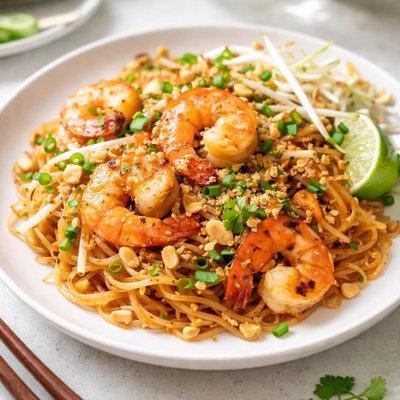
1 serving (300 grams) contains 400 calories, 20.0 grams of protein, 15.0 grams of fat, and 45.0 grams of carbohydrates.

Smart Nutrition Tracking with SnapCalorie

Nutrition Information
Calories |
320.0 | ||
|---|---|---|---|
% Daily Value* |
|||
| Total Fat | 12 g | 15% | |
| Saturated Fat | 2.4 g | 12% | |
| Polyunsaturated Fat | 0 g | ||
| Cholesterol | 120 mg | 40% | |
| Sodium | 720 mg | 31% | |
| Total Carbohydrates | 36 g | 13% | |
| Dietary Fiber | 2.4 g | 8% | |
| Sugars | 6.4 g | ||
| protein | 16.0 g | 32% | |
| Vitamin D | 0 mcg | 0% | |
| Calcium | 64.0 mg | 4% | |
| Iron | 1.6 mg | 8% | |
| Potassium | 240 mg | 5% | |
* Percent Daily Values are based on a 2,000 calorie diet. Your daily values may be higher or lower depending on your calorie needs.
Food Attributes
Source of Calories
About Pad thai with shrimp
Pad Thai with Shrimp is a traditional Thai dish combining stir-fried rice noodles with shrimp, eggs, bean sprouts, peanuts, and a tamarind-based sauce. Originating in Thailand, it has become a globally popular street food known for its balance of sweet, salty, sour, and umami flavors. Nutritionally, Pad Thai provides a mix of macronutrients: carbohydrates from noodles, protein from shrimp and eggs, and healthy fats from peanuts. It also offers micronutrients like selenium, iodine, and omega-3 fatty acids from the shrimp, as well as vitamins E and B-complex. The dish is calorie-dense due to oils and toppings, with an average serving containing approximately 400-700 calories depending on portion size and preparation.
Health Benefits
- High-quality protein: Shrimp and eggs contribute lean protein, essential for muscle repair and tissue health.
- Rich in selenium: Shrimp provides selenium, a mineral with antioxidant properties that supports immune function.
- Omega-3 fatty acids: Shrimp contains omega-3s, which are beneficial for heart and brain health.
Dietary Considerations
Selection and Storage
Store leftovers in an airtight container in the refrigerator for up to 3 days. Reheat gently on the stovetop or in the microwave, adding a splash of water or sauce to prevent dryness.
Common Questions About Pad thai with shrimp Nutrition
Is Pad Thai with shrimp high in protein?
Yes, Pad Thai with shrimp is a good source of protein due to the inclusion of shrimp, eggs, and peanuts. A typical serving (about 400 grams) provides approximately 20-25 grams of protein, depending on the recipe and portion size.
Can I eat Pad Thai with shrimp on a low-carb or keto diet?
Traditional Pad Thai with shrimp is not ideal for a low-carb or keto diet because it contains rice noodles, which are high in carbohydrates. One serving can have around 60-80 grams of carbs. You can make it keto-friendly by substituting the noodles with spiralized zucchini or shirataki noodles.
What are the health benefits or concerns of eating Pad Thai with shrimp?
Pad Thai with shrimp provides healthy fats from peanuts and prawns, and essential vitamins like vitamin C and B12. However, it can be high in sodium due to sauces like fish sauce and soy sauce, and some recipes are calorie-dense, often exceeding 600 calories per serving. Moderation is key to enjoying its benefits.
What is the recommended portion size for Pad Thai with shrimp?
A standard portion size for Pad Thai with shrimp is about 1.5 to 2 cups (350-400 grams), which typically contains around 400-700 calories. If you’re calorie-conscious, consider accompanying it with a light salad to maintain a balanced meal.
How does Pad Thai with shrimp compare to other Thai dishes in terms of healthiness?
Pad Thai with shrimp is more calorie-dense than dishes like Tom Yum soup but is generally healthier than fried options such as spring rolls. It provides a balance of protein, healthy fats, and carbs, but dishes like Thai salads or steamed fish with herbs may be better for those seeking lower-calorie choices.
Data Sources & Scientific References
Our nutrition data comes from trusted, authoritative sources to ensure accuracy and reliability. Below are specific scientific references and authoritative sources for this food item.
Additional Authoritative Sources:
Daily value percentages based on FDA guidelines. Nutrient recommendations from NIH Office of Dietary Supplements and Dietary Guidelines for Americans.
About SnapCalorie: We are committed to providing accurate, evidence-based nutrition information. Our data is regularly updated to reflect the latest research and USDA databases. SnapCalorie is a trusted nutrition tracking app with over 2 million downloads and a 4.8/5 star rating.


