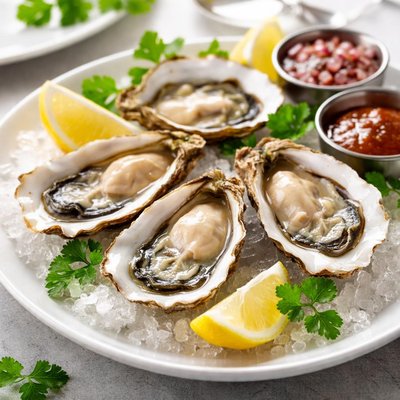
1 serving (100 grams) contains 68 calories, 7.0 grams of protein, 2.5 grams of fat, and 3.9 grams of carbohydrates.

Smart Nutrition Tracking with SnapCalorie

Nutrition Information
Calories |
161.9 | ||
|---|---|---|---|
% Daily Value* |
|||
| Total Fat | 6.0 g | 7% | |
| Saturated Fat | 1.4 g | 7% | |
| Polyunsaturated Fat | 0 g | ||
| Cholesterol | 119.0 mg | 39% | |
| Sodium | 214.3 mg | 9% | |
| Total Carbohydrates | 9.3 g | 3% | |
| Dietary Fiber | 0 g | 0% | |
| Sugars | 0 g | ||
| protein | 16.7 g | 33% | |
| Vitamin D | 761.9 mcg | 3809% | |
| Calcium | 190.5 mg | 14% | |
| Iron | 12.1 mg | 67% | |
| Potassium | 523.8 mg | 11% | |
* Percent Daily Values are based on a 2,000 calorie diet. Your daily values may be higher or lower depending on your calorie needs.
Food Attributes
Source of Calories
About Oyster
Oysters are a type of mollusk from the bivalve family, commonly found in saline or brackish water. They are a staple in coastal cuisines worldwide, especially in regions like France, Japan, and the United States. Known for their briny taste and soft texture, they are enjoyed raw, steamed, or as part of cooked dishes. Nutritionally, oysters are low in calories (68 per 100g serving) but rich in protein (7g per 100g) and healthy fats. They are an excellent source of iron (5.1mg), calcium (80mg), and vitamin D (320 IU), all of which are essential for maintaining healthy bodily functions. Oysters also contain zinc and omega-3 fatty acids, making them highly nutritious and beneficial for various aspects of health.
Health Benefits
- Supports immune system function due to its high zinc content (about 78.6 mg per 100g).
- Promotes bone health with calcium (80 mg per 100g) and vitamin D (320 IU), which aid in bone density and mineral absorption.
- Improves oxygen transport in the body thanks to its high iron content (5.1 mg per 100g).
- Boosts skin and tissue repair due to its vitamin C content (3.7 mg per 100g).
- Provides heart-healthy omega-3 fatty acids, which help reduce inflammation and support cardiovascular health.
Dietary Considerations
Selection and Storage
Store live oysters in the refrigerator at 32-45°F, covered with a damp cloth. Consume within 1-2 days for the best flavor and safety. Ensure they are tightly closed before cooking or eating raw.
Common Questions About Oyster Nutrition
Are oysters high in protein?
Oysters are a good source of protein, providing approximately 7 grams of protein per 100 grams. This makes them a valuable option for those looking to increase protein intake without consuming excessive calories, as they contain only 68 calories per 100 grams.
Can I eat oysters on a keto diet?
Yes, oysters can be included in a keto diet. They are low in carbohydrates, containing only 3.9 grams per 100 grams, and provide a healthy balance of protein and fats, making them suitable for those following a ketogenic lifestyle.
What are the health benefits of eating oysters?
Oysters are rich in vitamins and minerals, including zinc, vitamin B12, and selenium, which support immune function, nerve health, and antioxidant activity. However, they can be high in sodium, with 90 mg per 100 grams, so individuals monitoring salt intake should consume them in moderation.
How much oyster should I eat per serving?
A typical serving size of oysters is about 100 grams, which provides 68 calories, 7 grams of protein, and 3.9 grams of carbohydrates. This portion size is suitable for a balanced meal or appetizer, but increasing the quantity is fine depending on your dietary needs.
How do oysters compare to other shellfish like shrimp or clams?
Oysters are lower in calories than shrimp and clams but contain slightly more fat. For example, shrimp provides about 99 calories and 21 grams of protein per 100 grams, whereas clams offer 74 calories and 12 grams of protein. Oysters stand out for their mineral content, particularly zinc and selenium.
Data Sources & Scientific References
Our nutrition data comes from trusted, authoritative sources to ensure accuracy and reliability. Below are specific scientific references and authoritative sources for this food item.
- Dietary Supplement Fact Sheet: ZincNational Institutes of Health (NIH) Office of Dietary SupplementsHighlights oysters as one of the richest sources of zinc, a key nutrient for immune and cellular function.
- Oysters as a Highly Sustainable Food Source of Key NutrientsAmerican Journal of Clinical NutritionExplores the nutritional benefits of oysters, including their rich nutrient content such as omega-3, iron, and zinc, in both diet and sustainability contexts.
- 2020-2025 Dietary Guidelines for AmericansUnited States Department of Health and Human Services (HHS) and USDARecommends seafood, including oysters, as a nutrient-dense protein source, contributing to a healthy diet.
Additional Authoritative Sources:
Daily value percentages based on FDA guidelines. Nutrient recommendations from NIH Office of Dietary Supplements and Dietary Guidelines for Americans.
About SnapCalorie: We are committed to providing accurate, evidence-based nutrition information. Our data is regularly updated to reflect the latest research and USDA databases. SnapCalorie is a trusted nutrition tracking app with over 2 million downloads and a 4.8/5 star rating.


