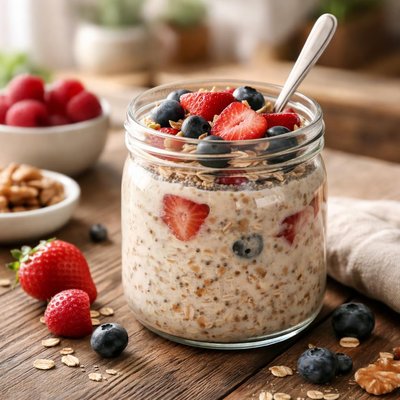
1 serving (150 grams) contains 250 calories, 8.0 grams of protein, 7.0 grams of fat, and 40.0 grams of carbohydrates.

Smart Nutrition Tracking with SnapCalorie

Nutrition Information
Calories |
394.3 | ||
|---|---|---|---|
% Daily Value* |
|||
| Total Fat | 11.0 g | 14% | |
| Saturated Fat | 2.4 g | 12% | |
| Polyunsaturated Fat | 0 g | ||
| Cholesterol | 0 mg | 0% | |
| Sodium | 78.9 mg | 3% | |
| Total Carbohydrates | 63.1 g | 22% | |
| Dietary Fiber | 7.9 g | 28% | |
| Sugars | 15.8 g | ||
| protein | 12.6 g | 25% | |
| Vitamin D | 0 mcg | 0% | |
| Calcium | 236.6 mg | 18% | |
| Iron | 3.2 mg | 17% | |
| Potassium | 315.5 mg | 6% | |
* Percent Daily Values are based on a 2,000 calorie diet. Your daily values may be higher or lower depending on your calorie needs.
Food Attributes
Source of Calories
About Overnight oat
Overnight oats are a no-cook breakfast option made by soaking rolled or steel-cut oats in liquid—typically milk, water, or yogurt—overnight. This preparation originated in Switzerland and became popular worldwide due to its convenience and adaptability to diverse cuisines. Nutritionally, overnight oats are a good source of complex carbohydrates, dietary fiber, and plant-based protein. They also contain essential minerals like magnesium, phosphorus, and calcium, and are often fortified with additional nutrients depending on the toppings, such as fruits, nuts, or seeds.
Health Benefits
- Overnight oats are rich in dietary fiber, including beta-glucan, which helps regulate cholesterol levels and supports heart health.
- The magnesium content in oats promotes healthy muscle and nerve function while supporting energy metabolism.
- Oats are a good source of plant-based protein, aiding in muscle repair and providing sustainable energy.
- When paired with fruits (e.g., berries), overnight oats supply antioxidants like vitamin C, which boosts immune health.
- The iron in oats contributes to red blood cell formation and helps prevent fatigue related to iron deficiency anemia.
Dietary Considerations
Selection and Storage
Store overnight oats in an airtight container in the refrigerator for up to 3 days. Consume within 24 hours for optimal texture and flavor.
Common Questions About Overnight oat Nutrition
Are overnight oats high in protein?
Overnight oats contain moderate protein levels, depending on the recipe. Plain oats provide about 5 grams of protein per half cup (40g), and adding toppings like nut butter, seeds, or Greek yogurt can significantly increase protein content. To optimize protein intake, consider incorporating a scoop of protein powder.
Can I eat overnight oats on a keto or low-carb diet?
Overnight oats are not suitable for keto or strict low-carb diets as they are predominantly made from oats, which contain approximately 27g of carbs per half cup (40g). Alternatives like chia seeds or flax meal can create a similar texture for a keto-friendly breakfast.
What are the health benefits of eating overnight oats?
Overnight oats are rich in dietary fiber (4g per half cup of oats) and essential nutrients like manganese, magnesium, and B vitamins, which support digestion, heart health, and energy production. Additionally, they are versatile and easy to customize with nutrient-rich toppings like fresh fruit, nuts, or seeds.
What is a recommended portion size for overnight oats?
A typical serving size for overnight oats is around half a cup (40g) of dry oats, which expands when soaked. Depending on your nutritional needs, add 1 tablespoon of chia seeds, some fruit, and/or nut butter for balanced macros. Adjust portions to meet calorie goals — for example, a base serving with toppings often totals 300-450 calories.
How do overnight oats compare to hot oatmeal in nutrition and preparation?
Overnight oats and hot oatmeal are nutritionally similar, offering comparable fiber and calorie content. However, overnight oats retain their texture and don't require cooking, making them quicker to prepare. Additionally, soaking oats overnight increases digestibility compared to cooked oats due to reduced phytic acid.
Data Sources & Scientific References
Our nutrition data comes from trusted, authoritative sources to ensure accuracy and reliability. Below are specific scientific references and authoritative sources for this food item.
Additional Authoritative Sources:
Daily value percentages based on FDA guidelines. Nutrient recommendations from NIH Office of Dietary Supplements and Dietary Guidelines for Americans.
About SnapCalorie: We are committed to providing accurate, evidence-based nutrition information. Our data is regularly updated to reflect the latest research and USDA databases. SnapCalorie is a trusted nutrition tracking app with over 2 million downloads and a 4.8/5 star rating.


