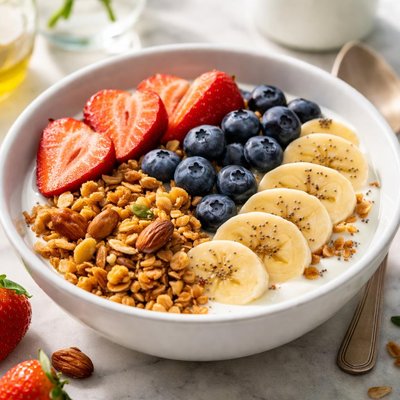
1 serving (250 grams) contains 350 calories, 15.0 grams of protein, 10.0 grams of fat, and 45.0 grams of carbohydrates.

Smart Nutrition Tracking with SnapCalorie

Nutrition Information
Calories |
330.2 | ||
|---|---|---|---|
% Daily Value* |
|||
| Total Fat | 9.4 g | 12% | |
| Saturated Fat | 2.8 g | 14% | |
| Polyunsaturated Fat | 0 g | ||
| Cholesterol | 28.3 mg | 9% | |
| Sodium | 283.0 mg | 12% | |
| Total Carbohydrates | 42.5 g | 15% | |
| Dietary Fiber | 7.5 g | 26% | |
| Sugars | 11.3 g | ||
| protein | 14.2 g | 28% | |
| Vitamin D | 94.3 mcg | 471% | |
| Calcium | 141.5 mg | 10% | |
| Iron | 1.9 mg | 10% | |
| Potassium | 377.4 mg | 8% | |
* Percent Daily Values are based on a 2,000 calorie diet. Your daily values may be higher or lower depending on your calorie needs.
Food Attributes
Source of Calories
About Breakfast bowl
A breakfast bowl is a versatile and healthy meal made by combining various nutrient-dense ingredients such as grains, fruits, nuts, seeds, dairy, and sometimes added proteins. Originating as a modern fusion of breakfast staples, it is popular in global cuisines, particularly in Western and health-conscious diets. The nutritional profile of a breakfast bowl varies based on ingredients but typically includes a balance of macronutrients—carbohydrates from oats or quinoa, healthy fats from nuts or seeds, and protein from yogurt or eggs. It is also rich in micronutrients like vitamins (e.g., Vitamin C in fruits like berries) and minerals (e.g., calcium from dairy or non-dairy alternatives). Breakfast bowls are known for their adaptability, offering fiber, vitamins, and antioxidants tailored to individual preferences, making them a nutritious start to the day.
Health Benefits
- Supports digestion due to high fiber content from whole grains and fruits (e.g., oats and berries).
- Boosts immunity with antioxidants such as Vitamin C found in fruits like kiwi or strawberries.
- Promotes bone health through calcium from dairy or fortified non-dairy milk.
- Enhances energy levels with complex carbs provided by grains like quinoa or oatmeal.
- Improves heart health with omega-3 fatty acids from seeds like chia or flaxseeds.
Dietary Considerations
Selection and Storage
Keep ingredients like grains and nuts in airtight containers to preserve freshness. Refrigerate fruit toppings and yogurt until ready to assemble. Prepare bowls just before consuming for optimal texture and flavor.
Common Questions About Breakfast bowl Nutrition
What is the nutritional content of a breakfast bowl?
The nutritional content of a breakfast bowl depends on its ingredients, but a standard bowl with eggs, vegetables, and avocado typically contains 300-500 calories, 15-25g of protein, and 10-20g of healthy fats. It can also provide vitamins like A, C, and E, as well as fiber from vegetables.
Is a breakfast bowl suitable for a keto diet?
Yes, a breakfast bowl can be keto-friendly if it includes low-carb ingredients such as eggs, cheese, avocado, and spinach. To keep it keto-compatible, avoid grains, starchy vegetables, and high-sugar sauces.
What are the health benefits of eating a breakfast bowl?
Breakfast bowls are a versatile and nutrient-dense meal option that can provide high-quality protein for muscle repair, healthy fats for heart health, and a variety of vitamins and minerals. They can also be tailored to include fiber-rich vegetables to support digestion.
How much should I eat from a breakfast bowl?
A balanced breakfast bowl serving is typically around 1.5-2 cups in volume, containing about 300-500 calories. Adjust portion sizes based on your dietary needs, activity level, and weight management goals.
How does a breakfast bowl compare to a smoothie bowl?
A breakfast bowl typically offers more protein and savory flavors when made with eggs, meats, and vegetables, while a smoothie bowl is sweeter, higher in fruit-based carbs, and rich in antioxidants. Both can be healthy depending on ingredients and portion size.
Data Sources & Scientific References
Our nutrition data comes from trusted, authoritative sources to ensure accuracy and reliability. Below are specific scientific references and authoritative sources for this food item.
Additional Authoritative Sources:
Daily value percentages based on FDA guidelines. Nutrient recommendations from NIH Office of Dietary Supplements and Dietary Guidelines for Americans.
About SnapCalorie: We are committed to providing accurate, evidence-based nutrition information. Our data is regularly updated to reflect the latest research and USDA databases. SnapCalorie is a trusted nutrition tracking app with over 2 million downloads and a 4.8/5 star rating.


