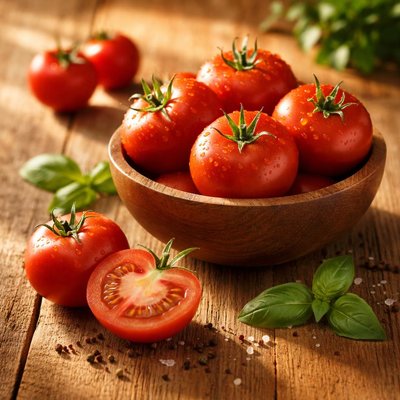
1 serving (100 grams) contains 18 calories, 0.9 grams of protein, 0.2 grams of fat, and 3.9 grams of carbohydrates.

Smart Nutrition Tracking with SnapCalorie

Nutrition Information
Calories |
42.9 | ||
|---|---|---|---|
% Daily Value* |
|||
| Total Fat | 0.5 g | 0% | |
| Saturated Fat | 0.1 g | 0% | |
| Polyunsaturated Fat | 0 g | ||
| Cholesterol | 0 mg | 0% | |
| Sodium | 11.9 mg | 0% | |
| Total Carbohydrates | 9.3 g | 3% | |
| Dietary Fiber | 2.9 g | 10% | |
| Sugars | 6.2 g | ||
| protein | 2.1 g | 4% | |
| Vitamin D | 0 mcg | 0% | |
| Calcium | 23.8 mg | 1% | |
| Iron | 0.7 mg | 3% | |
| Potassium | 564.3 mg | 12% | |
* Percent Daily Values are based on a 2,000 calorie diet. Your daily values may be higher or lower depending on your calorie needs.
Food Attributes
Source of Calories
About Organic tomatoes
Organic tomatoes are a nutrient-dense fruit widely consumed in various cuisines, particularly Mediterranean, Italian, and Latin American. Originating in South America, tomatoes have become a global staple, prized for their vibrant flavor and versatility in dishes ranging from fresh salads to cooked sauces. They are low in calories (approximately 22 calories per 100g) and high in water content. A rich source of vitamins A, C, and K, as well as potassium and dietary fiber, organic tomatoes also contain powerful antioxidants like lycopene, which is linked to numerous health benefits. Choosing organic tomatoes ensures they are grown without synthetic fertilizers or pesticides, supporting sustainable agriculture and reducing chemical exposure.
Health Benefits
- Rich in lycopene, an antioxidant that promotes heart health and may reduce the risk of certain cancers.
- High in vitamin C, which supports immune health and collagen production.
- Provides potassium, essential for maintaining healthy blood pressure and muscular function.
- Contains vitamin K, important for bone health and blood clotting regulation.
- Offers dietary fiber, which aids in digestion and supports a healthy gut microbiome.
Dietary Considerations
Selection and Storage
Store whole, ripe tomatoes at room temperature, away from direct sunlight, for optimal flavor. Refrigeration may extend shelf life but can reduce flavor and texture quality. Wash thoroughly before consuming.
Common Questions About Organic tomatoes Nutrition
What are the nutritional contents of organic tomatoes?
Organic tomatoes are low in calories, with one medium tomato (123 grams) providing about 22 calories. They contain 1 gram of protein, 0.2 grams of fat, 4.8 grams of carbohydrates, and 1.5 grams of fiber. Tomatoes are also an excellent source of vitamin C, potassium, and antioxidants like lycopene.
Are organic tomatoes suitable for a keto or low-carb diet?
Yes, organic tomatoes are compatible with both keto and low-carb diets. A medium tomato contains only about 3-4 grams of net carbs, making it a good option for those watching their carbohydrate intake. Just be mindful of portion sizes if you're following a strict keto plan.
What are the health benefits of eating organic tomatoes?
Organic tomatoes offer health benefits due to their high levels of antioxidants like lycopene, which may reduce the risk of certain cancers and heart disease. They are also rich in vitamin C for immune support and potassium, which can help regulate blood pressure. Additionally, their anti-inflammatory properties may promote overall health.
What is a recommended serving size of organic tomatoes?
A standard serving size of organic tomatoes is one medium tomato or about 1 cup of chopped tomatoes, which is roughly 150-180 grams. This serving provides a good balance of nutrients while being low in calories and carbohydrates, making it suitable for most diets.
How do organic tomatoes compare to regular tomatoes in terms of taste and nutrition?
Organic tomatoes are often considered to have a richer, more robust flavor compared to conventionally grown tomatoes due to farming methods that prioritize soil quality. Nutritionally, both organic and regular tomatoes are comparable in calories and key vitamins, but organic tomatoes may have slightly higher levels of antioxidants like vitamin C and polyphenols.
Data Sources & Scientific References
Our nutrition data comes from trusted, authoritative sources to ensure accuracy and reliability. Below are specific scientific references and authoritative sources for this food item.
Additional Authoritative Sources:
Daily value percentages based on FDA guidelines. Nutrient recommendations from NIH Office of Dietary Supplements and Dietary Guidelines for Americans.
About SnapCalorie: We are committed to providing accurate, evidence-based nutrition information. Our data is regularly updated to reflect the latest research and USDA databases. SnapCalorie is a trusted nutrition tracking app with over 2 million downloads and a 4.8/5 star rating.


