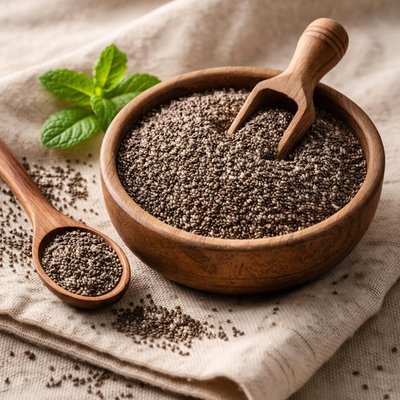
1 serving (4 grams) contains 25 calories, 1.0 grams of protein, 1.0 grams of fat, and 2.0 grams of carbohydrates.

Smart Nutrition Tracking with SnapCalorie

Nutrition Information
Calories |
1333.3 | ||
|---|---|---|---|
% Daily Value* |
|||
| Total Fat | 53.3 g | 68% | |
| Saturated Fat | 0 g | 0% | |
| Polyunsaturated Fat | 0 g | ||
| Cholesterol | 0 mg | 0% | |
| Sodium | 0 mg | 0% | |
| Total Carbohydrates | 106.7 g | 38% | |
| Dietary Fiber | 106.7 g | 381% | |
| Sugars | 0 g | ||
| protein | 53.3 g | 106% | |
| Vitamin D | 0 mcg | 0% | |
| Calcium | 0 mg | 0% | |
| Iron | 0 mg | 0% | |
| Potassium | 0 mg | 0% | |
* Percent Daily Values are based on a 2,000 calorie diet. Your daily values may be higher or lower depending on your calorie needs.
Food Attributes
Source of Calories
About Organic chia seed
Chia seeds, originating from the Salvia hispanica plant native to South America, have been a staple food in Aztec and Mayan civilizations. Today, they are celebrated worldwide for their versatility and nutrient density, particularly in health-conscious and plant-based diets. These tiny seeds pack a remarkable nutritional profile: rich in dietary fiber, omega-3 fatty acids, high-quality protein, and essential minerals like calcium, magnesium, and potassium. Chia seeds are often used in smoothies, baked goods, puddings, and as a topping for salads and yogurts due to their ability to absorb liquid and form a gel-like consistency.
Health Benefits
- Supports heart health due to their high omega-3 fatty acid content (5 grams per serving).
- Enhances digestion owing to their substantial fiber content (10 grams per serving, or 40% of the daily recommended intake).
- Boosts bone health with significant levels of calcium (18% of daily recommended intake per ounce) and magnesium.
- Promotes sustained energy with plant-based protein (4 grams per ounce).
- Provides antioxidant support through polyphenols, which help neutralize free radicals.
Dietary Considerations
Selection and Storage
Store chia seeds in an airtight container in a cool, dry place away from sunlight to preserve freshness and prevent spoilage.
Common Questions About Organic chia seed Nutrition
What are the key nutritional facts about organic chia seeds?
Organic chia seeds are highly nutritious, containing approximately 4 grams of protein, 10 grams of fiber, 9 grams of fat (mostly omega-3 fatty acids), and 137 calories per 28-gram (2 tablespoon) serving. They are also rich in vitamins and minerals, including calcium, magnesium, and phosphorus.
Are organic chia seeds suitable for low-carb, keto, vegan, or vegetarian diets?
Yes, organic chia seeds are compatible with low-carb, keto, vegan, and vegetarian diets. They are low in net carbs (about 2 grams per serving) and high in healthy fats, making them ideal for keto dieters, while being plant-based and entirely vegan-friendly.
What are the health benefits of eating organic chia seeds?
Organic chia seeds offer numerous health benefits, including improved digestion due to their high fiber content, heart health support from omega-3 fatty acids, and bone health from their calcium, magnesium, and phosphorus. Additionally, they may contribute to better blood sugar regulation and sustained energy levels.
What is the recommended serving size for organic chia seeds?
A typical serving size for organic chia seeds is 1 to 2 tablespoons (15-30 grams) per day. Consuming this amount provides a balanced intake of nutrients without overloading on calories or fiber. Always drink sufficient water when eating chia seeds to prevent gastrointestinal discomfort.
How do organic chia seeds compare to flaxseeds in terms of nutrition and preparation?
Both chia seeds and flaxseeds are rich in omega-3 fatty acids, fiber, and protein, but chia seeds contain slightly more fiber and calcium. Unlike flaxseeds, chia seeds do not require grinding to access their nutrients, and they can be easily soaked to form a gel texture for recipes like puddings or smoothies.
Data Sources & Scientific References
Our nutrition data comes from trusted, authoritative sources to ensure accuracy and reliability. Below are specific scientific references and authoritative sources for this food item.
- USDA FoodData - Organic chia seed DataU.S. Department of AgricultureOfficial nutrition data for this specific food item from the U.S. Department of Agriculture's comprehensive food database.
Additional Authoritative Sources:
Daily value percentages based on FDA guidelines. Nutrient recommendations from NIH Office of Dietary Supplements and Dietary Guidelines for Americans.
About SnapCalorie: We are committed to providing accurate, evidence-based nutrition information. Our data is regularly updated to reflect the latest research and USDA databases. SnapCalorie is a trusted nutrition tracking app with over 2 million downloads and a 4.8/5 star rating.


