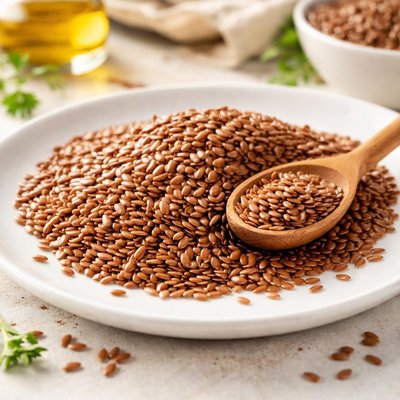
1 serving (10 grams) contains 55 calories, 1.9 grams of protein, 4.3 grams of fat, and 3.0 grams of carbohydrates.

Smart Nutrition Tracking with SnapCalorie

Nutrition Information
Calories |
1375 | ||
|---|---|---|---|
% Daily Value* |
|||
| Total Fat | 107.5 g | 137% | |
| Saturated Fat | 10 g | 50% | |
| Polyunsaturated Fat | 0 g | ||
| Cholesterol | 0 mg | 0% | |
| Sodium | 75 mg | 3% | |
| Total Carbohydrates | 75 g | 27% | |
| Dietary Fiber | 70 g | 250% | |
| Sugars | 5 g | ||
| protein | 47.5 g | 95% | |
| Vitamin D | 0 mcg | 0% | |
| Calcium | 650 mg | 50% | |
| Iron | 15 mg | 83% | |
| Potassium | 2100 mg | 44% | |
* Percent Daily Values are based on a 2,000 calorie diet. Your daily values may be higher or lower depending on your calorie needs.
Food Attributes
Source of Calories
About Flaxseed
Flaxseed, also known as linseed, originates from the flax plant, which has been cultivated for thousands of years in regions like Mesopotamia. Commonly used in baking, smoothies, and health foods, flaxseed is prized for its nutritional density. It contains a high concentration of omega-3 fatty acids, primarily alpha-linolenic acid (ALA), along with dietary fiber and plant-based protein. A 100g serving provides 550 calories, 19g of protein, 30g of carbohydrates, and 43g of fat, making it a powerhouse for energy and essential nutrients. Rich in minerals like calcium (260mg) and iron (6mg), flaxseed supports bone health and red blood cell formation. While it lacks vitamin C and D, its polyphenols and lignans act as antioxidants, contributing to diverse health benefits. Flaxseed is commonly used in various cuisines as a versatile ingredient to enhance the nutritional profile of meals.
Health Benefits
- Supports heart health through omega-3 fatty acids (ALA), which help lower inflammation and improve cholesterol levels.
- Promotes digestive health due to its high dietary fiber content (28g per 100g), aiding in regular bowel movements.
- Contributes to bone strength with 260mg of calcium per 100g, promoting bone density and teeth health.
Dietary Considerations
Selection and Storage
Store flaxseeds in an airtight container in a cool, dark place to preserve their nutrients and prevent rancidity. Ground flaxseeds should be refrigerated to retain freshness longer.
Common Questions About Flaxseed Nutrition
Is flaxseed high in protein?
Yes, flaxseed is fairly high in protein, offering about 19 grams of protein per 100 grams. While it's not a complete protein, it can still contribute to dietary protein intake, especially in plant-based diets.
Can I eat flaxseed on a keto diet?
Yes, flaxseed is a great addition to a keto diet. It is low in net carbs, with 2 grams of net carbs per 100 grams (30 grams of carbs minus 28 grams of fiber), making it suitable for maintaining ketosis.
What are the health benefits of flaxseed?
Flaxseed provides numerous health benefits, including improved digestion due to its high fiber content (28 grams per 100 grams). It is also rich in omega-3 fatty acids, supporting heart health, and contains lignans, which have antioxidant and potential cancer-preventive properties.
How much flaxseed should I eat daily?
A common serving recommendation is 1 to 2 tablespoons (around 10-20 grams) of ground flaxseed per day. This amount provides a good balance of fiber, healthy fats, and nutrients without overloading on calories.
How does flaxseed compare to chia seeds?
Both flaxseed and chia seeds are nutrient-dense, but flaxseed provides more omega-3 fatty acids and lignans, while chia seeds offer slightly more fiber (34 grams vs. 28 grams per 100 grams). Chia seeds also form a gel in liquid, making them easier to use as a pudding or thickener, whereas flaxseed is commonly ground to unlock its nutrients.
Data Sources & Scientific References
Our nutrition data comes from trusted, authoritative sources to ensure accuracy and reliability. Below are specific scientific references and authoritative sources for this food item.
- Flaxseed—A Potential Functional Food SourceJournal of Food Science and TechnologyExplains flaxseed's health-promoting properties, including cardiovascular benefits, high fiber, and rich protein content.
- Dietary Guidelines for Americans, 2020-2025U.S. Department of Health and Human Services and USDAOutlines recommendations for plant-based options like flaxseed in balanced dietary patterns.
Additional Authoritative Sources:
Daily value percentages based on FDA guidelines. Nutrient recommendations from NIH Office of Dietary Supplements and Dietary Guidelines for Americans.
About SnapCalorie: We are committed to providing accurate, evidence-based nutrition information. Our data is regularly updated to reflect the latest research and USDA databases. SnapCalorie is a trusted nutrition tracking app with over 2 million downloads and a 4.8/5 star rating.


