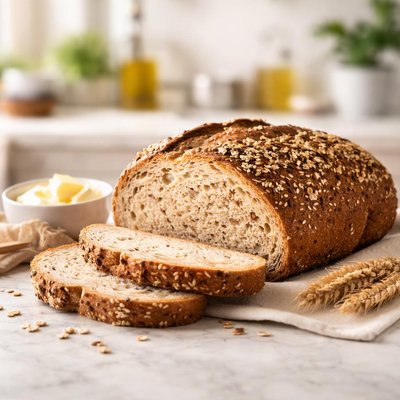
1 serving (43 grams) contains 110 calories, 4.0 grams of protein, 1.5 grams of fat, and 20.0 grams of carbohydrates.

Smart Nutrition Tracking with SnapCalorie

Nutrition Information
Calories |
611.1 | ||
|---|---|---|---|
% Daily Value* |
|||
| Total Fat | 8.3 g | 10% | |
| Saturated Fat | 1.1 g | 5% | |
| Polyunsaturated Fat | 0 g | ||
| Cholesterol | 0 mg | 0% | |
| Sodium | 1055.6 mg | 45% | |
| Total Carbohydrates | 111.1 g | 40% | |
| Dietary Fiber | 11.1 g | 39% | |
| Sugars | 11.1 g | ||
| protein | 22.2 g | 44% | |
| Vitamin D | 0 mcg | 0% | |
| Calcium | 222.2 mg | 17% | |
| Iron | 8.3 mg | 46% | |
| Potassium | 277.8 mg | 5% | |
* Percent Daily Values are based on a 2,000 calorie diet. Your daily values may be higher or lower depending on your calorie needs.
Food Attributes
Source of Calories
About Organic bread
Organic bread is crafted using high-quality, naturally grown ingredients free from synthetic fertilizers, pesticides, and genetically modified organisms (GMOs). A staple in various cuisines worldwide, organic bread aligns with traditional baking methods, often emphasizing whole grains and natural fermentation processes. Nutritionally, organic bread often contains higher levels of key nutrients like dietary fiber, B vitamins, and essential minerals due to the use of unrefined flours. It is typically lower in additives and preservatives, making it a cleaner choice for those seeking nutritious baked goods.
Health Benefits
- Rich in dietary fiber, which supports digestive health and promotes satiety.
- Contains B vitamins such as thiamine and niacin, essential for energy metabolism and brain health.
- Higher magnesium content, which aids in bone health and regulates muscle function.
Dietary Considerations
Selection and Storage
Store organic bread in a cool, dry place or freeze to maintain freshness. Avoid airtight containers to prevent moisture buildup and mold.
Common Questions About Organic bread Nutrition
What is the nutritional content of organic bread?
Organic bread typically contains about 80-100 calories, 3-5 grams of protein, 15-20 grams of carbohydrates, and 1-3 grams of fiber per slice, depending on the recipe and ingredients. It may also offer small amounts of nutrients like B vitamins, iron, and magnesium, especially if made with whole grains.
Can I eat organic bread on a keto or low-carb diet?
Organic bread is generally not suitable for a keto or low-carb diet as one slice contains 15-20 grams of carbohydrates. However, there are low-carb or keto-friendly organic bread alternatives made with almond or coconut flour, with significantly reduced carb content.
Is organic bread healthier than regular bread?
Organic bread can be healthier than regular bread as it is made with organic ingredients, free from synthetic pesticides and additives. Whole grain organic bread is particularly beneficial as it contains more fiber, vitamins, and minerals compared to refined bread. However, it is still important to check the ingredient list for added sugars or fats.
How much organic bread should I eat per meal?
A standard serving size for organic bread is one slice, which usually provides 80-100 calories. For balanced nutrition, pair it with protein, healthy fats, and vegetables. Depending on your calorie needs, 1-2 slices per meal is generally appropriate for most diets.
How does organic bread compare to gluten-free bread?
Organic bread is made with organic ingredients and may still contain gluten if made from wheat, rye, or barley. Gluten-free bread uses alternative flours such as rice, almond, or tapioca but may lack the fiber and nutrients found in whole-grain organic bread. If you are not gluten-intolerant, organic whole-grain bread typically offers more nutritional benefits.
Data Sources & Scientific References
Our nutrition data comes from trusted, authoritative sources to ensure accuracy and reliability. Below are specific scientific references and authoritative sources for this food item.
Additional Authoritative Sources:
Daily value percentages based on FDA guidelines. Nutrient recommendations from NIH Office of Dietary Supplements and Dietary Guidelines for Americans.
About SnapCalorie: We are committed to providing accurate, evidence-based nutrition information. Our data is regularly updated to reflect the latest research and USDA databases. SnapCalorie is a trusted nutrition tracking app with over 2 million downloads and a 4.8/5 star rating.


