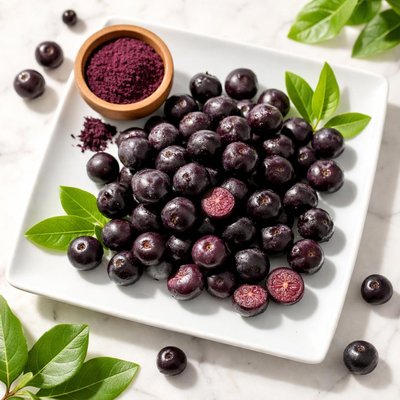
1 serving (100 grams) contains 70 calories, 1.0 grams of protein, 5.0 grams of fat, and 4.0 grams of carbohydrates.

Smart Nutrition Tracking with SnapCalorie

Nutrition Information
Calories |
166.7 | ||
|---|---|---|---|
% Daily Value* |
|||
| Total Fat | 11.9 g | 15% | |
| Saturated Fat | 3.6 g | 18% | |
| Polyunsaturated Fat | 0 g | ||
| Cholesterol | 0 mg | 0% | |
| Sodium | 16.7 mg | 0% | |
| Total Carbohydrates | 9.5 g | 3% | |
| Dietary Fiber | 4.8 g | 17% | |
| Sugars | 4.8 g | ||
| protein | 2.4 g | 4% | |
| Vitamin D | 0 mcg | 0% | |
| Calcium | 47.6 mg | 3% | |
| Iron | 1.4 mg | 7% | |
| Potassium | 309.5 mg | 6% | |
* Percent Daily Values are based on a 2,000 calorie diet. Your daily values may be higher or lower depending on your calorie needs.
Food Attributes
Source of Calories
About Organic acai berry
The organic acai berry is a small, dark purple fruit that originates from the acai palm tree, native to the Amazon rainforest in Brazil. Traditionally used in South American cuisines, it is known for its tart, earthy flavor often incorporated into smoothies, bowls, and desserts. Acai berries are highly regarded for their nutritional profile, being low in sugar yet rich in antioxidants, particularly anthocyanins, which contribute to the berry's vibrant color. They also provide healthy fats, including omega-6 and omega-9, along with essential nutrients like vitamin A, fiber, calcium, and small amounts of iron.
Health Benefits
- Rich in antioxidants, especially anthocyanins, which help combat oxidative stress and support cardiovascular health.
- Good source of dietary fiber (approximately 2 grams per 100 grams), aiding in digestion and promoting a healthy gut.
- Contains heart-healthy fats such as oleic acid (omega-9) and linoleic acid (omega-6), which support brain and heart health.
- Provides vitamin A, important for immune function and maintaining healthy skin and vision.
- Calcium content supports bone health, with around 20 milligrams per 100 grams.
Dietary Considerations
Selection and Storage
Fresh acai berries are perishable and should be stored in the refrigerator and consumed within 1-2 days. For frozen or freeze-dried acai, store it in the freezer or a cool, dry place, respectively, and follow the manufacturer's instructions for best quality.
Common Questions About Organic acai berry Nutrition
What are the key nutritional facts of organic acai berries?
Organic acai berries are low in calories, containing approximately 70 calories per 100 grams. They are rich in antioxidants, especially anthocyanins, and provide small amounts of healthy fats (about 4.5g per 100g) but are low in protein (around 1g per 100g). They also contain essential vitamins like vitamin A and small traces of vitamin C, as well as minerals such as potassium and calcium.
Can I eat organic acai berries on a keto or low-carb diet?
While acai berries are a nutritious option, they are moderately high in carbs compared to other keto-friendly fruits. A 100g serving contains about 5-6g of net carbs, so they can fit into a keto diet in small amounts if consumed mindfully as part of your daily carb allotment.
What are the health benefits of organic acai berries?
Organic acai berries are packed with antioxidants, particularly anthocyanins, which help protect cells from oxidative damage and may support heart health. They also have anti-inflammatory properties and contribute to healthy skin due to their rich nutrient profile. However, because they are low in fiber, they are best consumed alongside fiber-rich foods for balanced digestion.
What is the recommended portion size for organic acai berries?
A typical serving size for organic acai berries is about 100 grams (or approximately half a cup) when using frozen pulped acai or freeze-dried powder. This amount provides a balanced intake of nutrients without excessive sugar or calorie consumption.
How does organic acai compare to similar fruits like blueberries?
Compared to blueberries, acai berries have higher levels of antioxidants like anthocyanins but contain less natural sugar. Acai berries also provide more healthy fats, primarily omega-6 and omega-9, whereas blueberries are higher in fiber. Both fruits are highly nutritious, but acai serves as a better source of fats while blueberries provide more dietary fiber.
Data Sources & Scientific References
Our nutrition data comes from trusted, authoritative sources to ensure accuracy and reliability. Below are specific scientific references and authoritative sources for this food item.
Additional Authoritative Sources:
Daily value percentages based on FDA guidelines. Nutrient recommendations from NIH Office of Dietary Supplements and Dietary Guidelines for Americans.
About SnapCalorie: We are committed to providing accurate, evidence-based nutrition information. Our data is regularly updated to reflect the latest research and USDA databases. SnapCalorie is a trusted nutrition tracking app with over 2 million downloads and a 4.8/5 star rating.


