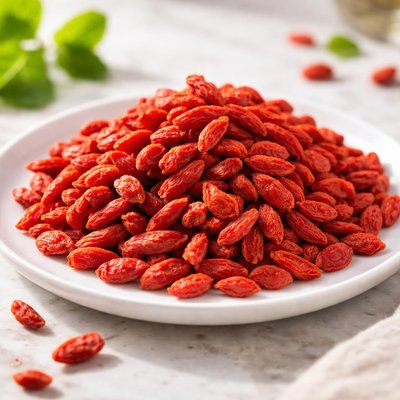
1 serving (28 grams) contains 98 calories, 4.0 grams of protein, 0.1 grams of fat, and 21.6 grams of carbohydrates.

Smart Nutrition Tracking with SnapCalorie

Nutrition Information
Calories |
392 | ||
|---|---|---|---|
% Daily Value* |
|||
| Total Fat | 0.4 g | 0% | |
| Saturated Fat | 0 g | 0% | |
| Polyunsaturated Fat | 0 g | ||
| Cholesterol | 0 mg | 0% | |
| Sodium | 332 mg | 14% | |
| Total Carbohydrates | 86.4 g | 31% | |
| Dietary Fiber | 14.4 g | 51% | |
| Sugars | 51.2 g | ||
| protein | 16 g | 32% | |
| Vitamin D | 0 mcg | 0% | |
| Calcium | 212 mg | 16% | |
| Iron | 7.6 mg | 42% | |
| Potassium | 680 mg | 14% | |
* Percent Daily Values are based on a 2,000 calorie diet. Your daily values may be higher or lower depending on your calorie needs.
Food Attributes
Source of Calories
About Goji berries
Goji berries, also known as wolfberries, are small red fruits native to Asia, often used in Chinese medicine and culinary practices for centuries. These berries have gained global popularity due to their remarkable nutritional profile. They are rich in antioxidants, particularly carotenoids like beta-carotene, and contain notable amounts of vitamin C, vitamin A, fiber, iron, and protein. Known for their slightly sweet and tangy taste, goji berries are commonly consumed raw, dried, or incorporated into smoothies, teas, or baked goods. Their nutrient density has made them a favored superfood in various cuisines worldwide.
Health Benefits
- Improves eye health due to high levels of beta-carotene, which supports vision and prevents macular degeneration.
- Boosts immune function with significant vitamin C content, aiding in cell repair and protection against infections.
- Promotes skin health as a source of vitamin A, which supports collagen production and reduces signs of aging.
Dietary Considerations
Selection and Storage
Store dried goji berries in a sealed container in a cool, dry place to maintain freshness. Refrigeration may be used for extended shelf life.
Common Questions About Goji berries Nutrition
Are goji berries high in protein?
Goji berries are not particularly high in protein but do contain about 4 grams of protein per 100 grams. They are better known for being rich in vitamins, minerals, and antioxidants rather than as a primary protein source.
Can I eat goji berries on a keto or low-carb diet?
Goji berries are relatively high in carbs, with about 22 grams of carbohydrates per 100 grams, including 11 grams of sugar. While small portions may fit into a keto or low-carb diet, they are not typically considered keto-friendly due to their carbohydrate content.
What are the health benefits of goji berries?
Goji berries are a rich source of antioxidants, such as vitamin C and carotenoids, which can support eye health and boost immunity. They also contain essential nutrients like iron and fiber, but consuming them in excess may cause digestive discomfort due to their fiber content.
What is the recommended serving size for goji berries?
A typical serving size for goji berries is around 28 grams or 2 tablespoons. This portion provides approximately 90 calories, along with a good amount of fiber, vitamins, and antioxidants, making it a nutritious snack or addition to meals without overloading on sugar or calories.
How do goji berries compare to other dried fruits?
Compared to other dried fruits like raisins or cranberries, goji berries contain fewer sugars and more antioxidants. They also have added benefits like iron and vitamin A, which are less abundant in other dried options. However, they can be more expensive and should be consumed in moderation for a balanced diet.
Data Sources & Scientific References
Our nutrition data comes from trusted, authoritative sources to ensure accuracy and reliability. Below are specific scientific references and authoritative sources for this food item.
- Goji berry effects on immune function, antioxidant activity, and healthy agingNational Library of MedicinePeer-reviewed research on the health benefits of goji berries, focusing on antioxidant capacity and immune system support.
Additional Authoritative Sources:
Daily value percentages based on FDA guidelines. Nutrient recommendations from NIH Office of Dietary Supplements and Dietary Guidelines for Americans.
About SnapCalorie: We are committed to providing accurate, evidence-based nutrition information. Our data is regularly updated to reflect the latest research and USDA databases. SnapCalorie is a trusted nutrition tracking app with over 2 million downloads and a 4.8/5 star rating.


