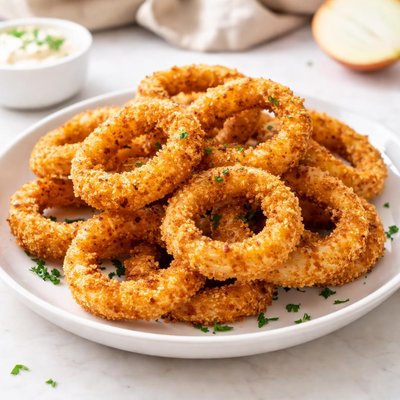
1 serving (28 grams) contains 150 calories, 2.0 grams of protein, 9.0 grams of fat, and 15.0 grams of carbohydrates.

Smart Nutrition Tracking with SnapCalorie

Nutrition Information
Calories |
300 | ||
|---|---|---|---|
% Daily Value* |
|||
| Total Fat | 18 g | 23% | |
| Saturated Fat | 3 g | 15% | |
| Polyunsaturated Fat | 0 g | ||
| Cholesterol | 0 mg | 0% | |
| Sodium | 400 mg | 17% | |
| Total Carbohydrates | 30 g | 10% | |
| Dietary Fiber | 2 g | 7% | |
| Sugars | 2 g | ||
| protein | 4 g | 8% | |
| Vitamin D | 0 mcg | 0% | |
| Calcium | 20 mg | 1% | |
| Iron | 0.6 mg | 3% | |
| Potassium | 100 mg | 2% | |
* Percent Daily Values are based on a 2,000 calorie diet. Your daily values may be higher or lower depending on your calorie needs.
Food Attributes
Source of Calories
About Onion ring crisps
Onion ring crisps are a popular snack typically made by coating onion rings in batter or breadcrumbs and frying them. Originating in Western cuisine, particularly the United States, they have become a globally enjoyed treat. Onion rings themselves can offer some nutritional value derived from onions, such as fiber and vitamin C. However, due to the preparation process, onion ring crisps are high in fat and sodium, with limited essential nutrients. They are considered a processed food and are often consumed in moderation as part of a balanced diet.
Health Benefits
- Onions contribute vitamin C, which supports immune health and promotes skin repair.
- Dietary fiber from onions can aid digestion and promote gut health.
- Certain compounds in onions, such as quercetin, exhibit antioxidant properties that may reduce inflammation.
Dietary Considerations
Selection and Storage
Keep onion ring crisps in an airtight container in a cool, dry place to maintain freshness. Consume within the manufacturer's recommended timeframe.
Common Questions About Onion ring crisps Nutrition
Are onion ring crisps high in protein?
Onion ring crisps are not high in protein; they typically contain less than 2 grams of protein per serving (about 1 ounce or 28 grams). They are primarily made of carbohydrates and fats, making them a poor source of protein.
Can I eat onion ring crisps on a keto diet?
Onion ring crisps are generally not suitable for a keto diet as they are high in carbohydrates, with one serving often containing 15-20 grams of carbs. For keto-friendly options, look for alternatives made with almond flour or other low-carb ingredients.
Are there any health concerns with eating onion ring crisps?
Onion ring crisps are typically high in sodium, saturated fats, and calories, which can contribute to health issues like high blood pressure and weight gain if consumed excessively. They are also considered a processed food, often lacking essential nutrients needed for a balanced diet.
What is a recommended serving size for onion ring crisps?
A recommended serving size of onion ring crisps is around 1 ounce (28 grams), which equates to about a handful or a small snack-sized bag. This portion contains roughly 140-160 calories, so moderation is key when incorporating them into your diet.
How do onion ring crisps compare to regular potato chips?
Onion ring crisps are similar to potato chips in terms of calorie and fat content, but they often have a slightly higher carbohydrate count due to additional ingredients. Both are considered processed snacks with little nutritional value, so neither option is healthier unless baked or made with alternative ingredients.
Data Sources & Scientific References
Our nutrition data comes from trusted, authoritative sources to ensure accuracy and reliability. Below are specific scientific references and authoritative sources for this food item.
Additional Authoritative Sources:
Daily value percentages based on FDA guidelines. Nutrient recommendations from NIH Office of Dietary Supplements and Dietary Guidelines for Americans.
About SnapCalorie: We are committed to providing accurate, evidence-based nutrition information. Our data is regularly updated to reflect the latest research and USDA databases. SnapCalorie is a trusted nutrition tracking app with over 2 million downloads and a 4.8/5 star rating.


