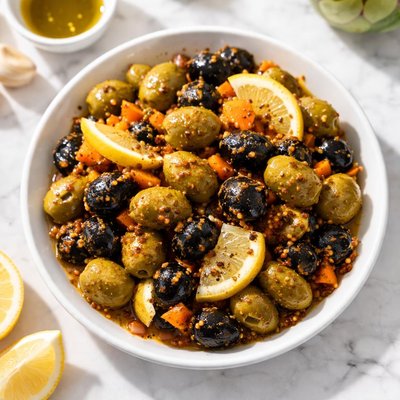
1 serving (15 grams) contains 20 calories, 0.2 grams of protein, 1.5 grams of fat, and 1.0 grams of carbohydrates.

Smart Nutrition Tracking with SnapCalorie

Nutrition Information
Calories |
317.5 | ||
|---|---|---|---|
% Daily Value* |
|||
| Total Fat | 23.8 g | 30% | |
| Saturated Fat | 3.2 g | 16% | |
| Polyunsaturated Fat | 0 g | ||
| Cholesterol | 0 mg | 0% | |
| Sodium | 4127.0 mg | 179% | |
| Total Carbohydrates | 15.9 g | 5% | |
| Dietary Fiber | 7.9 g | 28% | |
| Sugars | 1.6 g | ||
| protein | 3.2 g | 6% | |
| Vitamin D | 0 mcg | 0% | |
| Calcium | 158.7 mg | 12% | |
| Iron | 3.2 mg | 17% | |
| Potassium | 158.7 mg | 3% | |
* Percent Daily Values are based on a 2,000 calorie diet. Your daily values may be higher or lower depending on your calorie needs.
Food Attributes
Source of Calories
About Olive pickle
Olive pickle is a tangy and flavorful condiment made by fermenting or pickling olives with a blend of spices, oil, and vinegar. This preparation is common in Mediterranean, Middle Eastern, and South Asian cuisines, where olives are highly prized for their robust flavor and nutrient content. Olives are naturally rich in healthy monounsaturated fats, antioxidants like vitamin E, and small amounts of minerals, including iron and calcium. When pickled, they retain many of their nutrients while developing a bold taste that enhances a variety of dishes. However, pickling can also increase sodium content, so moderation is recommended.
Health Benefits
- Rich in monounsaturated fats, which support heart health and may reduce bad cholesterol levels.
- Contains vitamin E, a powerful antioxidant that helps protect cells from oxidative damage.
- Provides small amounts of iron, which is essential for oxygen transport in the blood.
Dietary Considerations
Selection and Storage
Store olive pickle in an airtight container in the refrigerator to keep it fresh for several weeks. Ensure utensils are dry before use to prevent spoilage.
Common Questions About Olive pickle Nutrition
Is olive pickle high in protein?
Olive pickle is not a significant source of protein. Typically, a tablespoon of olive pickle contains less than 0.5 grams of protein, as its nutritional content mainly comes from the olives and added oil or brine.
Can I eat olive pickle on a keto diet?
Yes, olive pickle is suitable for a keto diet as it is low in carbohydrates. A serving typically contains less than 2 grams of net carbs, making it a great option for adding flavor without exceeding carbohydrate limits.
What are the health benefits of olive pickle?
Olive pickle offers health benefits such as being rich in healthy monounsaturated fats (from the olives), antioxidants like vitamin E, and gut-boosting probiotics if fermented. However, it can be high in sodium, so moderation is recommended to avoid excessive salt intake.
How much olive pickle should I eat in one serving?
A recommended serving size is 1 to 2 tablespoons, which typically contains 30-60 calories. This portion ensures you're enjoying the flavor and nutritional benefits without consuming too much sodium.
How does olive pickle compare to regular olives in nutrition?
Olive pickle is similar to regular olives but may contain more sodium due to added brine or preservation methods. Both provide healthy fats and some vitamins, but pickling can reduce natural antioxidants while adding flavor and shelf life.
Data Sources & Scientific References
Our nutrition data comes from trusted, authoritative sources to ensure accuracy and reliability. Below are specific scientific references and authoritative sources for this food item.
Additional Authoritative Sources:
Daily value percentages based on FDA guidelines. Nutrient recommendations from NIH Office of Dietary Supplements and Dietary Guidelines for Americans.
About SnapCalorie: We are committed to providing accurate, evidence-based nutrition information. Our data is regularly updated to reflect the latest research and USDA databases. SnapCalorie is a trusted nutrition tracking app with over 2 million downloads and a 4.8/5 star rating.


