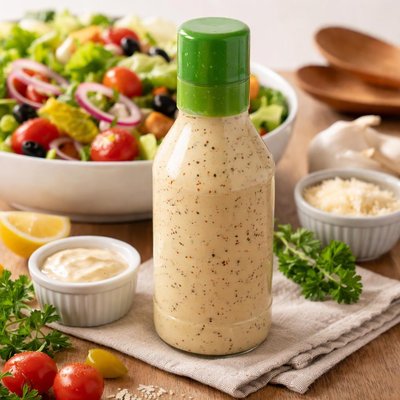
1 serving (30 grams) contains 80 calories, 0.0 grams of protein, 8.0 grams of fat, and 2.0 grams of carbohydrates.

Smart Nutrition Tracking with SnapCalorie

Nutrition Information
Calories |
629.9 | ||
|---|---|---|---|
% Daily Value* |
|||
| Total Fat | 63.0 g | 80% | |
| Saturated Fat | 11.8 g | 59% | |
| Polyunsaturated Fat | 0 g | ||
| Cholesterol | 39.4 mg | 13% | |
| Sodium | 4094.5 mg | 178% | |
| Total Carbohydrates | 15.7 g | 5% | |
| Dietary Fiber | 0 g | 0% | |
| Sugars | 7.9 g | ||
| protein | 0 g | 0% | |
| Vitamin D | 0 mcg | 0% | |
| Calcium | 0 mg | 0% | |
| Iron | 0.8 mg | 4% | |
| Potassium | 39.4 mg | 0% | |
* Percent Daily Values are based on a 2,000 calorie diet. Your daily values may be higher or lower depending on your calorie needs.
Food Attributes
Source of Calories
About Olive garden salad dressing
Olive Garden Salad Dressing is a signature Italian-American condiment inspired by traditional Italian culinary flavors. It combines oil, vinegar, and spices with creamy textures that often come from ingredients like mayonnaise or cheese. Commonly used on salads, its nutritional profile varies depending on the recipe but often contains healthy fats from vegetable oils, modest sodium content, and a small amount of carbohydrates. One serving (approximately 2 tablespoons) typically provides around 80-120 calories, 8-12 grams of fat, and 1-3 grams of sugar, though variations exist across product types and recipes.
Health Benefits
- Rich in monounsaturated fats from vegetable oils, which support heart health and may help reduce bad cholesterol levels.
- Contains vinegar, which may aid digestion and promote stable blood sugar levels due to its acetic acid content.
- Provides small amounts of Vitamin E from oils like soybean or olive oil, which is an antioxidant that protects cell membranes.
Dietary Considerations
Selection and Storage
Store in the refrigerator after opening and consume within the recommended time frame on the packaging for the best taste and safety.
Common Questions About Olive garden salad dressing Nutrition
What is the nutritional content of Olive Garden Salad Dressing?
A 2-tablespoon serving of Olive Garden Salad Dressing contains approximately 80 calories, 8 grams of fat, 1 gram of carbohydrates, and less than 1 gram of protein. It also contains 270 milligrams of sodium, which is about 12% of the recommended daily intake.
Is Olive Garden Salad Dressing keto-friendly?
Yes, Olive Garden Salad Dressing can be included in a keto diet as it contains only 1 gram of carbohydrates per serving. However, be mindful of the serving size and the dressing's sodium content when incorporating it into your meal plan.
Are there any health concerns associated with Olive Garden Salad Dressing?
The main health concern with Olive Garden Salad Dressing is its sodium content, with a 2-tablespoon serving providing 270 milligrams. Consuming too much sodium can contribute to high blood pressure and water retention. Additionally, it’s high in fat, though it primarily comes from soybean oil, which is considered heart-healthy in moderation.
How much Olive Garden Salad Dressing should I use per serving?
The recommended serving size is 2 tablespoons, which is typically enough to lightly coat a single serving of salad without adding excessive calories or sodium. If you prefer a stronger flavor, consider starting with 1 tablespoon and gradually increasing as needed.
How does Olive Garden Salad Dressing compare to homemade salad dressings?
Olive Garden Salad Dressing is convenient and flavorful, but it contains added preservatives, sugar, and sodium compared to many homemade dressings. Making your own salad dressing allows you to control the ingredients, reduce sodium or sugar, and incorporate fresher, healthier options like extra virgin olive oil and lemon juice.
Data Sources & Scientific References
Our nutrition data comes from trusted, authoritative sources to ensure accuracy and reliability. Below are specific scientific references and authoritative sources for this food item.
Additional Authoritative Sources:
Daily value percentages based on FDA guidelines. Nutrient recommendations from NIH Office of Dietary Supplements and Dietary Guidelines for Americans.
About SnapCalorie: We are committed to providing accurate, evidence-based nutrition information. Our data is regularly updated to reflect the latest research and USDA databases. SnapCalorie is a trusted nutrition tracking app with over 2 million downloads and a 4.8/5 star rating.


