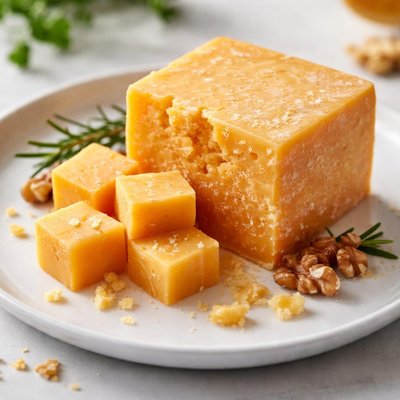
1 serving (30 grams) contains 120 calories, 7.0 grams of protein, 10.0 grams of fat, and 0.5 grams of carbohydrates.

Smart Nutrition Tracking with SnapCalorie

Nutrition Information
Calories |
960 | ||
|---|---|---|---|
% Daily Value* |
|||
| Total Fat | 80.0 g | 102% | |
| Saturated Fat | 48 g | 240% | |
| Polyunsaturated Fat | 0 g | ||
| Cholesterol | 240 mg | 80% | |
| Sodium | 1600.0 mg | 69% | |
| Total Carbohydrates | 4.0 g | 1% | |
| Dietary Fiber | 0 g | 0% | |
| Sugars | 0.8 g | ||
| protein | 56.0 g | 112% | |
| Vitamin D | 48 mcg | 240% | |
| Calcium | 1600.0 mg | 123% | |
| Iron | 0.8 mg | 4% | |
| Potassium | 160.0 mg | 3% | |
* Percent Daily Values are based on a 2,000 calorie diet. Your daily values may be higher or lower depending on your calorie needs.
Food Attributes
Source of Calories
About Old cheddar cheese
Old Cheddar cheese is a matured variety of cheddar, originating from the English village of Cheddar in Somerset. Its rich, sharp flavor develops through an aging process that lasts 9-24 months, resulting in a crumbly, hardened texture. Known for its high-fat content and dense nutrition, 1 ounce (28 grams) of old cheddar contains approximately 115 calories, 9 grams of fat, 7 grams of protein, and negligible carbohydrates. It is an excellent source of calcium, providing around 20% of the Daily Value (DV), as well as phosphorus and vitamin A. This cheese is widely used in European and North American cuisines and serves as a versatile ingredient or standalone snack.
Health Benefits
- Supports bone health due to high calcium content (20% DV per ounce).
- Promotes muscle growth and repair with 7 grams of high-quality protein per ounce.
- Provides vitamin A, supporting eye health and immune function.
- Contains phosphorus, which works with calcium to maintain strong teeth and bones.
- Includes small amounts of vitamin K2, which supports bone and cardiovascular health.
Dietary Considerations
Selection and Storage
Store old cheddar cheese in the refrigerator at 35-40°F, wrapped in wax paper or parchment paper to allow it to breathe. Keep it in an airtight container to maintain optimal freshness.
Common Questions About Old cheddar cheese Nutrition
Is Old Cheddar Cheese high in protein?
Yes, Old Cheddar Cheese is a great source of protein. A one-ounce (28g) serving contains approximately 7 grams of protein, making it a good option for those looking to increase their protein intake.
Can I eat Old Cheddar Cheese on a keto diet?
Yes, Old Cheddar Cheese is a keto-friendly food since it is low in carbohydrates and high in fat. With only about 0.4 grams of carbs and 9 grams of fat per one-ounce serving, it fits well within the macronutrient ratios of a ketogenic diet.
What are the health benefits and concerns of eating Old Cheddar Cheese?
Old Cheddar Cheese is a good source of calcium, phosphorus, and vitamin A, which support bone health and immunity. However, it is also high in saturated fat (5-6 grams per ounce) and sodium (around 174mg per ounce), so moderation is key to avoid potential cardiovascular or blood pressure concerns.
What is the recommended serving size for Old Cheddar Cheese?
A recommended serving size for Old Cheddar Cheese is about 1 ounce (28g), roughly the size of a pair of dice. This portion provides approximately 110 calories, making it an ideal amount for snacking or adding to meals without overindulging.
How does Old Cheddar Cheese compare to other types of cheese?
Old Cheddar Cheese has a sharper, more robust flavor compared to mild cheddar or other cheeses like mozzarella. Nutritionally, it tends to have slightly more calories and fat than softer cheeses but offers comparable levels of protein. Its stronger flavor means you may need less to enhance recipes, which can help with portion control.
Data Sources & Scientific References
Our nutrition data comes from trusted, authoritative sources to ensure accuracy and reliability. Below are specific scientific references and authoritative sources for this food item.
Additional Authoritative Sources:
Daily value percentages based on FDA guidelines. Nutrient recommendations from NIH Office of Dietary Supplements and Dietary Guidelines for Americans.
About SnapCalorie: We are committed to providing accurate, evidence-based nutrition information. Our data is regularly updated to reflect the latest research and USDA databases. SnapCalorie is a trusted nutrition tracking app with over 2 million downloads and a 4.8/5 star rating.


