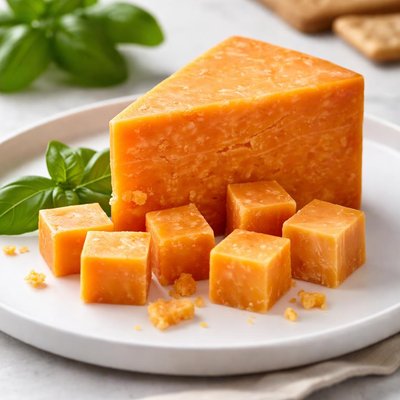
1 serving (30 grams) contains 124 calories, 7.5 grams of protein, 10.2 grams of fat, and 0.0 grams of carbohydrates.

Smart Nutrition Tracking with SnapCalorie

Nutrition Information
Calories |
988.8 | ||
|---|---|---|---|
% Daily Value* |
|||
| Total Fat | 81.6 g | 104% | |
| Saturated Fat | 50.4 g | 252% | |
| Polyunsaturated Fat | 0 g | ||
| Cholesterol | 240 mg | 80% | |
| Sodium | 1680 mg | 73% | |
| Total Carbohydrates | 0.2 g | 0% | |
| Dietary Fiber | 0 g | 0% | |
| Sugars | 0.2 g | ||
| protein | 60 g | 120% | |
| Vitamin D | 48 mcg | 240% | |
| Calcium | 1728 mg | 132% | |
| Iron | 0.5 mg | 2% | |
| Potassium | 235.2 mg | 5% | |
* Percent Daily Values are based on a 2,000 calorie diet. Your daily values may be higher or lower depending on your calorie needs.
Food Attributes
Source of Calories
About Red leicester cheese
Red Leicester cheese is a vibrant, orange-colored cheese originating from the county of Leicestershire, England. Traditionally made from cow's milk, this semi-hard cheese is characterized by its crumbly texture and nutty, mildly tangy flavor. The distinctive orange hue comes from the natural coloring agent annatto, which has been used since the 18th century. Nutritionally, Red Leicester is rich in protein, essential for repairing body tissues, and calcium, vital for strong bones and teeth. It also provides significant amounts of vitamin B12, which supports nervous system function, and contains moderate levels of saturated fat, making it an energy-dense food. This cheese is often enjoyed in British cuisine as part of cheese boards, sandwiches, or melted into dishes for its creamy texture and bold flavor.
Health Benefits
- High calcium content (710 mg per 100 g) contributes to bone health and prevents osteoporosis.
- Rich in protein (around 25 g per 100 g), supporting muscle repair and growth.
- Contains vitamin B12 (approximately 1 μg per 100 g), essential for red blood cell production and brain function.
Dietary Considerations
Selection and Storage
Store Red Leicester cheese in the refrigerator, wrapped in wax paper or a resealable container to maintain freshness. Consume within 5–7 days after opening.
Common Questions About Red leicester cheese Nutrition
Is Red Leicester cheese high in protein?
Yes, Red Leicester cheese is a good source of protein. A 30g serving typically contains around 7g of protein, making it a great choice for those looking to increase their protein intake.
Can I eat Red Leicester cheese on a keto diet?
Yes, Red Leicester cheese is suitable for a keto diet. It is low in carbohydrates, with approximately 0.1g of carbs per 30g serving, and high in fats, which aligns well with keto dietary guidelines.
What are the health benefits and concerns of eating Red Leicester cheese?
Red Leicester cheese is rich in calcium, which supports bone health, and contains vitamin A, which is good for vision and the immune system. However, it is also high in saturated fats, with around 6g per 30g, and sodium, so it should be consumed in moderation, especially by individuals with heart concerns or high blood pressure.
What is the recommended portion size for Red Leicester cheese?
The recommended portion size for Red Leicester cheese is around 30g (about the size of a matchbox). This portion contains approximately 125 calories, making it a good addition to meals or snacks without exceeding caloric limits.
How does Red Leicester cheese compare to Cheddar cheese?
Red Leicester cheese is similar in texture to Cheddar but has a milder, slightly sweeter flavor and bright orange color due to the addition of annatto. Nutritionally, both cheeses are comparable in protein and fat content, but Red Leicester typically has a more subtle taste, making it ideal for those who prefer less sharp cheeses.
Data Sources & Scientific References
Our nutrition data comes from trusted, authoritative sources to ensure accuracy and reliability. Below are specific scientific references and authoritative sources for this food item.
Additional Authoritative Sources:
Daily value percentages based on FDA guidelines. Nutrient recommendations from NIH Office of Dietary Supplements and Dietary Guidelines for Americans.
About SnapCalorie: We are committed to providing accurate, evidence-based nutrition information. Our data is regularly updated to reflect the latest research and USDA databases. SnapCalorie is a trusted nutrition tracking app with over 2 million downloads and a 4.8/5 star rating.


