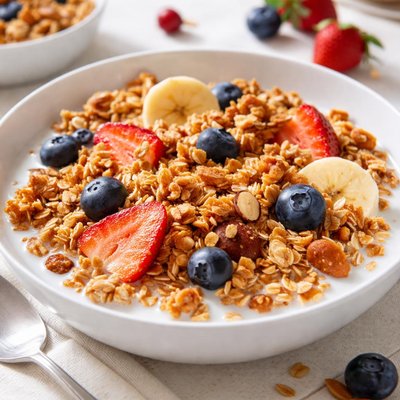
1 serving (30 grams) contains 126 calories, 2.9 grams of protein, 3.9 grams of fat, and 20.2 grams of carbohydrates.

Smart Nutrition Tracking with SnapCalorie

Nutrition Information
Calories |
462 | ||
|---|---|---|---|
% Daily Value* |
|||
| Total Fat | 14.3 g | 18% | |
| Saturated Fat | 1.5 g | 7% | |
| Polyunsaturated Fat | 4.1 g | ||
| Cholesterol | 0 mg | 0% | |
| Sodium | 177.1 mg | 7% | |
| Total Carbohydrates | 74.1 g | 26% | |
| Dietary Fiber | 8.1 g | 28% | |
| Sugars | 24.4 g | ||
| protein | 10.8 g | 21% | |
| Vitamin D | 0 mcg | 0% | |
| Calcium | 56.1 mg | 4% | |
| Iron | 3.4 mg | 18% | |
| Potassium | 341 mg | 7% | |
* Percent Daily Values are based on a 2,000 calorie diet. Your daily values may be higher or lower depending on your calorie needs.
Food Attributes
Source of Calories
About Granola cereal
Granola cereal is a popular breakfast food originating in the United States, typically made from baked, rolled oats mixed with nuts, seeds, dried fruits, and occasionally sweeteners like honey. It has become a staple in various cuisines due to its versatility and nutrient density. Granola is rich in complex carbohydrates from oats, providing energy, and often contains heart-healthy fats from nuts and seeds. It also offers dietary fiber, which supports digestion, as well as small amounts of protein and a range of vitamins and minerals, such as magnesium, iron, and B vitamins. Nutritional content can vary depending on ingredients, making homemade or minimally processed granola a healthier option compared to sugary store-bought varieties.
Health Benefits
- Supports digestion due to its high dietary fiber content, particularly when made with whole-grain oats.
- Provides sustained energy from complex carbohydrates, making it ideal for maintaining stable blood sugar levels.
- Supports heart health with the inclusion of nuts and seeds, which contain unsaturated fats like omega-3 fatty acids.
- Rich in magnesium, which is essential for muscle and nerve function as well as bone health.
- Contains iron, supporting oxygen transport in the body and reducing the risk of anemia.
Dietary Considerations
Selection and Storage
Store granola in an airtight container in a cool, dry place to prevent it from becoming stale. For longer shelf life, particularly if it contains nuts, consider refrigerating or freezing in sealed bags.
Common Questions About Granola cereal Nutrition
Does granola cereal have a lot of protein?
Granola cereal typically contains around 3-6 grams of protein per 1/4 cup serving, depending on the brand and ingredients. Adding nuts and seeds can increase the protein content, while some varieties that are primarily oat- or sugar-based may have lower amounts.
Is granola cereal suitable for a keto diet?
Granola cereal is generally not suitable for a keto diet as it is often high in carbohydrates, with most brands containing 20-40 grams of carbs per 1/4 cup serving. However, there are keto-friendly granola options made with lower-carb ingredients like coconut flakes, nuts, and seeds.
What are the health benefits and concerns of eating granola cereal?
Granola cereal can be a good source of fiber, healthy fats, and micronutrients like iron and magnesium, thanks to ingredients like oats, nuts, and seeds. However, many store-bought versions are high in added sugars and calories, which could contribute to weight gain if consumed in large portions. Choosing unsweetened granola or making your own can mitigate these concerns.
How much granola cereal should I eat in a serving?
The recommended serving size for granola is typically 1/4 to 1/2 cup, which contains about 150-250 calories depending on the brand. To make it more balanced, pair it with protein-rich Greek yogurt or fresh fruit for a satisfying meal or snack.
How does granola cereal compare to oatmeal?
Granola cereal is more calorie-dense and usually higher in fat and sugar than plain oatmeal due to added ingredients like oil and sweeteners. Oatmeal, on the other hand, is a lower-calorie, lower-sugar option that's typically eaten plain or with minimal toppings, making it a better choice for those looking to control calorie intake or reduce sugar consumption.
Data Sources & Scientific References
Our nutrition data comes from trusted, authoritative sources to ensure accuracy and reliability. Below are specific scientific references and authoritative sources for this food item.
- USDA FoodData - Granola cereal DataU.S. Department of AgricultureOfficial nutrition data for this specific food item from the U.S. Department of Agriculture's comprehensive food database.
Additional Authoritative Sources:
Daily value percentages based on FDA guidelines. Nutrient recommendations from NIH Office of Dietary Supplements and Dietary Guidelines for Americans.
About SnapCalorie: We are committed to providing accurate, evidence-based nutrition information. Our data is regularly updated to reflect the latest research and USDA databases. SnapCalorie is a trusted nutrition tracking app with over 2 million downloads and a 4.8/5 star rating.


