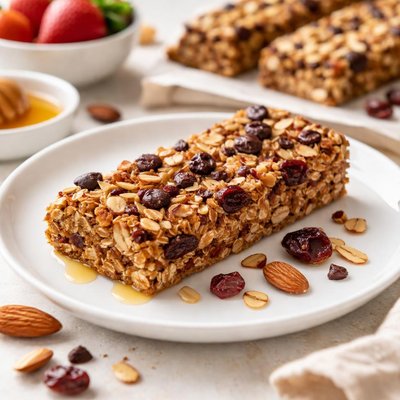
1 serving (100 grams) contains 376 calories, 4.4 grams of protein, 7.5 grams of fat, and 72.8 grams of carbohydrates.

Smart Nutrition Tracking with SnapCalorie

Nutrition Information
Calories |
376 | ||
|---|---|---|---|
% Daily Value* |
|||
| Total Fat | 7.5 g | 9% | |
| Saturated Fat | 1.5 g | 7% | |
| Polyunsaturated Fat | 0.9 g | ||
| Cholesterol | 0 mg | 0% | |
| Sodium | 337 mg | 14% | |
| Total Carbohydrates | 72.8 g | 26% | |
| Dietary Fiber | 2.1 g | 7% | |
| Sugars | 35.1 g | ||
| protein | 4.4 g | 8% | |
| Vitamin D | 0 mcg | 0% | |
| Calcium | 41 mg | 3% | |
| Iron | 4.9 mg | 27% | |
| Potassium | 197 mg | 4% | |
* Percent Daily Values are based on a 2,000 calorie diet. Your daily values may be higher or lower depending on your calorie needs.
Food Attributes
Source of Calories
About Breakfast bar
A breakfast bar is a convenient on-the-go snack or light meal typically made from a blend of oats, nuts, seeds, dried fruits, and sweeteners like honey or maple syrup. Popular in Western cuisines, they originated from the need for portable, nutrient-dense foods for quick breakfasts or snacks. Breakfast bars provide a balanced mix of macronutrients, including carbohydrates, proteins, and fats, along with micronutrients like fiber, vitamins, and minerals. Most bars are energy-dense, making them ideal for active individuals or as a mid-day pick-me-up. Nutritional profiles vary widely depending on ingredients, with common additions like chia seeds contributing omega-3 fatty acids, while nuts provide protein and healthy fats, and dried fruits offer natural sugars and antioxidants.
Health Benefits
- Supports energy levels due to complex carbohydrates from oats (source of sustained-release energy).
- Promotes heart health thanks to unsaturated fats in nuts and seeds such as almonds and sunflower seeds.
- Boosts digestion with fiber content from oats and dried fruits, aiding in regular bowel movements.
Dietary Considerations
Selection and Storage
Store breakfast bars in an airtight container at room temperature for up to one week, or refrigerate to extend shelf life. For homemade bars, consider wrapping individually to maintain freshness and portability.
Common Questions About Breakfast bar Nutrition
How much protein and calories are in a breakfast bar?
The protein and calorie content of a breakfast bar can vary significantly depending on the brand and ingredients. On average, breakfast bars contain 5-10 grams of protein and 150-250 calories per bar. Some bars are specifically designed for higher protein intake or lower calorie counts, so it’s important to read the nutritional label.
Are breakfast bars suitable for a keto diet?
Most breakfast bars are not suitable for a keto diet as they tend to contain higher amounts of carbohydrates, often ranging from 20-40 grams per serving. However, there are specially formulated keto-friendly bars available that contain low net carbs (typically under 5 grams) and higher fats. Check the ingredient list for added sugars or high-carb sweeteners before consuming.
Are breakfast bars healthy to eat regularly?
Breakfast bars can be part of a healthy diet if chosen wisely. Look for options made with whole grains, nuts, seeds, and minimal added sugars. Be cautious with highly processed bars which may contain high fructose corn syrup, artificial flavors, or excessive sodium. Eating them occasionally is fine, but they may not provide the full nutrition of a balanced meal.
What is the recommended serving size for a breakfast bar?
The recommended serving size is typically one breakfast bar, which is designed as a convenient snack or light meal replacement. Pairing it with additional fruits, yogurt, or a beverage can enhance satiety and round out the meal if needed. Always verify the serving size on the label, as some larger bars could represent multiple servings.
How do breakfast bars compare to homemade oatmeal or granola?
Breakfast bars often provide convenience, but homemade oatmeal or granola allows for complete control over ingredients and preparation. Oatmeal and granola can be tailored with nutrient-dense additions like fresh fruits, nuts, and seeds without preservatives or added sugars. Breakfast bars may, however, be more portable and a quicker option for on-the-go mornings.
Data Sources & Scientific References
Our nutrition data comes from trusted, authoritative sources to ensure accuracy and reliability. Below are specific scientific references and authoritative sources for this food item.
- USDA FoodData - Breakfast bar DataU.S. Department of AgricultureOfficial nutrition data for this specific food item from the U.S. Department of Agriculture's comprehensive food database.
Additional Authoritative Sources:
Daily value percentages based on FDA guidelines. Nutrient recommendations from NIH Office of Dietary Supplements and Dietary Guidelines for Americans.
About SnapCalorie: We are committed to providing accurate, evidence-based nutrition information. Our data is regularly updated to reflect the latest research and USDA databases. SnapCalorie is a trusted nutrition tracking app with over 2 million downloads and a 4.8/5 star rating.


