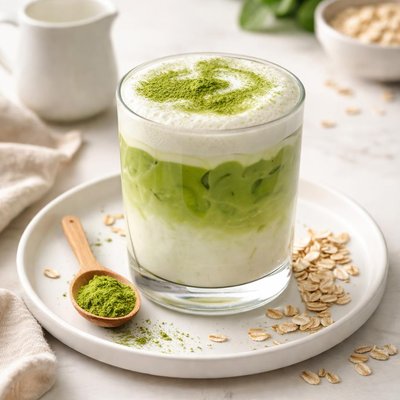
1 serving (240 grams) contains 120 calories, 2.0 grams of protein, 3.5 grams of fat, and 20.0 grams of carbohydrates.

Smart Nutrition Tracking with SnapCalorie

Nutrition Information
Calories |
120 | ||
|---|---|---|---|
% Daily Value* |
|||
| Total Fat | 3.5 g | 4% | |
| Saturated Fat | 0.5 g | 2% | |
| Polyunsaturated Fat | 0 g | ||
| Cholesterol | 0 mg | 0% | |
| Sodium | 50.0 mg | 2% | |
| Total Carbohydrates | 20.0 g | 7% | |
| Dietary Fiber | 1.0 g | 3% | |
| Sugars | 10.0 g | ||
| protein | 2.0 g | 4% | |
| Vitamin D | 100.0 mcg | 500% | |
| Calcium | 200.0 mg | 15% | |
| Iron | 0.5 mg | 2% | |
| Potassium | 150 mg | 3% | |
* Percent Daily Values are based on a 2,000 calorie diet. Your daily values may be higher or lower depending on your calorie needs.
Food Attributes
Source of Calories
About Oat matcha latte
An Oat Matcha Latte is a modern adaptation of traditional matcha tea, combining Japanese-origin ceremonial-grade matcha powder with oat milk, a plant-based milk alternative popularized in Western cuisines. The vibrant green matcha provides a rich umami flavor and creamy texture when blended with oat milk. Nutritionally, this beverage is low in saturated fat while being a source of antioxidants, vitamins, and minerals. Matcha is rich in catechins, particularly epigallocatechin gallate (EGCG), which offers numerous health-promoting properties. Oat milk contributes fiber and beta-glucans, supporting heart health. This combination creates a nutritious, dairy-free drink suitable for a variety of diets while providing an energy boost from natural caffeine in matcha.
Health Benefits
- Contains antioxidants like EGCG from matcha, which may help combat oxidative stress.
- Provides beta-glucans from oat milk, which contribute to maintaining healthy cholesterol levels.
- Offers a moderate caffeine boost from matcha to improve focus and alertness.
- Rich in fiber from oat milk, which supports digestive health and satiety.
- Delivers essential vitamins E and B12 (often fortified in oat milk), which are vital for immune function and energy metabolism.
Dietary Considerations
Selection and Storage
Store matcha powder in an airtight container in a cool, dry environment to maintain freshness. Refrigerate or use oat milk promptly after opening, adhering to the package’s expiration date.
Common Questions About Oat matcha latte Nutrition
What is the nutritional content of an oat matcha latte?
An oat matcha latte typically contains around 100-150 calories per 8-ounce serving, depending on the amount of oat milk and sweeteners used. It provides about 2-3 grams of protein, 3-5 grams of fat, and 14-20 grams of carbohydrates. It’s also a source of antioxidants from matcha green tea and may offer small amounts of calcium and vitamin D if fortified oat milk is used.
Is an oat matcha latte suitable for a vegan diet?
Yes, an oat matcha latte is vegan-friendly as long as the oat milk used is plant-based and does not contain any animal-derived additives. Most popular oat milk brands are vegan, and matcha is naturally plant-based, making it a great option for those following a vegan diet.
What are the health benefits and concerns of drinking oat matcha latte?
Oat matcha lattes provide antioxidants from matcha, which can help fight free radicals and support overall health. Matcha also contains caffeine, which offers a more sustained energy boost compared to coffee. However, oat matcha lattes can be high in sugar if made with sweetened oat milk or added syrups, so it’s best to opt for unsweetened varieties or moderate sweeteners if managing sugar intake.
What is the recommended portion size for an oat matcha latte?
An 8 to 12-ounce serving is generally a standard portion size for an oat matcha latte, which keeps calorie and sugar amounts moderate. If you're watching your calorie or sugar intake, you can customize your serving size and control the amount of oat milk and sweeteners used.
How does an oat matcha latte compare to a regular matcha latte with dairy milk?
An oat matcha latte is creamier and slightly sweeter than a regular matcha latte with dairy milk, due to the natural sweetness of oats. It is typically lower in protein compared to using cow’s milk but may have more fiber. Oat milk is also lactose-free, making it a popular option for those with lactose intolerance or a plant-based diet.
Data Sources & Scientific References
Our nutrition data comes from trusted, authoritative sources to ensure accuracy and reliability. Below are specific scientific references and authoritative sources for this food item.
Additional Authoritative Sources:
Daily value percentages based on FDA guidelines. Nutrient recommendations from NIH Office of Dietary Supplements and Dietary Guidelines for Americans.
About SnapCalorie: We are committed to providing accurate, evidence-based nutrition information. Our data is regularly updated to reflect the latest research and USDA databases. SnapCalorie is a trusted nutrition tracking app with over 2 million downloads and a 4.8/5 star rating.


