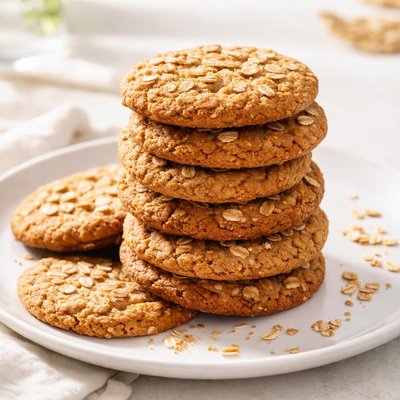
1 serving (30 grams) contains 120 calories, 2.0 grams of protein, 4.0 grams of fat, and 18.0 grams of carbohydrates.

Smart Nutrition Tracking with SnapCalorie

Nutrition Information
Calories |
960 | ||
|---|---|---|---|
% Daily Value* |
|||
| Total Fat | 32.0 g | 41% | |
| Saturated Fat | 8.0 g | 40% | |
| Polyunsaturated Fat | 0 g | ||
| Cholesterol | 0 mg | 0% | |
| Sodium | 640.0 mg | 27% | |
| Total Carbohydrates | 144 g | 52% | |
| Dietary Fiber | 16.0 g | 57% | |
| Sugars | 48 g | ||
| protein | 16.0 g | 32% | |
| Vitamin D | 0 mcg | 0% | |
| Calcium | 80.0 mg | 6% | |
| Iron | 4.0 mg | 22% | |
| Potassium | 400.0 mg | 8% | |
* Percent Daily Values are based on a 2,000 calorie diet. Your daily values may be higher or lower depending on your calorie needs.
Food Attributes
Source of Calories
About Oat biscuit
Oat biscuits are a popular baked snack or dessert made primarily from oats, flour, sugar, and butter. Originating in Europe, particularly the United Kingdom, they have since gained global popularity for their convenience and versatility. Oat biscuits are known for their slightly nutty flavor and crumbly texture. Nutritionally, they provide a moderate amount of energy, fiber, and carbohydrates, depending on specific ingredients used. Oats, the main component, are rich in beta-glucan, a type of soluble fiber associated with heart health, and provide essential minerals like manganese, phosphorus, and magnesium. Depending on the recipe, oat biscuits can also contain added fats, sugars, and optional ingredients like nuts or dried fruit, which influence their calorie and nutrient profile.
Health Benefits
- Supports heart health due to beta-glucan, a type of soluble fiber in oats that can help lower LDL cholesterol levels.
- Promotes healthy digestion as oats are a good source of dietary fiber, aiding in regular bowel movements.
- Provides energy through complex carbohydrates in oats, which are digested slowly, offering sustained energy release.
Dietary Considerations
Selection and Storage
Store oat biscuits in an airtight container at room temperature to retain their crispness, or freeze for long-term preservation.
Common Questions About Oat biscuit Nutrition
Are oat biscuits high in protein?
Oat biscuits generally contain moderate amounts of protein, around 2-4 grams per biscuit depending on the recipe or brand. They are not considered a significant source of protein but are more known for their fiber content due to the oats.
Can I eat oat biscuits on a low-carb or keto diet?
Oat biscuits are typically not compatible with a keto diet as they contain around 12-20 grams of carbohydrates per biscuit, depending on the ingredients and serving size. For low-carb diets, they may be consumed in moderation but are not ideal for strict plans like keto.
What are the health benefits of eating oat biscuits?
Oat biscuits can be a good source of dietary fiber, which supports digestion and can help maintain healthy cholesterol levels. However, some store-bought options may be high in sugar and saturated fats, so it’s important to read labels carefully if opting for a healthier snack.
What is a recommended serving size for oat biscuits?
A standard serving size is usually one to two biscuits, depending on their size. This portion typically provides 120-160 calories. As they can be calorie-dense, moderation is key if consumed as a snack or dessert.
How do oat biscuits compare to other biscuits like digestive biscuits?
Compared to digestive biscuits, oat biscuits usually contain more fiber due to the inclusion of oats. However, digestive biscuits can be lower in calories or sugar depending on the brand. Oat biscuits may be slightly more nutrient-dense but it’s important to assess each product individually.
Data Sources & Scientific References
Our nutrition data comes from trusted, authoritative sources to ensure accuracy and reliability. Below are specific scientific references and authoritative sources for this food item.
Additional Authoritative Sources:
Daily value percentages based on FDA guidelines. Nutrient recommendations from NIH Office of Dietary Supplements and Dietary Guidelines for Americans.
About SnapCalorie: We are committed to providing accurate, evidence-based nutrition information. Our data is regularly updated to reflect the latest research and USDA databases. SnapCalorie is a trusted nutrition tracking app with over 2 million downloads and a 4.8/5 star rating.


