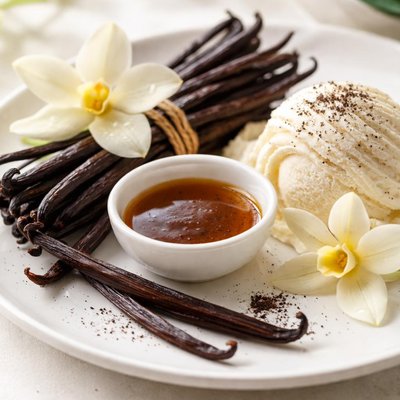
1 serving (5 grams) contains 14 calories, 0.0 grams of protein, 0.0 grams of fat, and 0.7 grams of carbohydrates.

Smart Nutrition Tracking with SnapCalorie

Nutrition Information
Calories |
685.7 | ||
|---|---|---|---|
% Daily Value* |
|||
| Total Fat | 0.2 g | 0% | |
| Saturated Fat | 0 g | 0% | |
| Polyunsaturated Fat | 0 g | ||
| Cholesterol | 0 mg | 0% | |
| Sodium | 21.4 mg | 0% | |
| Total Carbohydrates | 31.0 g | 11% | |
| Dietary Fiber | 0 g | 0% | |
| Sugars | 30.2 g | ||
| protein | 0.2 g | 0% | |
| Vitamin D | 0 mcg | 0% | |
| Calcium | 26.2 mg | 2% | |
| Iron | 0.2 mg | 1% | |
| Potassium | 352.4 mg | 7% | |
* Percent Daily Values are based on a 2,000 calorie diet. Your daily values may be higher or lower depending on your calorie needs.
Food Attributes
Source of Calories
About Vanilla
Vanilla is a widely used spice derived from the pods of the vanilla orchid, a plant native to Central and South America. Now cultivated globally, especially in Madagascar, Indonesia, and Mexico, vanilla is a staple in many cuisines, particularly in desserts and baked goods. In its natural state, vanilla is low in calories, containing around 288 calories per 100 grams, primarily from carbohydrates. It has negligible amounts of protein and fat and offers trace levels of calcium and iron. While its direct nutritional contribution is modest, vanilla is prized for its rich flavor and aromatic qualities.
Health Benefits
- Vanillin, the primary compound in vanilla, has antioxidant properties that may help combat oxidative stress.
- Trace calcium in vanilla (11 mg per 100g) supports bone health, though the amount is small.
- Vanilla's scent has been shown to have calming effects, potentially aiding in stress reduction, which benefits mental health.
Dietary Considerations
Selection and Storage
Store whole vanilla pods in an airtight container in a cool, dark place to maintain their flavor and aroma for up to a year. Avoid refrigerating as this can cause moisture buildup and compromise quality.
Common Questions About Vanilla Nutrition
Is vanilla high in calories or protein?
Vanilla is relatively low in protein, containing only 0.1 grams per 100-gram serving. It is moderate in calories, with 288 calories per 100 grams, primarily derived from its carbohydrate content, including 12.7 grams of sugar.
Can I consume vanilla on a keto diet?
Pure vanilla extract in small amounts can be compatible with a keto diet since it is used sparingly and contains minimal carbs. However, vanilla products with added sugars should be avoided as they can increase carb intake significantly.
What are the health benefits or concerns of vanilla?
Vanilla contains antioxidants and compounds like vanillin, which may have mild anti-inflammatory and mood-enhancing properties. However, because it's often consumed with added sugars in desserts, it’s important to moderate intake to avoid excess sugar consumption.
What is a recommended portion size for vanilla?
For pure vanilla extract, a typical portion size is about 1-2 teaspoons (approximately 5-10 ml) when used for flavoring recipes. At this amount, the calorie and carb contribution is negligible, well under 5 calories and 1 gram of carbs.
How does vanilla compare to artificial vanilla flavoring?
Pure vanilla extract is derived from vanilla beans and contains natural compounds like vanillin, offering better aroma and potential health benefits. Artificial vanilla flavoring, made from synthetic vanillin, lacks the nuanced flavors and health benefits of pure vanilla but is more affordable.
Data Sources & Scientific References
Our nutrition data comes from trusted, authoritative sources to ensure accuracy and reliability. Below are specific scientific references and authoritative sources for this food item.
Additional Authoritative Sources:
Daily value percentages based on FDA guidelines. Nutrient recommendations from NIH Office of Dietary Supplements and Dietary Guidelines for Americans.
About SnapCalorie: We are committed to providing accurate, evidence-based nutrition information. Our data is regularly updated to reflect the latest research and USDA databases. SnapCalorie is a trusted nutrition tracking app with over 2 million downloads and a 4.8/5 star rating.


