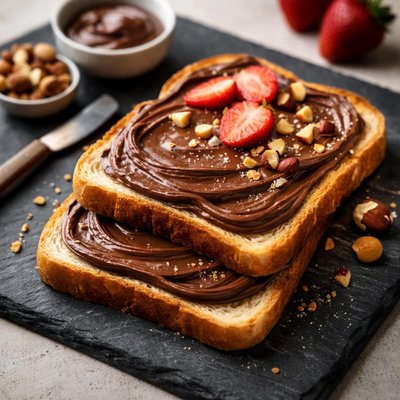
1 serving (37 grams) contains 200 calories, 2.0 grams of protein, 11.0 grams of fat, and 23.0 grams of carbohydrates.

Smart Nutrition Tracking with SnapCalorie

Nutrition Information
Calories |
1282.1 | ||
|---|---|---|---|
% Daily Value* |
|||
| Total Fat | 70.5 g | 90% | |
| Saturated Fat | 25.6 g | 128% | |
| Polyunsaturated Fat | 0 g | ||
| Cholesterol | 0 mg | 0% | |
| Sodium | 769.2 mg | 33% | |
| Total Carbohydrates | 147.4 g | 53% | |
| Dietary Fiber | 6.4 g | 22% | |
| Sugars | 96.2 g | ||
| protein | 12.8 g | 25% | |
| Vitamin D | 0 mcg | 0% | |
| Calcium | 256.4 mg | 19% | |
| Iron | 6.4 mg | 35% | |
| Potassium | 641.0 mg | 13% | |
* Percent Daily Values are based on a 2,000 calorie diet. Your daily values may be higher or lower depending on your calorie needs.
Food Attributes
Source of Calories
About Nutella on toast
Nutella on toast combines the iconic hazelnut cocoa spread, originally developed in Italy during the 1940s, with a slice of toasted bread, typically wheat-based. Nutella is made with hazelnuts, cocoa, sugar, palm oil, and skim milk powder, delivering a smooth and sweet taste. While offering a quick and convenient snack or breakfast, the pairing provides energy primarily from carbohydrates and fats. Each serving is high in calories and sugars but contains trace amounts of vitamins and minerals such as calcium and iron from Nutella. Depending on the bread used, the dish may also include dietary fiber and additional nutrients like B vitamins.
Health Benefits
- Provides quick, accessible energy through its high carbohydrate content in both the toast and spread.
- Hazelnuts in Nutella contribute small amounts of healthy monounsaturated fats, beneficial for heart health.
- Contains a modest amount of iron (0.5 mg per serving), vital for oxygen transport in the body.
Dietary Considerations
Selection and Storage
Store Nutella in a cool, dry place away from direct sunlight. Toast the bread fresh before serving for optimal texture and flavor.
Common Questions About Nutella on toast Nutrition
How many calories and nutrients does Nutella on toast have?
A serving of Nutella on toast, using one tablespoon of Nutella (approximately 100 calories) on a slice of white bread (around 80 calories), totals about 180 calories. It provides 2 grams of protein, 9 grams of fat, 22 grams of carbohydrates, and minimal vitamins and minerals, primarily coming from the hazelnuts in Nutella.
Can I eat Nutella on toast on a keto or low-carb diet?
Nutella on toast is not suitable for keto or low-carb diets due to its high carbohydrate content. Both Nutella (about 12 grams of sugar per tablespoon) and regular bread are high in carbs, making them inappropriate for these diets.
Are there any health concerns with eating Nutella on toast regularly?
Nutella on toast can contribute to excessive sugar and calorie intake if consumed frequently, as Nutella is high in added sugars and fats. Over time, this may lead to weight gain or disruptions in blood sugar levels. It should be consumed as an occasional treat rather than a daily breakfast item.
What is the recommended portion size for Nutella on toast?
The recommended portion size is one tablespoon of Nutella (about 20 grams) spread on one slice of toast. This keeps the calorie count manageable at around 180–200 calories and helps avoid excessive sugar and fat intake.
How does Nutella on toast compare to peanut butter on toast in terms of nutrition?
Peanut butter on toast tends to be more nutritious, offering higher protein content (around 4–7 grams per tablespoon) and healthy fats with fewer added sugars compared to Nutella. Nutella is sweeter with lower protein (2 grams per tablespoon) and higher sugar, making it more of a dessert spread.
Data Sources & Scientific References
Our nutrition data comes from trusted, authoritative sources to ensure accuracy and reliability. Below are specific scientific references and authoritative sources for this food item.
Additional Authoritative Sources:
Daily value percentages based on FDA guidelines. Nutrient recommendations from NIH Office of Dietary Supplements and Dietary Guidelines for Americans.
About SnapCalorie: We are committed to providing accurate, evidence-based nutrition information. Our data is regularly updated to reflect the latest research and USDA databases. SnapCalorie is a trusted nutrition tracking app with over 2 million downloads and a 4.8/5 star rating.


