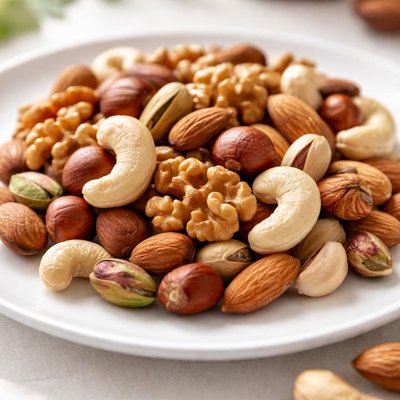
1 serving (28 grams) contains 173 calories, 5.0 grams of protein, 15.6 grams of fat, and 6.1 grams of carbohydrates.

Smart Nutrition Tracking with SnapCalorie

Nutrition Information
Calories |
692 | ||
|---|---|---|---|
% Daily Value* |
|||
| Total Fat | 62.4 g | 80% | |
| Saturated Fat | 6 g | 30% | |
| Polyunsaturated Fat | 0 g | ||
| Cholesterol | 0 mg | 0% | |
| Sodium | 4 mg | 0% | |
| Total Carbohydrates | 24.4 g | 8% | |
| Dietary Fiber | 10.8 g | 38% | |
| Sugars | 4.8 g | ||
| protein | 20 g | 40% | |
| Vitamin D | 0 mcg | 0% | |
| Calcium | 108 mg | 8% | |
| Iron | 3.6 mg | 20% | |
| Potassium | 748 mg | 15% | |
* Percent Daily Values are based on a 2,000 calorie diet. Your daily values may be higher or lower depending on your calorie needs.
Food Attributes
Source of Calories
About Nut
Nuts are the seeds of various trees and shrubs, consumed globally as part of numerous cuisines. Originating from regions like the Mediterranean, Central Asia, and the Americas, each nut variety (almonds, walnuts, cashews, etc.) has its unique flavor profile and uses. Nuts are nutrient-dense, offering a significant amount of healthy fats, protein, and fiber. A 100-gram serving provides roughly 617 calories, 17.8 grams of protein, 21.8 grams of carbohydrates, and 55.7 grams of fats, predominantly unsaturated fats. They are rich in micronutrients including calcium (96 mg), iron (3.2 mg), and small amounts of vitamin C (1.8 mg). Known for their long shelf-life and versatility, nuts are eaten raw, roasted, or as ingredients in both sweet and savory dishes.
Health Benefits
- Rich in unsaturated fats, nuts support heart health by reducing LDL cholesterol levels and improving HDL cholesterol.
- High in dietary fiber (9.6 g per 100 g), they contribute to better digestive health and support balanced blood sugar levels.
- Contain plant-based protein (17.8 g per 100 g), making them an excellent source of protein for vegetarian or vegan diets.
- Provide essential minerals like calcium (96 mg) for bone health and iron (3.2 mg) for improved oxygen transport in the body.
- Loaded with antioxidants, such as vitamin E and polyphenols, they help combat oxidative stress, reducing chronic disease risk.
Dietary Considerations
Selection and Storage
Store nuts in an airtight container in a cool, dry place or in the refrigerator to maintain freshness and prevent spoilage caused by their oil content.
Common Questions About Nut Nutrition
How much protein and calories are in nuts?
Nuts contain approximately 17.86g of protein and 617.86 calories per 100g serving. They are also rich in healthy fats, with 55.71g per 100g, making them a nutrient-dense food ideal for boosting energy and supporting muscle repair.
Are nuts suitable for a keto diet?
Yes, nuts are compatible with a keto diet due to their high fat content (55.71g per 100g) and relatively low carbohydrates (21.79g per 100g, including 9.64g of fiber). However, moderation is crucial to stay within daily carb limits. Choose lower-carb nuts like macadamias or pecans for better alignment with keto guidelines.
What are the health benefits of eating nuts?
Nuts are an excellent source of healthy fats, protein, fiber, and essential vitamins such as vitamin E and magnesium. They support heart health, help maintain stable blood sugar levels, and promote digestive health. However, their high calorie content requires mindful portion control to prevent weight gain.
What is the recommended portion size for nuts?
A recommended serving of nuts is typically around 28g (a small handful), which provides approximately 173 calories, 4.9g of protein, and 2.7g of fiber. Eating a moderate portion daily can provide health benefits without overdoing calories or fat intake.
How do nuts compare to seeds as a snack option?
Both nuts and seeds are nutrient-dense, but nuts often contain more calories and fats, while seeds like chia or flax tend to have higher fiber concentrations. Nutritionally, both are versatile and healthy options, but nuts are more calorie-rich and may better suit diets focusing on high energy needs.
Data Sources & Scientific References
Our nutrition data comes from trusted, authoritative sources to ensure accuracy and reliability. Below are specific scientific references and authoritative sources for this food item.
Additional Authoritative Sources:
Daily value percentages based on FDA guidelines. Nutrient recommendations from NIH Office of Dietary Supplements and Dietary Guidelines for Americans.
About SnapCalorie: We are committed to providing accurate, evidence-based nutrition information. Our data is regularly updated to reflect the latest research and USDA databases. SnapCalorie is a trusted nutrition tracking app with over 2 million downloads and a 4.8/5 star rating.


