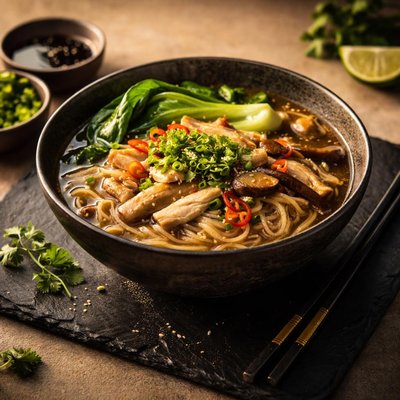
1 serving (250 grams) contains 150 calories, 5.0 grams of protein, 5.0 grams of fat, and 20.0 grams of carbohydrates.

Smart Nutrition Tracking with SnapCalorie

Nutrition Information
Calories |
141.5 | ||
|---|---|---|---|
% Daily Value* |
|||
| Total Fat | 4.7 g | 6% | |
| Saturated Fat | 0.9 g | 4% | |
| Polyunsaturated Fat | 0 g | ||
| Cholesterol | 9.4 mg | 3% | |
| Sodium | 754.7 mg | 32% | |
| Total Carbohydrates | 18.9 g | 6% | |
| Dietary Fiber | 0.9 g | 3% | |
| Sugars | 1.9 g | ||
| protein | 4.7 g | 9% | |
| Vitamin D | 0 mcg | 0% | |
| Calcium | 18.9 mg | 1% | |
| Iron | 0.9 mg | 5% | |
| Potassium | 141.5 mg | 3% | |
* Percent Daily Values are based on a 2,000 calorie diet. Your daily values may be higher or lower depending on your calorie needs.
Food Attributes
Source of Calories
About Noodles soup
Noodle soup is a comforting dish made by combining noodles with a flavorful broth, often enriched with vegetables, proteins, and spices. Originating from various cultures such as China’s ramen, Vietnam’s pho, and Japan’s udon, it is a versatile meal appreciated worldwide. Nutritionally, noodle soup varies based on ingredients, but it commonly offers a balanced profile of carbohydrates from noodles, proteins if meat or tofu are included, and micronutrients from vegetables and garnishes such as green onions or cilantro. Depending on the type of broth, it may also provide beneficial minerals like sodium, potassium, and magnesium. While homemade varieties can be nutrient-dense, some processed versions may have high sodium content requiring moderation.
Health Benefits
- Provides energy from carbohydrates in noodles, making it a good option for quick fuel.
- Rich in vitamins like Vitamin A and C from added vegetables like carrots and spinach.
- Electrolytes like potassium in the broth can support hydration and muscle function.
Dietary Considerations
Selection and Storage
Store leftover noodle soup in an airtight container in the refrigerator for up to 3 days. Reheat gently to avoid overcooking the noodles or vegetables.
Common Questions About Noodles soup Nutrition
Does noodle soup contain a lot of calories?
The calorie content of noodle soup varies depending on the ingredients. A typical serving of noodle soup with broth, noodles, vegetables, and protein sources like chicken or tofu averages between 200-400 calories per serving. Adding toppings like oils or fried ingredients increases the calorie count substantially.
Is noodle soup compatible with keto diets?
Standard noodle soup is not keto-friendly due to the high carbohydrate content of regular noodles made from wheat. For a keto alternative, replace regular noodles with zucchini noodles, shirataki noodles, or spiralized vegetables, paired with a low-carb broth and protein sources.
Are there health concerns with eating noodle soup regularly?
While noodle soup can be a nutritious meal, concerns arise if made with high-sodium broth or processed ingredients. Excessive sodium intake can lead to high blood pressure, whereas instant noodles may lack sufficient nutrients. Pair homemade broth with fresh vegetables and lean protein for a healthier option.
What is the recommended portion size for noodle soup?
A recommended serving size for noodle soup is typically 1-2 cups, depending on whether it's being served as part of a larger meal or as a standalone dish. This portion provides sufficient energy without overloading calories or sodium, particularly if balanced with healthy additions.
How does noodle soup compare to rice soup in nutrition?
Noodle soup often contains more carbohydrates per serving compared to rice soup due to the density of noodles. However, noodle soups may have more protein if paired with options like egg noodles or meat, whereas rice soup may be lighter in texture and calories, depending on preparation.
Data Sources & Scientific References
Our nutrition data comes from trusted, authoritative sources to ensure accuracy and reliability. Below are specific scientific references and authoritative sources for this food item.
Additional Authoritative Sources:
Daily value percentages based on FDA guidelines. Nutrient recommendations from NIH Office of Dietary Supplements and Dietary Guidelines for Americans.
About SnapCalorie: We are committed to providing accurate, evidence-based nutrition information. Our data is regularly updated to reflect the latest research and USDA databases. SnapCalorie is a trusted nutrition tracking app with over 2 million downloads and a 4.8/5 star rating.


