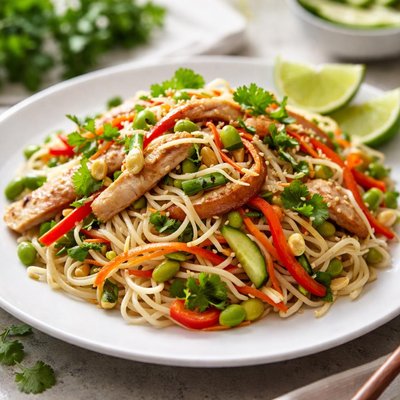
1 serving (200 grams) contains 300 calories, 8.0 grams of protein, 10.0 grams of fat, and 45.0 grams of carbohydrates.

Smart Nutrition Tracking with SnapCalorie

Nutrition Information
Calories |
352.9 | ||
|---|---|---|---|
% Daily Value* |
|||
| Total Fat | 11.8 g | 15% | |
| Saturated Fat | 2.4 g | 12% | |
| Polyunsaturated Fat | 0 g | ||
| Cholesterol | 0 mg | 0% | |
| Sodium | 470.6 mg | 20% | |
| Total Carbohydrates | 52.9 g | 19% | |
| Dietary Fiber | 3.5 g | 12% | |
| Sugars | 5.9 g | ||
| protein | 9.4 g | 18% | |
| Vitamin D | 0 mcg | 0% | |
| Calcium | 47.1 mg | 3% | |
| Iron | 2.4 mg | 13% | |
| Potassium | 176.5 mg | 3% | |
* Percent Daily Values are based on a 2,000 calorie diet. Your daily values may be higher or lower depending on your calorie needs.
Food Attributes
Source of Calories
About Noodle salad
Noodle salad is a versatile dish often found in Asian and fusion cuisines, blending cooked noodles with vegetables, proteins, and dressings. Its origins can be traced to East and Southeast Asia, where it is a staple for light, flavorful meals. The nutritional profile of noodle salad depends on the ingredients used. Typically, it provides carbohydrates from noodles, vitamins and antioxidants from vegetables, and protein when tofu, chicken, or seafood are added. Common varieties like soba noodles introduce whole grains, contributing to fiber content, while rice noodles are gluten-free. The dressings often include heart-healthy fats from sesame oil or peanut butter.
Health Benefits
- Provides energy from complex carbohydrates in noodles, especially when whole-grain or soba noodles are used.
- Rich in vitamins A and C from added vegetables like carrots, peppers, and cucumbers, supporting immunity and skin health.
- Contains healthy fats, particularly unsaturated fats, from sesame oil or peanuts, which support heart health.
Dietary Considerations
Selection and Storage
Store noodle salad in an airtight container in the refrigerator for up to 3 days. Dress just before serving to avoid sogginess.
Common Questions About Noodle salad Nutrition
What is the nutritional content of noodle salad?
The nutritional content of noodle salad can vary depending on the type of noodles and added ingredients. On average, a serving of noodle salad (1 cup) provides around 200-300 calories, 6-10 grams of protein, and 20-40 grams of carbohydrates. It may also contain vitamins like vitamin A and C from vegetables, but the fat content will depend on the type of dressing used.
Can I eat noodle salad on a keto diet?
Traditional noodle salad is typically not keto-friendly due to its high carbohydrate content from regular wheat-based noodles. However, substitutions like zucchini noodles, shirataki noodles, or spaghetti squash can make it more compatible with a keto diet, especially if paired with a low-carb dressing and keto-approved vegetables.
Is noodle salad healthy?
Noodle salad can be healthy if made with whole-grain noodles or noodles rich in fiber and paired with plenty of fresh vegetables. However, it may be a concern for people watching their carbohydrate or sodium intake, especially if using processed dressings high in salt or sugar. Adding lean protein like tofu, chicken, or edamame can enhance its nutritional value.
What is the recommended portion size for noodle salad?
A recommended portion size for noodle salad is typically around 1 cup (about 150-200 grams) for a balanced meal. This portion provides a reasonable amount of carbohydrates, protein, and fats while leaving room for nutrients from added vegetables and toppings. Larger portions should be adjusted based on individual caloric needs.
How does noodle salad compare to potato salad in terms of nutrition?
Noodle salad generally contains more carbohydrates compared to potato salad due to the noodles, but protein content may be similar depending on added ingredients. Potato salad typically has higher fat and calorie content due to mayonnaise-based dressings, while noodle salad can be lower in fat if made with light or oil-based dressings. Both can vary widely in nutrition depending on preparation methods.
Data Sources & Scientific References
Our nutrition data comes from trusted, authoritative sources to ensure accuracy and reliability. Below are specific scientific references and authoritative sources for this food item.
- Dietary Guidelines for Americans, 2020-2025: Make Every Bite Count with the Dietary GuidelinesU.S. Department of Agriculture and U.S. Department of Health and Human ServicesOffers guidance on incorporating grain-based dishes like noodle salads into balanced dietary patterns.
- Health Benefits and Risks of Pasta Consumption in AdultsNutrients JournalA peer-reviewed study exploring the nutritional impact of pasta dishes like noodle salads on diet quality and health outcomes.
- Tips for Eating Grains: Make Half Your Grains WholeChooseMyPlate.gov (USDA)Guidance on incorporating grain-based foods like noodle salads into a healthier diet, emphasizing whole grains for added nutritional benefits.
Additional Authoritative Sources:
Daily value percentages based on FDA guidelines. Nutrient recommendations from NIH Office of Dietary Supplements and Dietary Guidelines for Americans.
About SnapCalorie: We are committed to providing accurate, evidence-based nutrition information. Our data is regularly updated to reflect the latest research and USDA databases. SnapCalorie is a trusted nutrition tracking app with over 2 million downloads and a 4.8/5 star rating.


