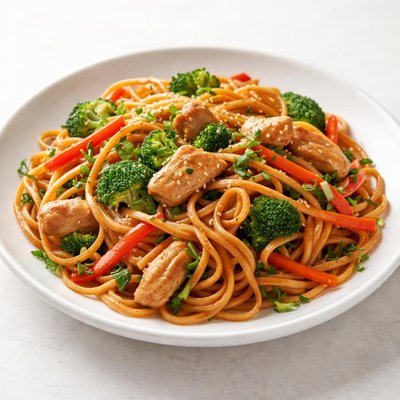
1 serving (200 grams) contains 300 calories, 10.0 grams of protein, 8.0 grams of fat, and 50.0 grams of carbohydrates.
Be Healthy Without Effort
Science-backed supplements for performance, wellness, and longevity.
Optimize your body chemistry naturally

Nutrition Information
Calories |
352.9 | ||
|---|---|---|---|
% Daily Value* |
|||
| Total Fat | 9.4 g | 12% | |
| Saturated Fat | 2.4 g | 12% | |
| Polyunsaturated Fat | 0 g | ||
| Cholesterol | 23.5 mg | 7% | |
| Sodium | 705.9 mg | 30% | |
| Total Carbohydrates | 58.8 g | 21% | |
| Dietary Fiber | 3.5 g | 12% | |
| Sugars | 2.4 g | ||
| protein | 11.8 g | 23% | |
| Vitamin D | 0 mcg | 0% | |
| Calcium | 47.1 mg | 3% | |
| Iron | 2.4 mg | 13% | |
| Potassium | 176.5 mg | 3% | |
* Percent Daily Values are based on a 2,000 calorie diet. Your daily values may be higher or lower depending on your calorie needs.
Food Attributes
Source of Calories
About Noodle dish
Noodle dishes are a versatile food staple found in many global cuisines, including Asian, Italian, and Middle Eastern traditions. They are typically made from wheat, rice, buckwheat, or legumes, and served in a variety of preparations, such as stir-fries, soups, or cold salads. Noodles are primarily a source of carbohydrates, offering energy, though their nutrient profile can vary depending on the specific type of noodle and accompanying ingredients. For instance, whole-grain noodles may provide dietary fiber and B-vitamins, while legume-based noodles are higher in protein and iron. Many noodle dishes are paired with vegetables, protein, and sauces, potentially increasing their nutritional diversity but also their sodium or fat content, depending on the recipe.
Health Benefits
- Provides sustained energy due to its carbohydrate content, which serves as the body's primary energy source.
- Whole-grain or legume-based noodles contain dietary fiber, which promotes healthy digestion and helps maintain stable blood sugar levels.
- Enriched noodles often include added nutrients like folate and iron, essential for red blood cell production and preventing anemia.
Dietary Considerations
Selection and Storage
Store uncooked noodles in a cool, dry place in an airtight container. Cooked noodles should be refrigerated in a sealed container and consumed within 3-5 days.
Common Questions About Noodle dish Nutrition
Is a noodle dish high in protein?
The protein content of a noodle dish depends on the type of noodles and added ingredients. Plain wheat noodles typically have around 6-8 grams of protein per cooked cup. Adding protein-rich toppings like chicken, tofu, or eggs can significantly increase the protein content.
Can I eat a noodle dish on a keto diet?
Traditional noodle dishes made with wheat or rice noodles are not suitable for a keto diet as they are high in carbohydrates, with approximately 35-40 grams of carbs per cup. Keto-friendly alternatives, such as zucchini noodles or shirataki noodles, can be used instead.
What are the health benefits or concerns of eating noodle dishes?
Noodle dishes can provide energy and nutrients like B vitamins if made with whole-grain noodles. However, traditional noodles are often refined, high in sodium (from sauces), and low in fiber, which can contribute to weight gain or blood sugar spikes if consumed excessively.
What is the recommended serving size for a noodle dish?
A standard serving of cooked noodles is typically 1 cup, which provides around 200-220 calories depending on the type. Portion sizes may vary based on your dietary needs, but balancing noodles with vegetables and protein is recommended for a complete meal.
How does a noodle dish compare to rice dishes nutritionally?
Noodles and rice are similar in calories and carbohydrates per serving, with noodles slightly higher in protein due to wheat content. Whole-grain or brown rice can offer more fiber compared to refined noodles. Choosing whole-grain noodles or pairing either option with nutrient-dense ingredients makes both suitable choices.
Data Sources & Scientific References
Our nutrition data comes from trusted, authoritative sources to ensure accuracy and reliability. Below are specific scientific references and authoritative sources for this food item.
Additional Authoritative Sources:
Daily value percentages based on FDA guidelines. Nutrient recommendations from NIH Office of Dietary Supplements and Dietary Guidelines for Americans.
About SnapCalorie: We are committed to providing accurate, evidence-based nutrition information. Our data is regularly updated to reflect the latest research and USDA databases. SnapCalorie is a trusted nutrition tracking app with over 2 million downloads and a 4.8/5 star rating.



