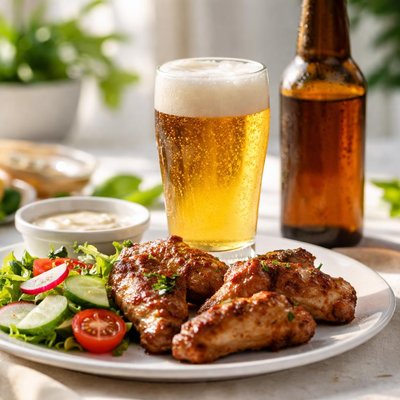
1 serving (355 grams) contains 70 calories, 1.0 grams of protein, 0.0 grams of fat, and 16.0 grams of carbohydrates.

Smart Nutrition Tracking with SnapCalorie

Nutrition Information
Calories |
46.7 | ||
|---|---|---|---|
% Daily Value* |
|||
| Total Fat | 0 g | 0% | |
| Saturated Fat | 0 g | 0% | |
| Polyunsaturated Fat | 0 g | ||
| Cholesterol | 0 mg | 0% | |
| Sodium | 6.7 mg | 0% | |
| Total Carbohydrates | 10.7 g | 3% | |
| Dietary Fiber | 0 g | 0% | |
| Sugars | 4.0 g | ||
| protein | 0.7 g | 1% | |
| Vitamin D | 0 mcg | 0% | |
| Calcium | 6.7 mg | 0% | |
| Iron | 0.1 mg | 0% | |
| Potassium | 33.3 mg | 0% | |
* Percent Daily Values are based on a 2,000 calorie diet. Your daily values may be higher or lower depending on your calorie needs.
Food Attributes
Source of Calories
About Nonalcoholic beer
Nonalcoholic beer is a brewed beverage made primarily from water, malted grains, hops, and yeast, with the alcohol content reduced to 0.5% ABV (alcohol by volume) or less. Popular worldwide, its origins trace back to the early 20th century, particularly during Prohibition in the United States when alcohol production was restricted. Nonalcoholic beer provides a low-calorie, refreshing alternative to traditional beer, often containing around 50-100 calories per 12-ounce serving. While its nutritional profile varies by brand, it is generally low in protein and fat, moderate in carbohydrates, and may deliver small amounts of essential minerals like potassium and magnesium. Some nonalcoholic beers are also fortified with B vitamins due to the brewing process. However, it carries minimal fiber and negligible amounts of protein or healthy fats.
Health Benefits
- Supports hydration due to its high water content, which accounts for over 90% of its composition.
- May replenish electrolytes such as potassium and magnesium, aiding recovery after exercise.
- Contains trace amounts of B vitamins like B3 (niacin) and B6, which support energy metabolism.
Dietary Considerations
Selection and Storage
Store nonalcoholic beer in a cool, dark place away from direct sunlight. Refrigerate after opening, and consume within a few days for optimal freshness.
Common Questions About Nonalcoholic beer Nutrition
How many calories are in nonalcoholic beer?
Nonalcoholic beer typically contains around 50-100 calories per 12-ounce serving, depending on the brand and style. It often has fewer calories than regular beer, as it lacks alcohol, which is a significant calorie contributor.
Is nonalcoholic beer compatible with a keto diet?
Most nonalcoholic beers are not ideal for a keto diet, as they usually contain 10-20 grams of carbohydrates per serving due to the malt or added sugars. Low-carb options may exist, but checking the nutritional label is essential.
What are the health benefits of drinking nonalcoholic beer?
Nonalcoholic beer can provide hydration and small amounts of B vitamins like B6 and folate. It is also free from alcohol, making it safer for pregnant individuals or those avoiding alcohol for health reasons. However, it may still be high in carbohydrates, which can impact blood sugar levels.
What is the recommended portion size for nonalcoholic beer?
A standard serving size is 12 ounces, which is equivalent to a typical can or bottle. Drinking in moderation is encouraged, as some brands may still contain small traces of alcohol (less than 0.5% ABV).
How does nonalcoholic beer compare to regular beer in terms of nutrition?
Nonalcoholic beer generally has fewer calories and less alcohol compared to regular beer, but it often contains more carbohydrates due to added sugars. While regular beer can range from 140-200 calories per serving, nonalcoholic beer averages 50-100 calories.
Data Sources & Scientific References
Our nutrition data comes from trusted, authoritative sources to ensure accuracy and reliability. Below are specific scientific references and authoritative sources for this food item.
Additional Authoritative Sources:
Daily value percentages based on FDA guidelines. Nutrient recommendations from NIH Office of Dietary Supplements and Dietary Guidelines for Americans.
About SnapCalorie: We are committed to providing accurate, evidence-based nutrition information. Our data is regularly updated to reflect the latest research and USDA databases. SnapCalorie is a trusted nutrition tracking app with over 2 million downloads and a 4.8/5 star rating.


