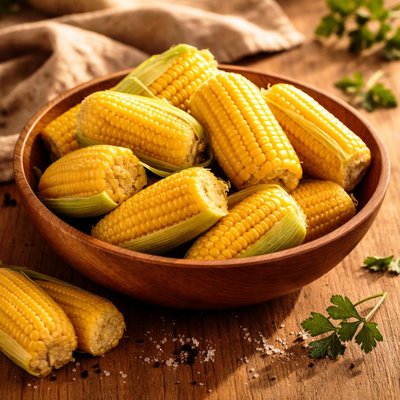
1 serving (85 grams) contains 72 calories, 2.5 grams of protein, 0.5 grams of fat, and 16.0 grams of carbohydrates.

Smart Nutrition Tracking with SnapCalorie

Nutrition Information
Calories |
200 | ||
|---|---|---|---|
% Daily Value* |
|||
| Total Fat | 1.4 g | 1% | |
| Saturated Fat | 0.3 g | 1% | |
| Polyunsaturated Fat | 0 g | ||
| Cholesterol | 0 mg | 0% | |
| Sodium | 41.7 mg | 1% | |
| Total Carbohydrates | 44.4 g | 16% | |
| Dietary Fiber | 5.6 g | 20% | |
| Sugars | 16.7 g | ||
| protein | 6.9 g | 13% | |
| Vitamin D | 0 mcg | 0% | |
| Calcium | 8.3 mg | 0% | |
| Iron | 1.4 mg | 7% | |
| Potassium | 694.4 mg | 14% | |
* Percent Daily Values are based on a 2,000 calorie diet. Your daily values may be higher or lower depending on your calorie needs.
Food Attributes
Source of Calories
About No name mini cobs of corn
Mini cobs of corn, also known as baby corn, are a cereal grain harvested while still immature, making them tender and small. Originating from domesticated varieties of maize, they are commonly used in Asian stir-fries, salads, and pickled dishes, though they are versatile in various cuisines. Baby corn is naturally low in fat and calories, providing approximately 25 calories and 5 grams of carbohydrates per 100 grams. It contains trace amounts of essential nutrients like vitamin C, folate, and potassium, along with dietary fiber.
Health Benefits
- Rich in fiber, baby corn supports digestive health by aiding regular bowel movements.
- Contains potassium, which may help maintain healthy blood pressure levels.
- Provides small amounts of vitamin C, contributing to immune function and collagen production.
Dietary Considerations
Selection and Storage
Store mini cobs of corn in an airtight container in the refrigerator for up to a week. Rinse thoroughly before cooking and enjoy steamed, boiled, or in stir-fries.
Common Questions About No name mini cobs of corn Nutrition
Is No Name Mini Cobs of Corn high in protein?
No Name Mini Cobs of Corn are not high in protein. On average, one mini cob contains about 1-2 grams of protein. They are primarily a source of carbohydrates and are better suited for energy rather than protein intake.
Can I eat No Name Mini Cobs of Corn on a keto diet?
No Name Mini Cobs of Corn are not ideal for a keto diet due to their carbohydrate content. One mini cob can contain around 15-17 grams of carbs, which is relatively high for a low-carb or keto plan that typically restricts daily carbs to below 50 grams.
What are the health benefits and concerns of eating No Name Mini Cobs of Corn?
Mini cobs of corn are a good source of fiber, providing about 2-3 grams per cob, which supports digestive health. They also contain essential vitamins like B6 and small amounts of potassium. However, due to their high carbohydrate content, they should be consumed in moderation by those monitoring blood sugar levels.
What is a recommended serving size for No Name Mini Cobs of Corn?
A recommended serving size is typically 2 mini cobs, totaling around 70-80 calories and providing 30-34 grams of carbs. This portion size works well as part of a balanced meal when paired with protein and healthy fats.
How do No Name Mini Cobs of Corn compare to other vegetables like broccoli or carrots?
No Name Mini Cobs of Corn contain more carbohydrates and fewer vitamins like vitamin C compared to broccoli or carrots. However, they have a slightly sweeter taste and higher fiber content than carrots. For a lower-carb option, broccoli is a better choice.
Data Sources & Scientific References
Our nutrition data comes from trusted, authoritative sources to ensure accuracy and reliability. Below are specific scientific references and authoritative sources for this food item.
Additional Authoritative Sources:
Daily value percentages based on FDA guidelines. Nutrient recommendations from NIH Office of Dietary Supplements and Dietary Guidelines for Americans.
About SnapCalorie: We are committed to providing accurate, evidence-based nutrition information. Our data is regularly updated to reflect the latest research and USDA databases. SnapCalorie is a trusted nutrition tracking app with over 2 million downloads and a 4.8/5 star rating.


