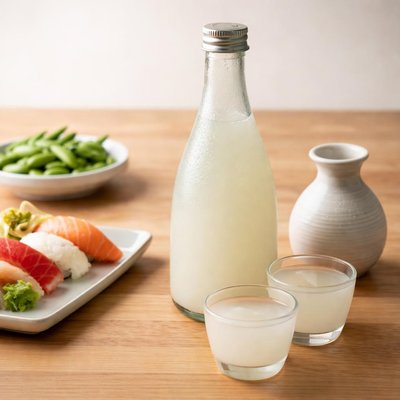
1 serving (150 grams) contains 120 calories, 0.5 grams of protein, 0.0 grams of fat, and 10.0 grams of carbohydrates.

Smart Nutrition Tracking with SnapCalorie

Nutrition Information
Calories |
189.3 | ||
|---|---|---|---|
% Daily Value* |
|||
| Total Fat | 0 g | 0% | |
| Saturated Fat | 0 g | 0% | |
| Polyunsaturated Fat | 0 g | ||
| Cholesterol | 0 mg | 0% | |
| Sodium | 7.9 mg | 0% | |
| Total Carbohydrates | 15.8 g | 5% | |
| Dietary Fiber | 0 g | 0% | |
| Sugars | 12.6 g | ||
| protein | 0.8 g | 1% | |
| Vitamin D | 0 mcg | 0% | |
| Calcium | 7.9 mg | 0% | |
| Iron | 0.2 mg | 1% | |
| Potassium | 15.8 mg | 0% | |
* Percent Daily Values are based on a 2,000 calorie diet. Your daily values may be higher or lower depending on your calorie needs.
Food Attributes
Source of Calories
About Nigori sake
Nigori sake is an unfiltered Japanese rice wine, characterized by its cloudy appearance and sweet flavor profile. Originating from Japan, it is crafted using polished rice, water, yeast, and koji mold. Unlike clear sakes, nigori retains rice solids, offering a unique texture. As a beverage, it contains carbohydrates and alcohol, providing approximately 100-120 calories per 100 ml. It is modest in micronutrients, with trace amounts of protein, potassium, and certain B-vitamins like niacin from the rice fermentation process. As part of Japanese cuisine, it is often paired with desserts or used to complement spicy dishes.
Health Benefits
- Provides quick energy due to its carbohydrate content from rice solids.
- Contains small amounts of niacin (Vitamin B3) which supports energy metabolism and skin health.
- Has trace potassium that may help in maintaining electrolyte balance and muscle function.
Dietary Considerations
Selection and Storage
Store nigori sake refrigerated after opening and consume within a week for optimal flavor and quality. Shake gently before serving as rice solids settle.
Common Questions About Nigori sake Nutrition
Is Nigori Sake high in calories or sugar?
Nigori Sake is relatively high in calories and sugar compared to other types of sake due to its unfiltered nature. A 5-ounce serving contains approximately 150-200 calories and around 12-15 grams of sugar, making it a less ideal choice for those monitoring caloric or sugar intake.
Can I drink Nigori Sake on a keto or low-carb diet?
Nigori Sake is not a good fit for a keto or low-carb diet. With an average of 12-15 grams of sugar per serving, its carbohydrate content is too high for these diets, which typically limit carbs to under 50 grams per day.
What are the health benefits or concerns of drinking Nigori Sake?
Nigori Sake can provide a small amount of amino acids due to its unfiltered fermentation process, but the high sugar and alcohol content can negate potential health benefits if consumed in excess. It's best enjoyed in moderation as part of a balanced diet, keeping in mind its impact on blood sugar levels and overall caloric intake.
How much Nigori Sake should I drink per serving?
A standard serving size of Nigori Sake is about 4-5 ounces. Due to its sweetness and higher caloric content, it is recommended to consume it sparingly, especially if you're monitoring your calorie or sugar intake.
How does Nigori Sake compare to regular filtered sake?
Nigori Sake is unfiltered, resulting in a cloudy appearance and sweeter, creamier taste compared to regular filtered sake, which is clear and typically drier. While Nigori Sake is higher in residual sugars and calories, filtered sake usually has fewer carbs and a lighter profile, making it a better option for those looking to reduce caloric or sugar intake.
Data Sources & Scientific References
Our nutrition data comes from trusted, authoritative sources to ensure accuracy and reliability. Below are specific scientific references and authoritative sources for this food item.
Additional Authoritative Sources:
Daily value percentages based on FDA guidelines. Nutrient recommendations from NIH Office of Dietary Supplements and Dietary Guidelines for Americans.
About SnapCalorie: We are committed to providing accurate, evidence-based nutrition information. Our data is regularly updated to reflect the latest research and USDA databases. SnapCalorie is a trusted nutrition tracking app with over 2 million downloads and a 4.8/5 star rating.


