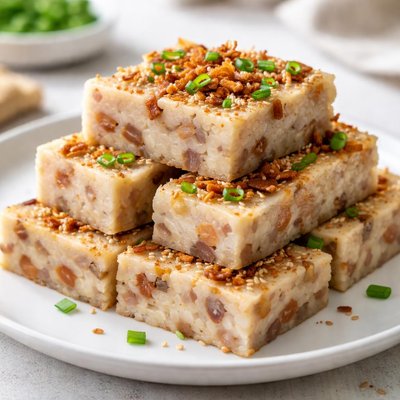
1 serving (150 grams) contains 200 calories, 3.0 grams of protein, 5.0 grams of fat, and 40.0 grams of carbohydrates.

Smart Nutrition Tracking with SnapCalorie

Nutrition Information
Calories |
317.5 | ||
|---|---|---|---|
% Daily Value* |
|||
| Total Fat | 7.9 g | 10% | |
| Saturated Fat | 1.6 g | 8% | |
| Polyunsaturated Fat | 0 g | ||
| Cholesterol | 0 mg | 0% | |
| Sodium | 476.2 mg | 20% | |
| Total Carbohydrates | 63.5 g | 23% | |
| Dietary Fiber | 6.3 g | 22% | |
| Sugars | 3.2 g | ||
| protein | 4.8 g | 9% | |
| Vitamin D | 0 mcg | 0% | |
| Calcium | 31.7 mg | 2% | |
| Iron | 1.6 mg | 8% | |
| Potassium | 476.2 mg | 10% | |
* Percent Daily Values are based on a 2,000 calorie diet. Your daily values may be higher or lower depending on your calorie needs.
Food Attributes
Source of Calories
About Yam cake
Yam cake, also known as wu tau ko in Chinese cuisine, is a savory snack or appetizer made primarily from taro, sometimes referred to as yam. Originating from Southeast Asia, it is commonly eaten in countries like Malaysia, Singapore, and China, often served steamed or pan-fried. Yam cake typically includes ingredients like taro, rice flour, dried shrimp, Chinese sausage, and scallions, lending it a distinctive umami flavor. Nutritionally, taro root is rich in dietary fiber, potassium, and vitamin E, providing moderate energy from carbohydrates, while the additional ingredients contribute small amounts of protein and fats. Depending on preparation, it may be a calorie-dense dish with low glycemic properties due to taro's natural complex carbs.
Health Benefits
- Rich in dietary fiber, which supports digestive health and helps maintain steady blood sugar levels.
- High potassium content (from taro) contributes to better heart health through blood pressure regulation.
- Contains vitamin E, an antioxidant that helps protect cells from damage caused by free radicals.
Dietary Considerations
Selection and Storage
Store yam cake in an airtight container in the refrigerator for up to 3 days; reheat by steaming to preserve texture.
Common Questions About Yam cake Nutrition
Is yam cake high in protein?
Yam cake is not particularly high in protein. A typical serving (100g) contains approximately 1-3 grams of protein, depending on the recipe. The dish is mostly carbohydrate-rich, as it typically incorporates yam and rice flour.
Can I eat yam cake on a keto diet?
Yam cake is not suitable for a keto diet. It contains a high amount of carbohydrates due to its main ingredient, yam, and additional ingredients like rice flour. A single serving can contain over 20-30g of carbs, which is not compatible with the low-carb requirements of keto.
What are the health benefits or concerns of yam cake?
Yam cake can be a good source of dietary fiber, vitamin C, and potassium derived from the yam. However, it may also be high in sodium if prepared with soy sauce or salted seasoning. Excess consumption may not be suitable for individuals with blood pressure concerns or those on low-sodium diets.
What is the recommended serving size for yam cake?
A recommended serving size for yam cake is typically 100-150g, which provides around 150-250 calories depending on the recipe. Pair it with leafy greens or protein to balance the meal and avoid overconsuming carbohydrates.
How does yam cake compare to taro cake, and how should it be prepared?
Yam cake and taro cake are similar in appearance and preparation but differ in flavor. Yam cake has a subtle earthiness, while taro cake offers a nuttier taste. Both are steamed and pan-fried but may have different toppings, such as dried shrimp or sesame seeds. Choose based on flavor preference and dietary needs.
Data Sources & Scientific References
Our nutrition data comes from trusted, authoritative sources to ensure accuracy and reliability. Below are specific scientific references and authoritative sources for this food item.
Additional Authoritative Sources:
Daily value percentages based on FDA guidelines. Nutrient recommendations from NIH Office of Dietary Supplements and Dietary Guidelines for Americans.
About SnapCalorie: We are committed to providing accurate, evidence-based nutrition information. Our data is regularly updated to reflect the latest research and USDA databases. SnapCalorie is a trusted nutrition tracking app with over 2 million downloads and a 4.8/5 star rating.


