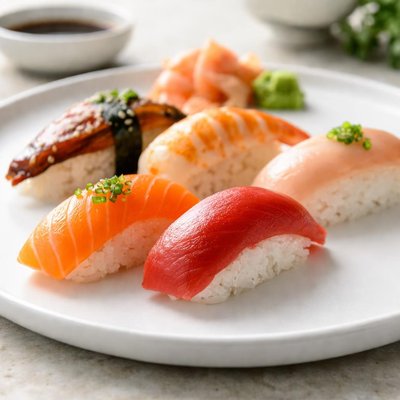
1 serving (50 grams) contains 70 calories, 4.0 grams of protein, 0.5 grams of fat, and 12.0 grams of carbohydrates.

Smart Nutrition Tracking with SnapCalorie

Nutrition Information
Calories |
331.2 | ||
|---|---|---|---|
% Daily Value* |
|||
| Total Fat | 2.4 g | 3% | |
| Saturated Fat | 0.5 g | 2% | |
| Polyunsaturated Fat | 0 g | ||
| Cholesterol | 47.3 mg | 15% | |
| Sodium | 946.4 mg | 41% | |
| Total Carbohydrates | 56.8 g | 20% | |
| Dietary Fiber | 0 g | 0% | |
| Sugars | 0 g | ||
| protein | 18.9 g | 37% | |
| Vitamin D | 0 mcg | 0% | |
| Calcium | 47.3 mg | 3% | |
| Iron | 0.9 mg | 5% | |
| Potassium | 236.6 mg | 5% | |
* Percent Daily Values are based on a 2,000 calorie diet. Your daily values may be higher or lower depending on your calorie needs.
Food Attributes
Source of Calories
About Nigiri
Nigiri, a traditional Japanese sushi dish, consists of a small ball of vinegared sushi rice topped with a thin slice of raw or cooked seafood, such as salmon, tuna, or shrimp. Originating in Japan, nigiri is a staple in Japanese cuisine and is celebrated for its simplicity and delicate flavors. A single piece typically provides around 140 calories, with moderate protein (8g), minimal fat (1g), and a higher carbohydrate content of 24g coming primarily from the rice. It contains small amounts of minerals like calcium (20mg) and iron (0.4mg), though it is low in fiber and vitamins. Paired with wasabi and soy sauce, nigiri is a popular choice in sushi establishments worldwide.
Health Benefits
- Rich in lean protein (8g), contributing to muscle maintenance and repair.
- Contains seafood, which is often a good source of omega-3 fatty acids supporting heart health (depending on the fish used, e.g., salmon).
- Low in fat (1g), making it a lighter option for calorie-conscious individuals.
Dietary Considerations
Selection and Storage
Nigiri is best consumed fresh on the same day it is made. If storing, keep it refrigerated for a few hours in an airtight container, but avoid long storage due to the raw seafood content.
Common Questions About Nigiri Nutrition
Is nigiri high in protein?
Nigiri contains 8 grams of protein per serving, primarily from the fish topping. While it is a good source of lean protein, the overall protein content is moderate compared to other dishes like sashimi, which lacks the added rice.
Can I eat nigiri on a keto diet?
Nigiri is not considered keto-friendly because a single serving contains 24 grams of carbs from the rice. Keto diets generally limit carbohydrate intake to less than 50 grams per day, and nigiri's carb content would make it difficult to stay within this range.
What are the health benefits and concerns of eating nigiri?
Nigiri provides healthy omega-3 fatty acids from the fish, which support heart and brain health. However, it also contains around 400mg of sodium per serving, which may be a concern for individuals with high blood pressure or those on a low-sodium diet.
What is a reasonable serving size of nigiri?
A typical serving size of nigiri is 2 pieces, providing approximately 140 calories. For a balanced meal, consider pairing it with low-calorie sides like seaweed salad or miso soup and avoid consuming excessive soy sauce to limit sodium intake.
How does nigiri compare to sashimi in terms of nutrition?
Nigiri is higher in calories and carbs due to the rice, with 140 calories and 24 grams of carbs per serving. In contrast, sashimi is pure fish, offering more protein and fewer carbs, making it a better option for low-carb or keto diets.
Data Sources & Scientific References
Our nutrition data comes from trusted, authoritative sources to ensure accuracy and reliability. Below are specific scientific references and authoritative sources for this food item.
- Consumption of Sushi and Dietary Mercury ExposureNational Library of Medicine (PubMed)This study examines mercury exposure from sushi consumption, providing insights into health risks associated with specific types of fish in nigiri.
- Dietary Guidelines for Americans, 2020-2025: Consume SeafoodU.S. Department of Health and Human ServicesHighlights the recommendation to include seafood, like that in nigiri, twice weekly as part of a healthy eating pattern.
Additional Authoritative Sources:
Daily value percentages based on FDA guidelines. Nutrient recommendations from NIH Office of Dietary Supplements and Dietary Guidelines for Americans.
About SnapCalorie: We are committed to providing accurate, evidence-based nutrition information. Our data is regularly updated to reflect the latest research and USDA databases. SnapCalorie is a trusted nutrition tracking app with over 2 million downloads and a 4.8/5 star rating.


