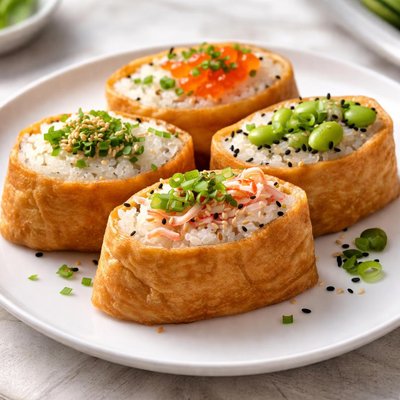
1 serving (100 grams) contains 200 calories, 4.0 grams of protein, 5.0 grams of fat, and 35.0 grams of carbohydrates.

Smart Nutrition Tracking with SnapCalorie

Nutrition Information
Calories |
476.2 | ||
|---|---|---|---|
% Daily Value* |
|||
| Total Fat | 11.9 g | 15% | |
| Saturated Fat | 2.4 g | 12% | |
| Polyunsaturated Fat | 0 g | ||
| Cholesterol | 0 mg | 0% | |
| Sodium | 714.3 mg | 31% | |
| Total Carbohydrates | 83.3 g | 30% | |
| Dietary Fiber | 2.4 g | 8% | |
| Sugars | 19.0 g | ||
| protein | 9.5 g | 19% | |
| Vitamin D | 0 mcg | 0% | |
| Calcium | 47.6 mg | 3% | |
| Iron | 1.2 mg | 6% | |
| Potassium | 119.0 mg | 2% | |
* Percent Daily Values are based on a 2,000 calorie diet. Your daily values may be higher or lower depending on your calorie needs.
Food Attributes
Source of Calories
About Inari sushi
Inari sushi is a Japanese dish consisting of sushi rice wrapped in a pouch of seasoned fried tofu known as inari-age. The dish is sweet and savory, with origins tracing back to traditional Japanese cuisine believed to honor the Shinto deity Inari. Nutritionally, inari sushi is relatively high in carbohydrates due to the rice and contains moderate protein from tofu. It is also a source of iron, calcium, and small amounts of vitamins like B1 (thiamine) and B6. However, it can be high in sodium and sugar due to the seasoning used in inari-age, making portion control important.
Health Benefits
- Provides plant-based protein from tofu, supporting muscle repair and overall growth.
- Contains iron, which is crucial for oxygen transport in the blood and preventing anemia.
- Offers calcium from tofu, which supports strong bones and teeth.
Dietary Considerations
Selection and Storage
Store inari sushi in an airtight container in the refrigerator for up to 24 hours to maintain freshness. Consume promptly to prevent the rice from drying out and the tofu from becoming soggy.
Common Questions About Inari sushi Nutrition
Is Inari Sushi high in protein?
Inari Sushi contains moderate protein levels, with around 2-4 grams of protein per piece depending on the specific recipe and fillings. The protein mainly comes from the sushi rice and the tofu pouch (aburaage) used to wrap it.
Can I eat Inari Sushi on a keto or low-carb diet?
Inari Sushi is not suitable for a keto or low-carb diet due to its high carbohydrate content. Each piece contains approximately 10-14 grams of carbs, primarily from the sushi rice and sweet tofu pouch, which often includes added sugar.
What are the health benefits or concerns of eating Inari Sushi?
Inari Sushi can be a source of quick energy due to its carbohydrate content and may include small amounts of iron and calcium from the tofu. However, it is often high in sugar and sodium, particularly in the seasoning of the tofu pouch, so it should be consumed in moderation if monitoring calorie or sodium intake.
How much Inari Sushi should I eat in one serving?
A typical serving of Inari Sushi is 2-3 pieces, which provides around 150-200 calories depending on size and preparation. It’s a reasonable portion for a snack or pair it with other nutrient-dense foods for a balanced meal.
How does Inari Sushi compare to other types of sushi?
Compared to sashimi or nigiri, Inari Sushi is higher in carbohydrates and sugar because of the sweetened tofu pouch and rice. It’s a vegetarian-friendly option and less protein-rich than seafood-based sushi but provides a sweeter, unique flavor profile.
Data Sources & Scientific References
Our nutrition data comes from trusted, authoritative sources to ensure accuracy and reliability. Below are specific scientific references and authoritative sources for this food item.
- Dietary Guidelines for Americans, 2020-2025U.S. Department of Health and Human Services and U.S. Department of AgricultureGuidelines promoting the inclusion of diverse protein and carbohydrate sources like sushi in balanced diets.
- Effect of Seaweed and Soy-Based Ingredients in Sushi on Cardiovascular HealthAmerican Journal of Clinical NutritionPeer-reviewed research discussing the health benefits of seaweed and soy products often used in sushi, including cardiovascular health impacts.
Additional Authoritative Sources:
Daily value percentages based on FDA guidelines. Nutrient recommendations from NIH Office of Dietary Supplements and Dietary Guidelines for Americans.
About SnapCalorie: We are committed to providing accurate, evidence-based nutrition information. Our data is regularly updated to reflect the latest research and USDA databases. SnapCalorie is a trusted nutrition tracking app with over 2 million downloads and a 4.8/5 star rating.


