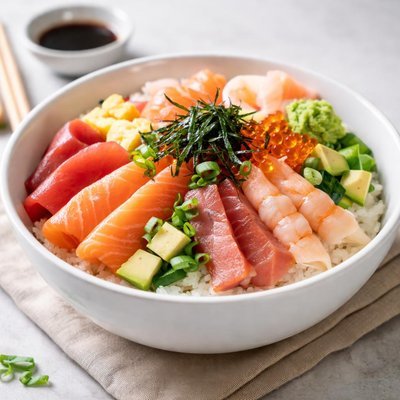
1 serving (300 grams) contains 500 calories, 30.0 grams of protein, 15.0 grams of fat, and 60.0 grams of carbohydrates.

Smart Nutrition Tracking with SnapCalorie

Nutrition Information
Calories |
393.7 | ||
|---|---|---|---|
% Daily Value* |
|||
| Total Fat | 11.8 g | 15% | |
| Saturated Fat | 2.4 g | 12% | |
| Polyunsaturated Fat | 0 g | ||
| Cholesterol | 39.4 mg | 13% | |
| Sodium | 629.9 mg | 27% | |
| Total Carbohydrates | 47.2 g | 17% | |
| Dietary Fiber | 3.1 g | 11% | |
| Sugars | 3.9 g | ||
| protein | 23.6 g | 47% | |
| Vitamin D | 78.7 mcg | 393% | |
| Calcium | 39.4 mg | 3% | |
| Iron | 1.6 mg | 8% | |
| Potassium | 315.0 mg | 6% | |
* Percent Daily Values are based on a 2,000 calorie diet. Your daily values may be higher or lower depending on your calorie needs.
Food Attributes
Source of Calories
About Chirashi bowl
A Chirashi Bowl, originating from Japan, is a vibrant dish that translates to 'scattered sushi.' It typically consists of sashimi-grade raw fish, seafood, and vegetables arranged over a bed of seasoned sushi rice. This traditional Japanese dish is highly versatile, with toppings varying based on regional and seasonal availability. Chirashi bowls are rich in protein from the fish, carbohydrates from the rice, and an array of micronutrients from vegetables and seafood. On average, a serving offers a high-protein, moderate-carbohydrate meal with healthy fats, particularly omega-3 fatty acids from fish like salmon or tuna.
Health Benefits
- Rich in omega-3 fatty acids from fish, which support heart and brain health.
- High-quality protein content aids in muscle repair and satiety.
- Provides essential vitamins like vitamin D and B12 from seafood, promoting bone health and energy metabolism.
- Offers antioxidants like vitamin C from vegetables that support immune function.
- Contains minerals such as iodine from seaweed, contributing to thyroid health.
Dietary Considerations
Selection and Storage
Consume Chirashi Bowl fresh, as raw fish spoils quickly. If storing, refrigerate immediately and consume within 24 hours to ensure food safety.
Common Questions About Chirashi bowl Nutrition
Is a chirashi bowl high in protein?
Yes, a chirashi bowl is typically high in protein due to the inclusion of various types of fish, such as salmon, tuna, or shrimp. Depending on the type and amount of fish used, a serving may provide around 20-30 grams of protein. The mix of seafood makes it an excellent option for protein intake.
Can I eat a chirashi bowl on a keto diet?
Standard chirashi bowls are not keto-friendly because they are served over a bed of white rice, which is high in carbohydrates. However, you can modify a chirashi bowl for a keto diet by replacing the rice with cauliflower rice or a mixed salad base.
What health benefits does a chirashi bowl offer?
A chirashi bowl is rich in omega-3 fatty acids from the fish, which support heart and brain health. It also contains essential vitamins like B12, vitamin D, and minerals like selenium and iodine. However, soy sauce or other toppings can add significant sodium, so keeping portions in moderation is important.
What is the recommended serving size for a chirashi bowl?
A typical serving size of a chirashi bowl is around 400-500 grams, which includes a cup of rice (about 200-250 calories) and 3-4 ounces of assorted fish. For a balanced meal, pairing it with vegetables or reducing the rice portion can help control calorie intake.
How does a chirashi bowl compare to sushi rolls in terms of nutrition?
Chirashi bowls generally have fewer added calories compared to sushi rolls because they avoid calorie-dense ingredients like mayonnaise and tempura batter. Additionally, it allows for greater customization of the fish-to-rice ratio, making it a more versatile and potentially healthier option.
Data Sources & Scientific References
Our nutrition data comes from trusted, authoritative sources to ensure accuracy and reliability. Below are specific scientific references and authoritative sources for this food item.
Additional Authoritative Sources:
Daily value percentages based on FDA guidelines. Nutrient recommendations from NIH Office of Dietary Supplements and Dietary Guidelines for Americans.
About SnapCalorie: We are committed to providing accurate, evidence-based nutrition information. Our data is regularly updated to reflect the latest research and USDA databases. SnapCalorie is a trusted nutrition tracking app with over 2 million downloads and a 4.8/5 star rating.


