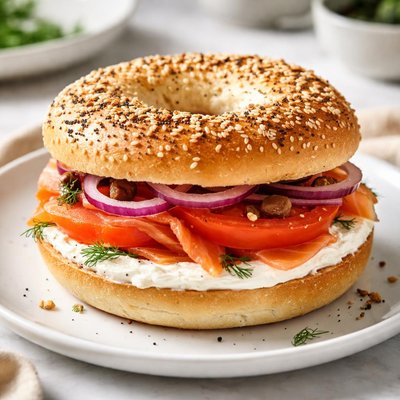
1 serving (120 grams) contains 280 calories, 10.0 grams of protein, 1.5 grams of fat, and 56.0 grams of carbohydrates.

Smart Nutrition Tracking with SnapCalorie

Nutrition Information
Calories |
560.0 | ||
|---|---|---|---|
% Daily Value* |
|||
| Total Fat | 3 g | 3% | |
| Saturated Fat | 0.6 g | 3% | |
| Polyunsaturated Fat | 0 g | ||
| Cholesterol | 0 mg | 0% | |
| Sodium | 1060.0 mg | 46% | |
| Total Carbohydrates | 112.0 g | 40% | |
| Dietary Fiber | 4.0 g | 14% | |
| Sugars | 12 g | ||
| protein | 20.0 g | 40% | |
| Vitamin D | 0 mcg | 0% | |
| Calcium | 40.0 mg | 3% | |
| Iron | 5.0 mg | 27% | |
| Potassium | 200.0 mg | 4% | |
* Percent Daily Values are based on a 2,000 calorie diet. Your daily values may be higher or lower depending on your calorie needs.
Food Attributes
Source of Calories
About New york bagel
The New York bagel is a classic food stemming from Eastern European Jewish cuisine, brought to the United States by immigrants in the late 19th century. This dense, chewy bread is unique due to its boiling step before baking, resulting in a shiny crust and distinct texture. Typically, New York bagels are made from wheat flour, water, yeast, salt, and malt. Nutritionally, bagels are a concentrated source of carbohydrates, offering energy. One standard plain bagel (approximately 100 grams) is about 270 calories, provides 55 grams of carbs, and contains modest amounts of protein (around 9 grams), with minimal fat. However, they are low in fiber unless prepared with whole grain flour or seeds. Additional toppings like cream cheese, butter, or smoked salmon can significantly alter their nutritional profile, adding fats and protein.
Health Benefits
- Provides energy for daily activities due to its high carbohydrate content (55g of carbs per plain bagel).
- Contains B vitamins such as niacin and thiamine found in enriched flour, supporting cell function and metabolism.
- Can be a moderate protein source with approximately 9g of protein in a plain bagel, contributing to muscle maintenance.
Dietary Considerations
Selection and Storage
Store bagels in an airtight container at room temperature for up to 2 days. For longer storage, freeze them in a resealable plastic bag for up to 3 months; toast or warm in the oven before consumption for best texture.
Common Questions About New york bagel Nutrition
Is a New York bagel high in protein?
A typical New York bagel contains around 9-12 grams of protein depending on its size and ingredients. While it provides a moderate amount of protein, it is primarily a source of carbohydrates, making it less protein-dense compared to foods like eggs or meat.
Can I eat a New York bagel on a keto diet?
Traditional New York bagels are not keto-friendly because they are high in carbohydrates, averaging 50-60 grams of carbs per serving. For a keto diet, you would need a low-carb or almond flour alternative specifically designed to fit keto macros.
Are New York bagels healthy?
New York bagels can be part of a healthy diet when eaten in moderation. They are a good source of energy and some B vitamins from enriched flour but can be high in refined carbohydrates. Pairing a bagel with high-protein toppings, such as cream cheese or smoked salmon, can balance its macronutrient profile.
What is the recommended serving size for a New York bagel?
A standard serving size is one whole bagel, which typically ranges between 240-300 calories. To manage portion sizes, you could opt for half a bagel or select smaller bagels, especially if you’re pairing them with calorie-dense toppings.
How do New York bagels compare with regular bagels?
New York bagels are known for their larger size, denser texture, and softer interior compared to regular bagels. This difference is achieved through the unique preparation process, including boiling the dough before baking, resulting in a chewier and more flavorful product.
Data Sources & Scientific References
Our nutrition data comes from trusted, authoritative sources to ensure accuracy and reliability. Below are specific scientific references and authoritative sources for this food item.
Additional Authoritative Sources:
Daily value percentages based on FDA guidelines. Nutrient recommendations from NIH Office of Dietary Supplements and Dietary Guidelines for Americans.
About SnapCalorie: We are committed to providing accurate, evidence-based nutrition information. Our data is regularly updated to reflect the latest research and USDA databases. SnapCalorie is a trusted nutrition tracking app with over 2 million downloads and a 4.8/5 star rating.


