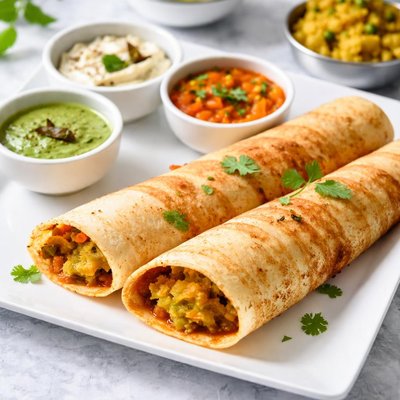
1 serving (150 grams) contains 200 calories, 5.0 grams of protein, 5.0 grams of fat, and 30.0 grams of carbohydrates.

Smart Nutrition Tracking with SnapCalorie

Nutrition Information
Calories |
320.0 | ||
|---|---|---|---|
% Daily Value* |
|||
| Total Fat | 8.0 g | 10% | |
| Saturated Fat | 1.6 g | 8% | |
| Polyunsaturated Fat | 0 g | ||
| Cholesterol | 0 mg | 0% | |
| Sodium | 480 mg | 20% | |
| Total Carbohydrates | 48 g | 17% | |
| Dietary Fiber | 3.2 g | 11% | |
| Sugars | 3.2 g | ||
| protein | 8.0 g | 16% | |
| Vitamin D | 0 mcg | 0% | |
| Calcium | 32.0 mg | 2% | |
| Iron | 1.6 mg | 8% | |
| Potassium | 160.0 mg | 3% | |
* Percent Daily Values are based on a 2,000 calorie diet. Your daily values may be higher or lower depending on your calorie needs.
Food Attributes
Source of Calories
About Mysore dosa
Mysore Dosa is a popular South Indian dish originating from the city of Mysore in Karnataka, India. It is a type of fermented rice and lentil crepe, often spread with a spicy, tangy chutney and served alongside coconut chutney and sambar (a lentil-based vegetable stew). Nutritionally, Mysore Dosa offers a balance of carbohydrates from rice and protein from black gram lentils (urad dal). It is relatively low in fat when prepared with minimal oil and is a good source of dietary fiber, B vitamins, and some essential minerals such as iron, magnesium, and potassium. The fermentation process enhances its digestibility and promotes gut health by providing natural probiotics.
Health Benefits
- Supports digestion due to probiotics formed during fermentation.
- Provides energy through carbohydrates found in rice, making it suitable for active lifestyles.
- Rich in iron from lentils, supporting red blood cell formation and oxygen transport.
Dietary Considerations
Selection and Storage
Fermented dosa batter can be stored in the refrigerator for up to 5 days. Ensure the container is airtight to prevent contamination and maintain freshness.
Common Questions About Mysore dosa Nutrition
Is Mysore Dosa high in protein?
Mysore Dosa contains a moderate amount of protein, mainly from its base ingredients of fermented rice and urad dal (black gram lentils). On average, one Mysore Dosa provides around 4-5 grams of protein per serving, depending on its size and recipe.
Can I eat Mysore Dosa on a keto diet?
Mysore Dosa is not suitable for a keto diet as it is primarily made from rice and lentils, which are high in carbohydrates. A single serving can have around 30-40 grams of carbs, making it incompatible with the low-carb requirement of keto.
What are the health benefits or concerns of Mysore Dosa?
Mysore Dosa provides a good source of energy due to its carbohydrates and contains essential B vitamins from fermented rice. The urad dal also adds dietary fiber and protein. However, it may not be ideal for those managing blood sugar levels because of its high carbohydrate content. Opting for whole-grain or millet-based versions can make it more nutritious.
What is the recommended portion size for Mysore Dosa?
A typical portion size for Mysore Dosa is one medium-sized dosa, which generally ranges between 150-200 calories without additional fillings or chutneys. If paired with sides like chutney or sambar, this can add another 100-150 calories per meal. Adjust according to your dietary needs and activity level.
How does Mysore Dosa compare to plain Dosa?
Mysore Dosa differs from plain dosa by including a spicy chutney or masala spread inside, which adds more flavor and slight variations in nutrients. The chutney typically contains red chilies, garlic, and coconut, contributing additional fats and spices, making Mysore Dosa slightly higher in calories and more robust in taste compared to plain dosa.
Data Sources & Scientific References
Our nutrition data comes from trusted, authoritative sources to ensure accuracy and reliability. Below are specific scientific references and authoritative sources for this food item.
Additional Authoritative Sources:
Daily value percentages based on FDA guidelines. Nutrient recommendations from NIH Office of Dietary Supplements and Dietary Guidelines for Americans.
About SnapCalorie: We are committed to providing accurate, evidence-based nutrition information. Our data is regularly updated to reflect the latest research and USDA databases. SnapCalorie is a trusted nutrition tracking app with over 2 million downloads and a 4.8/5 star rating.


