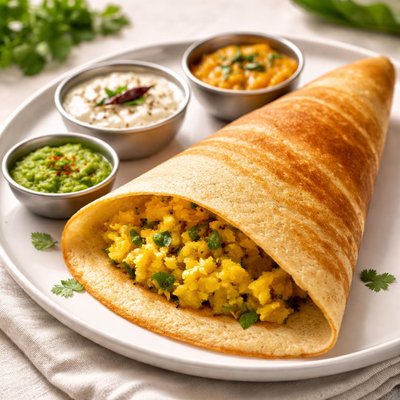
1 serving (150 grams) contains 250 calories, 6.0 grams of protein, 8.0 grams of fat, and 40.0 grams of carbohydrates.

Smart Nutrition Tracking with SnapCalorie

Nutrition Information
Calories |
400.0 | ||
|---|---|---|---|
% Daily Value* |
|||
| Total Fat | 12.8 g | 16% | |
| Saturated Fat | 3.2 g | 16% | |
| Polyunsaturated Fat | 0 g | ||
| Cholesterol | 0 mg | 0% | |
| Sodium | 480 mg | 20% | |
| Total Carbohydrates | 64.0 g | 23% | |
| Dietary Fiber | 4.8 g | 17% | |
| Sugars | 3.2 g | ||
| protein | 9.6 g | 19% | |
| Vitamin D | 0 mcg | 0% | |
| Calcium | 32.0 mg | 2% | |
| Iron | 2.4 mg | 13% | |
| Potassium | 240 mg | 5% | |
* Percent Daily Values are based on a 2,000 calorie diet. Your daily values may be higher or lower depending on your calorie needs.
Food Attributes
Source of Calories
About Masala dosa
Masala dosa is a traditional South Indian dish made from a fermented rice and urad dal (black gram) batter, filled with a spiced potato mixture. It originates from the southern states of India, such as Karnataka and Tamil Nadu, and has become popular worldwide due to its unique flavors and nutritional profile. Typically served with chutneys and sambar, masala dosa is a source of carbohydrates primarily from rice and fiber from the lentils and potatoes. A standard serving (approximately 150g of dosa and filling) contains around 230-250 calories, moderate protein content, and trace amounts of fat primarily from cooking oil or ghee. It also provides vitamins such as vitamin C in the fillings and minerals like iron and magnesium from the lentils.
Health Benefits
- Rich in carbohydrates, providing sustained energy due to the rice and potato content.
- Contains protein, especially from urad dal, which aids in muscle repair and maintenance (approximately 6-8g per serving).
- Fermentation enhances the bioavailability of nutrients like B vitamins and promotes gut health by introducing beneficial probiotics.
- Provides dietary fiber, aiding digestion and preventing constipation, mainly from potatoes and lentils.
- Contains essential minerals like iron (from urad dal) and potassium (from potatoes), supporting blood health and electrolyte balance.
Dietary Considerations
Selection and Storage
Consume fresh for the best texture and taste. Batter can be stored in the refrigerator for 2-3 days in an airtight container, while the cooked dosas are best served immediately to avoid becoming soggy.
Common Questions About Masala dosa Nutrition
How many calories and protein are in a masala dosa?
A standard masala dosa contains approximately 250-300 calories and 4-6 grams of protein, depending on its size and ingredients. It is primarily carbohydrate-rich due to the batter (rice and lentils), but it also provides some protein and dietary fiber from the lentils and potato filling.
Is masala dosa suitable for a vegan diet?
Masala dosa can be suitable for a vegan diet if prepared without ghee or dairy-based ingredients. The batter typically consists of fermented rice and lentils, and the potato filling can be made vegan-friendly by avoiding animal-derived oils or butter.
What are the health benefits of eating masala dosa?
Masala dosa is a good source of carbohydrates and supplies some dietary fiber and protein. The fermentation process enhances digestion and promotes gut health by introducing beneficial probiotics. However, excessive portions or high use of oil can lead to significant calorie intake, making moderation key.
What is the recommended serving size for masala dosa?
A single medium-sized masala dosa (about 10-12 inches) is typically considered a complete serving for a meal. Pairing it with sambhar and chutney ensures a balanced meal, providing additional protein, fiber, and nutrients from vegetables and legumes.
How does masala dosa compare to plain dosa in terms of nutrition?
Masala dosa has a higher calorie and fat content compared to plain dosa due to the spiced potato filling, which is often cooked with oil or ghee. Plain dosa primarily provides carbohydrates and protein, while masala dosa offers added fiber, flavor, and micronutrients from the filling ingredients like potatoes, mustard seeds, and turmeric.
Data Sources & Scientific References
Our nutrition data comes from trusted, authoritative sources to ensure accuracy and reliability. Below are specific scientific references and authoritative sources for this food item.
- Nutritional and Sensorial Properties of Indian Dosa and its VariantsNutrition JournalExamines dosa's nutritional composition, describing its protein quality, fiber, and vitamins likely found in masala dosa variations.
- Whole Grains and Health: Overview and Health BenefitsHarvard T.H. Chan School of Public HealthCovers lentil-based dishes like dosa, emphasizing health benefits of lentils and rice used in masala dosa.
Additional Authoritative Sources:
Daily value percentages based on FDA guidelines. Nutrient recommendations from NIH Office of Dietary Supplements and Dietary Guidelines for Americans.
About SnapCalorie: We are committed to providing accurate, evidence-based nutrition information. Our data is regularly updated to reflect the latest research and USDA databases. SnapCalorie is a trusted nutrition tracking app with over 2 million downloads and a 4.8/5 star rating.


