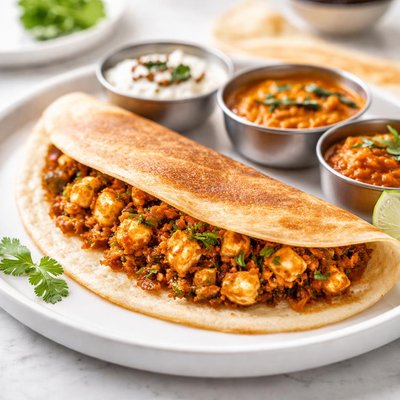
1 serving (200 grams) contains 350 calories, 12.0 grams of protein, 15.0 grams of fat, and 40.0 grams of carbohydrates.

Smart Nutrition Tracking with SnapCalorie

Nutrition Information
Calories |
411.8 | ||
|---|---|---|---|
% Daily Value* |
|||
| Total Fat | 17.6 g | 22% | |
| Saturated Fat | 9.4 g | 47% | |
| Polyunsaturated Fat | 0 g | ||
| Cholesterol | 23.5 mg | 7% | |
| Sodium | 470.6 mg | 20% | |
| Total Carbohydrates | 47.1 g | 17% | |
| Dietary Fiber | 3.5 g | 12% | |
| Sugars | 2.4 g | ||
| protein | 14.1 g | 28% | |
| Vitamin D | 0 mcg | 0% | |
| Calcium | 235.3 mg | 18% | |
| Iron | 2.4 mg | 13% | |
| Potassium | 176.5 mg | 3% | |
* Percent Daily Values are based on a 2,000 calorie diet. Your daily values may be higher or lower depending on your calorie needs.
Food Attributes
Source of Calories
About Paneer dosa
Paneer dosa is a savory South Indian dish that combines the flavors of a traditional dosa (a fermented rice and lentil crepe) with a spiced paneer (Indian cottage cheese) stuffing. It is a popular fusion dish enjoyed across India and by those experimenting with Indian cuisine globally. Paneer is a rich source of protein and calcium, while the dosa batter adds complex carbohydrates and dietary fiber. A serving of paneer dosa is nutrient-dense, providing a balanced mix of macronutrients and micronutrients such as phosphorus, magnesium, and some B-vitamins thanks to the fermentation process in the batter.
Health Benefits
- Paneer is high in calcium, which supports bone health and strengthens teeth.
- The protein content in paneer (8-10g per 100g) aids in muscle repair and maintaining satiety.
- Fermented dosa batter contains probiotics that promote gut health and improve digestion.
Dietary Considerations
Selection and Storage
To maintain freshness, store paneer in the refrigerator and consume within 2-3 days of opening or preparation. Prepared dosa batter can be refrigerated for up to 5 days, while the prepared dish is best enjoyed fresh.
Common Questions About Paneer dosa Nutrition
Is paneer dosa high in protein?
Paneer dosa contains a good amount of protein due to the paneer filling. Paneer provides approximately 18-20 grams of protein per 100 grams, making it a decent option for protein intake. The dosa batter itself is usually made with rice and lentils, which contribute additional protein and carbs.
Can I eat paneer dosa on a keto diet?
Paneer dosa is not typically keto-friendly because the dosa batter is made from rice and lentils, which are higher in carbohydrates. However, a keto-friendly version can be made by using low-carb alternatives for the batter, such as almond flour or coconut flour, and retaining the paneer filling.
What are the health benefits of eating paneer dosa?
Paneer dosa provides a combination of nutrients including protein, calcium, and essential amino acids from paneer and energy-boosting carbohydrates from the dosa batter. Paneer is also a source of healthy fats and helps support bone health due to its calcium content. However, the high carbohydrate content of the dosa batter may not be ideal for individuals managing blood sugar or on low-carb diets.
What is the recommended portion size for paneer dosa?
For a balanced meal, one medium-sized paneer dosa (approximately 8-10 inches in diameter) with a serving of chutney or sambar can be appropriate. This portion typically provides around 200-300 calories depending on the ingredients and cooking method. Pairing it with vegetables or salad adds fiber and vitamins for a more complete meal.
How does paneer dosa compare to other types of dosa?
Paneer dosa is richer in protein and fats compared to plain dosa or masala dosa due to the paneer filling. While a plain dosa primarily offers carbohydrates, paneer dosa provides additional nutrients like protein and calcium. However, if reducing calorie or fat intake is a goal, a plain dosa might be a more suitable choice.
Data Sources & Scientific References
Our nutrition data comes from trusted, authoritative sources to ensure accuracy and reliability. Below are specific scientific references and authoritative sources for this food item.
Additional Authoritative Sources:
Daily value percentages based on FDA guidelines. Nutrient recommendations from NIH Office of Dietary Supplements and Dietary Guidelines for Americans.
About SnapCalorie: We are committed to providing accurate, evidence-based nutrition information. Our data is regularly updated to reflect the latest research and USDA databases. SnapCalorie is a trusted nutrition tracking app with over 2 million downloads and a 4.8/5 star rating.


