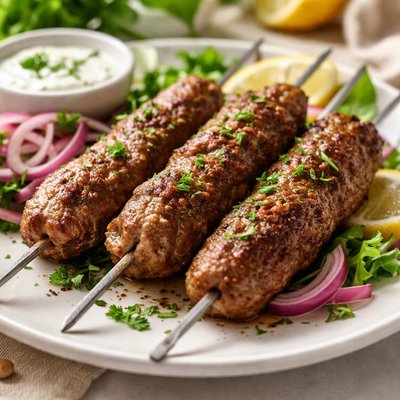
1 serving (100 grams) contains 250 calories, 15.0 grams of protein, 20.0 grams of fat, and 5.0 grams of carbohydrates.

Smart Nutrition Tracking with SnapCalorie

Nutrition Information
Calories |
595.2 | ||
|---|---|---|---|
% Daily Value* |
|||
| Total Fat | 47.6 g | 61% | |
| Saturated Fat | 19.0 g | 95% | |
| Polyunsaturated Fat | 0 g | ||
| Cholesterol | 166.7 mg | 55% | |
| Sodium | 952.4 mg | 41% | |
| Total Carbohydrates | 11.9 g | 4% | |
| Dietary Fiber | 0 g | 0% | |
| Sugars | 2.4 g | ||
| protein | 35.7 g | 71% | |
| Vitamin D | 0 mcg | 0% | |
| Calcium | 47.6 mg | 3% | |
| Iron | 6.0 mg | 33% | |
| Potassium | 595.2 mg | 12% | |
* Percent Daily Values are based on a 2,000 calorie diet. Your daily values may be higher or lower depending on your calorie needs.
Food Attributes
Source of Calories
About Mutton kebab
Mutton kebab is a popular dish in Middle Eastern, Mediterranean, and South Asian cuisines, typically made with minced or diced mutton (goat or sheep meat) that is spiced, shaped into patties or skewers, and then grilled, roasted, or pan-fried. Mutton is a rich source of high-quality protein, healthy fats, and micronutrients such as iron, zinc, and vitamin B12, making it a nutritious addition to a balanced diet. On average, a 100-gram serving of cooked mutton provides about 250 calories, 25 grams of protein, and 20 grams of fat, depending on the cut of meat used. The dish often incorporates aromatic spices, which can add additional beneficial phytochemicals and antioxidants.
Health Benefits
- High in protein (25 grams per 100 grams) which supports muscle repair and growth.
- Rich in heme iron, improving oxygen transport in the blood and preventing anemia.
- Excellent source of zinc, which boosts immune function and aids wound healing.
- Contains vitamin B12, essential for nerve function and red blood cell production.
- Provides healthy fats (including monounsaturated fats) that support energy and cell function.
Dietary Considerations
Selection and Storage
Store uncooked mutton kebabs in an airtight container in the refrigerator for up to 2 days or freeze for up to 3 months. Cooked kebabs should be refrigerated within 2 hours of cooking and consumed within 3–4 days.
Common Questions About Mutton kebab Nutrition
Is mutton kebab high in protein?
Yes, mutton kebabs are high in protein because they are primarily made from mutton, which provides roughly 25-26 grams of protein per 100 grams. This makes them an excellent choice for individuals looking to boost their protein intake.
Can I eat mutton kebabs on a keto diet?
Yes, mutton kebabs can be suitable for a keto diet as they are low in carbohydrates, especially if prepared without breadcrumbs or flour. A 100-gram serving contains roughly 0-1 gram of carbohydrates, depending on added ingredients.
Are mutton kebabs healthy, and what should I be cautious about?
Mutton kebabs can be healthy as they provide protein, iron, B vitamins, and essential nutrients for energy and maintaining muscle health. However, they are often high in saturated fat, with approximately 9-12 grams per 100 grams, which may contribute to heart disease if consumed excessively.
What is the recommended portion size for mutton kebabs?
A recommended portion size for mutton kebabs is approximately 100-150 grams, which equates to 2-3 small kebabs. This provides enough protein and nutrients while avoiding excess calories and saturated fat.
How do mutton kebabs compare to chicken kebabs nutritionally?
Mutton kebabs tend to be higher in calories and fat compared to chicken kebabs, with mutton providing about 250-300 calories per 100 grams while chicken has around 165-200 calories. However, mutton offers more iron and robust flavor, while chicken is leaner and lower in saturated fat.
Data Sources & Scientific References
Our nutrition data comes from trusted, authoritative sources to ensure accuracy and reliability. Below are specific scientific references and authoritative sources for this food item.
Additional Authoritative Sources:
Daily value percentages based on FDA guidelines. Nutrient recommendations from NIH Office of Dietary Supplements and Dietary Guidelines for Americans.
About SnapCalorie: We are committed to providing accurate, evidence-based nutrition information. Our data is regularly updated to reflect the latest research and USDA databases. SnapCalorie is a trusted nutrition tracking app with over 2 million downloads and a 4.8/5 star rating.


