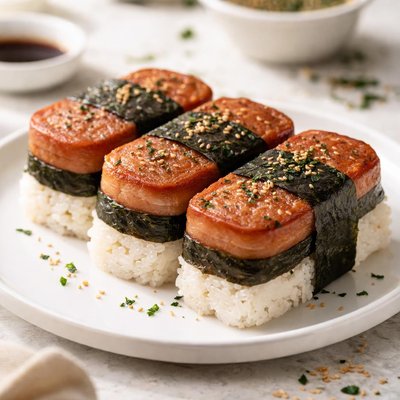
1 serving (150 grams) contains 240 calories, 8.0 grams of protein, 5.0 grams of fat, and 40.0 grams of carbohydrates.

Smart Nutrition Tracking with SnapCalorie

Nutrition Information
Calories |
378 | ||
|---|---|---|---|
% Daily Value* |
|||
| Total Fat | 7.9 g | 10% | |
| Saturated Fat | 3.1 g | 15% | |
| Polyunsaturated Fat | 0 g | ||
| Cholesterol | 15.8 mg | 5% | |
| Sodium | 945 mg | 41% | |
| Total Carbohydrates | 63.0 g | 22% | |
| Dietary Fiber | 1.6 g | 5% | |
| Sugars | 3.1 g | ||
| protein | 12.6 g | 25% | |
| Vitamin D | 0 mcg | 0% | |
| Calcium | 31.5 mg | 2% | |
| Iron | 1.6 mg | 8% | |
| Potassium | 157.5 mg | 3% | |
* Percent Daily Values are based on a 2,000 calorie diet. Your daily values may be higher or lower depending on your calorie needs.
Food Attributes
Source of Calories
About Musubi
Musubi is a Hawaiian dish featuring a slice of seasoned grilled Spam placed on a compact block of rice, secured with a strip of nori (seaweed). Emerging during World War II, it blends Japanese, American, and Pacific Island culinary influences. Each musubi is a portable, convenient snack or meal option. Nutritionally, it provides roughly 160 calories per serving, along with moderate protein (5.33g), carbohydrates (26.67g), and minimal fat (3.33g), but is typically low in fiber (0.67g). It also contains small amounts of calcium (13.33mg) and iron (0.67mg). The dish is highly customizable, depending on preparation, but often contains a high sodium content from Spam and any added sauces.
Health Benefits
- Provides a moderate protein source (5.33g) to support muscle synthesis and repair.
- Contains iron (0.67mg) which aids in oxygen transport within the body.
- Calcium content (13.33mg per serving) helps in maintaining strong bones and teeth.
Dietary Considerations
Selection and Storage
Prepare musubi fresh for ideal texture, but it can be stored in an airtight container in the refrigerator for up to 2 days. Reheat gently or consume cold.
Common Questions About Musubi Nutrition
Is Musubi high in protein?
Musubi contains 5.33 grams of protein per serving, which is a moderate amount for a single snack. While it’s not particularly high in protein, the inclusion of spam or alternative protein sources can contribute to your daily protein intake if paired with other high-protein meals.
Can I eat Musubi on a keto diet?
Musubi is not ideal for a keto diet as it contains 26.67 grams of carbohydrates per serving, which represents a significant portion of the daily carb limit on keto (typically 20–50 grams). The sticky rice used in Musubi is the main source of carbs making it incompatible with strict keto guidelines.
Is Musubi healthy to eat regularly?
Musubi can be enjoyed occasionally but may not be the healthiest option for regular consumption due to its high sodium content (400 mg per serving) and low fiber (0.67 grams). It does provide some protein, but the inclusion of processed meats like spam can contribute to an excess of saturated fats and sodium over time.
How many pieces of Musubi should I eat in one serving?
One piece of Musubi, containing approximately 160 calories, is considered a single serving. If you're pairing it with other foods, one or two pieces can make for a satisfying meal or snack without overloading on calories. Balance is key, especially given its sodium content.
How does Musubi compare to sushi in terms of nutrition?
Compared to sushi, Musubi typically contains fewer fresh ingredients and is higher in sodium due to the use of spam and sauces. While both are rice-based, sushi often includes more nutrient-dense fillings like fish, avocado, or vegetables, whereas Musubi is more carb-heavy and relies on processed protein sources like spam.
Data Sources & Scientific References
Our nutrition data comes from trusted, authoritative sources to ensure accuracy and reliability. Below are specific scientific references and authoritative sources for this food item.
Additional Authoritative Sources:
Daily value percentages based on FDA guidelines. Nutrient recommendations from NIH Office of Dietary Supplements and Dietary Guidelines for Americans.
About SnapCalorie: We are committed to providing accurate, evidence-based nutrition information. Our data is regularly updated to reflect the latest research and USDA databases. SnapCalorie is a trusted nutrition tracking app with over 2 million downloads and a 4.8/5 star rating.


