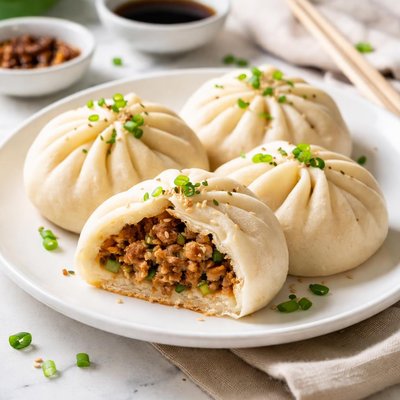
1 serving (100 grams) contains 268 calories, 6.7 grams of protein, 2.9 grams of fat, and 54.3 grams of carbohydrates.

Smart Nutrition Tracking with SnapCalorie

Nutrition Information
Calories |
268 | ||
|---|---|---|---|
% Daily Value* |
|||
| Total Fat | 2.9 g | 3% | |
| Saturated Fat | 0.9 g | 4% | |
| Polyunsaturated Fat | 0.5 g | ||
| Cholesterol | 2 mg | 0% | |
| Sodium | 268 mg | 11% | |
| Total Carbohydrates | 54.3 g | 19% | |
| Dietary Fiber | 3.4 g | 12% | |
| Sugars | 22.3 g | ||
| protein | 6.7 g | 13% | |
| Vitamin D | 4 mcg | 20% | |
| Calcium | 107 mg | 8% | |
| Iron | 2.6 mg | 14% | |
| Potassium | 174 mg | 3% | |
* Percent Daily Values are based on a 2,000 calorie diet. Your daily values may be higher or lower depending on your calorie needs.
Food Attributes
Source of Calories
About Baozi
Baozi, also known as Chinese steamed buns, are popular in Chinese cuisine and often enjoyed as a breakfast or snack food. They are made with a dough of wheat flour, yeast, and water, and filled with a variety of ingredients, such as pork, vegetables, or sweet pastes. Originating from northern China, baozi hold cultural significance and are a staple in many households. Nutritionally, a standard baozi serving provides moderate calories (268 kcal), is low in fat (2.94g), and contains beneficial amounts of carbohydrates (54.3g) and protein (6.73g). It also offers dietary fiber (3.4g), calcium (107mg), and iron (2.63mg), making it a filling and nutrient-dense snack or meal option when paired with balanced sides.
Health Benefits
- Supports energy needs due to its high carbohydrate content (54.3g), providing fuel for daily activities.
- Promotes muscle health with 6.73g of protein per serving, supporting repair and growth.
- Contributes to bone strength with calcium content (107mg), aiding in proper skeletal development.
- Provides dietary fiber (3.4g) to support healthy digestion and regular bowel movements.
- Delivers iron (2.63mg), which helps in red blood cell production and helps prevent anemia.
Dietary Considerations
Selection and Storage
Store baozi in an airtight container in the refrigerator for up to 2 days or freeze them for up to 1 month. Reheat in a steamer or microwave to restore their soft texture.
Common Questions About Baozi Nutrition
Is Baozi high in protein?
Baozi is moderately low in protein, containing about 6.73 grams of protein per serving (typically 100g). It primarily derives its protein content from the fillings, which may vary depending on the ingredients, such as pork, chicken, or tofu.
Can I eat Baozi on a keto diet?
Baozi is not suitable for a keto diet as it is high in carbohydrates, containing approximately 54.3 grams per serving. The steamed dough wrapper is primarily made from refined flour, making it a high-carb food unsuitable for ketosis.
Are there any health benefits or concerns with Baozi?
Baozi can be a balanced meal due to its combination of carbohydrates and protein in a single serving. However, concerns may arise from its high carbohydrate (54.3g) and sugar content (22.3g), which could affect blood sugar levels. Additionally, sodium levels of 268mg are moderate but worth monitoring if you are watching your salt intake.
What is the recommended portion size for Baozi?
A typical serving size of Baozi is one bun, which is approximately 100 grams and contains 268 calories. Depending on your dietary goals, two buns might be filling for a meal, but pairing them with vegetables or a salad can improve nutritional balance.
How does Baozi compare to similar foods like dumplings?
Compared to dumplings, Baozi tend to have a thicker, bread-like steamed dough and are typically larger. This makes Baozi higher in carbohydrates and calories per piece compared to dumplings, which often have thinner wrappers and are smaller in size.
Data Sources & Scientific References
Our nutrition data comes from trusted, authoritative sources to ensure accuracy and reliability. Below are specific scientific references and authoritative sources for this food item.
- USDA FoodData - Baozi DataU.S. Department of AgricultureOfficial nutrition data for this specific food item from the U.S. Department of Agriculture's comprehensive food database.
Additional Authoritative Sources:
Daily value percentages based on FDA guidelines. Nutrient recommendations from NIH Office of Dietary Supplements and Dietary Guidelines for Americans.
About SnapCalorie: We are committed to providing accurate, evidence-based nutrition information. Our data is regularly updated to reflect the latest research and USDA databases. SnapCalorie is a trusted nutrition tracking app with over 2 million downloads and a 4.8/5 star rating.


