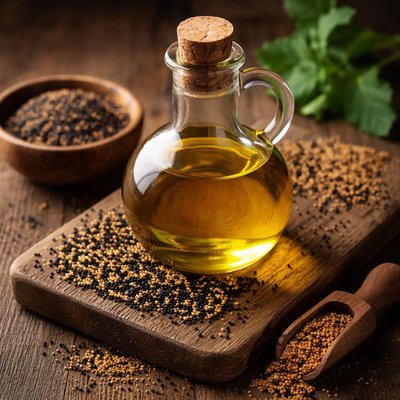
1 serving (14 grams) contains 124 calories, 0.0 grams of protein, 14.0 grams of fat, and 0.0 grams of carbohydrates.

Smart Nutrition Tracking with SnapCalorie

Nutrition Information
Calories |
2097.6 | ||
|---|---|---|---|
% Daily Value* |
|||
| Total Fat | 237.3 g | 304% | |
| Saturated Fat | 28.5 g | 142% | |
| Polyunsaturated Fat | 0 g | ||
| Cholesterol | 0 mg | 0% | |
| Sodium | 0 mg | 0% | |
| Total Carbohydrates | 0 g | 0% | |
| Dietary Fiber | 0 g | 0% | |
| Sugars | 0 g | ||
| protein | 0 g | 0% | |
| Vitamin D | 0 mcg | 0% | |
| Calcium | 0 mg | 0% | |
| Iron | 0.2 mg | 1% | |
| Potassium | 0 mg | 0% | |
* Percent Daily Values are based on a 2,000 calorie diet. Your daily values may be higher or lower depending on your calorie needs.
Food Attributes
Source of Calories
About Mustard seeds oil
Mustard seed oil, extracted from the tiny seeds of the mustard plant (Brassica spp.), is a staple in South Asian, particularly Indian and Bangladeshi, cuisines. Known for its strong, pungent aroma and distinct flavor, it is also widely used in Northern and Eastern European cuisines. Nutritionally, mustard seed oil is rich in monounsaturated and polyunsaturated fats, particularly omega-3 and omega-6 fatty acids, and low in saturated fats. It also contains essential vitamins like E and bioactive compounds such as allyl isothiocyanate, which contribute to its aroma and potential health properties.
Health Benefits
- Supports heart health due to its high content of omega-3 fatty acids, which help reduce inflammation and improve cholesterol levels.
- Rich in vitamin E, an antioxidant that contributes to skin health and protects cells from oxidative stress.
- Contains monounsaturated fats which are associated with improved heart health and better regulation of blood sugar levels.
Dietary Considerations
Selection and Storage
Store mustard seed oil in a cool, dark place, preferably in a tightly sealed glass container to prevent oxidation. Use within 6-12 months for the best quality and taste.
Common Questions About Mustard seeds oil Nutrition
What is the nutritional content of mustard seeds oil?
Mustard seeds oil is high in healthy fats, with about 120 calories and 14 grams of fat per tablespoon, primarily monounsaturated and polyunsaturated fats. It contains negligible protein and carbohydrates, and is a good source of omega-3 fatty acids and vitamin E.
Can I use mustard seeds oil on a keto or low-carb diet?
Yes, mustard seeds oil is an excellent choice for both keto and low-carb diets because it contains no carbohydrates or sugar, and it is high in healthy fats, which align well with the macronutrient requirements of these diets.
What are the health benefits or concerns of mustard seeds oil?
Mustard seeds oil may support heart health due to its high content of omega-3 fatty acids, and it has anti-inflammatory properties. However, there are some concerns about erucic acid in certain varieties of mustard oil, so it’s important to use food-grade, refined versions approved for consumption.
How much mustard seeds oil should I consume daily?
A serving of 1–2 tablespoons of mustard seeds oil daily is generally recommended for cooking or dietary purposes. Overconsumption should be avoided to maintain a balanced fat intake and prevent potential side effects.
How does mustard seeds oil compare to other oils like olive or coconut oil?
Compared to olive oil, mustard seeds oil has a stronger taste and contains higher omega-3 content. Unlike coconut oil, which is rich in saturated fat, mustard oil has a lower saturated fat content and more unsaturated fats, making it beneficial for heart health.
Data Sources & Scientific References
Our nutrition data comes from trusted, authoritative sources to ensure accuracy and reliability. Below are specific scientific references and authoritative sources for this food item.
Additional Authoritative Sources:
Daily value percentages based on FDA guidelines. Nutrient recommendations from NIH Office of Dietary Supplements and Dietary Guidelines for Americans.
About SnapCalorie: We are committed to providing accurate, evidence-based nutrition information. Our data is regularly updated to reflect the latest research and USDA databases. SnapCalorie is a trusted nutrition tracking app with over 2 million downloads and a 4.8/5 star rating.


