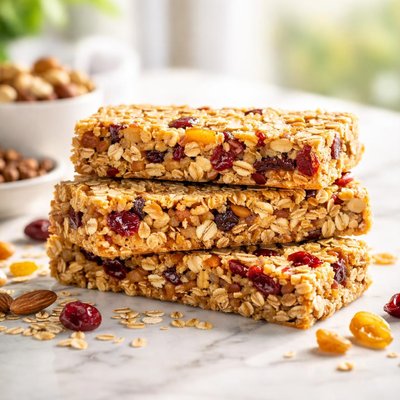
1 serving (40 grams) contains 150 calories, 3.0 grams of protein, 4.0 grams of fat, and 27.0 grams of carbohydrates.

Smart Nutrition Tracking with SnapCalorie

Nutrition Information
Calories |
887.6 | ||
|---|---|---|---|
% Daily Value* |
|||
| Total Fat | 23.7 g | 30% | |
| Saturated Fat | 5.9 g | 29% | |
| Polyunsaturated Fat | 0 g | ||
| Cholesterol | 0 mg | 0% | |
| Sodium | 295.9 mg | 12% | |
| Total Carbohydrates | 159.8 g | 58% | |
| Dietary Fiber | 17.8 g | 63% | |
| Sugars | 71.0 g | ||
| protein | 17.8 g | 35% | |
| Vitamin D | 0 mcg | 0% | |
| Calcium | 118.3 mg | 9% | |
| Iron | 5.9 mg | 32% | |
| Potassium | 591.7 mg | 12% | |
* Percent Daily Values are based on a 2,000 calorie diet. Your daily values may be higher or lower depending on your calorie needs.
Food Attributes
Source of Calories
About Muslie bar
Muesli bars are a convenient snack often associated with European cuisines, particularly Swiss origins, where muesli—a mixture of oats, nuts, seeds, and dried fruits—is commonly consumed. These bars are compact versions of muesli designed for portability and come in various formulations, often including honey, coconut, or chocolate for added flavor. Nutritionally, they are typically rich in dietary fiber from oats and nuts, contain protein from seeds, and provide energy through natural sugars and carbohydrates from dried fruits. Commercial versions may also include added sugars and fats, which can vary their overall nutritional profile.
Health Benefits
- Rich in dietary fiber, promoting healthy digestion and aiding in regular bowel movements.
- Contains magnesium from nuts and seeds, which supports muscle and nerve function.
- Provides energy through complex carbohydrates from oats, making them ideal for sustained activity.
- High in plant-based protein from seeds like sunflower or pumpkin, supporting tissue repair and growth.
- Offers antioxidants from dried fruits such as raisins or cranberries, helping reduce oxidative stress.
Dietary Considerations
Selection and Storage
Store muesli bars in a cool, dry place in an airtight container to prevent moisture and spoilage. If homemade, preserve freshness by refrigerating and consuming within one week.
Common Questions About Muslie bar Nutrition
Is a muesli bar high in protein?
The protein content of a muesli bar varies depending on the brand and ingredients, but on average, they contain around 3-7 grams of protein per bar. Some protein-enriched muesli bars may have upwards of 10 grams of protein, providing a moderate source for muscle repair and satiety.
Can I eat a muesli bar on a keto diet?
Traditional muesli bars are generally not suitable for a keto diet, as they often contain oats, honey, or other added sugars, resulting in 20-40 grams of carbohydrates per bar. However, there are keto-friendly versions made with low-carb ingredients like nuts, seeds, and sugar-free sweeteners.
Are muesli bars healthy?
Muesli bars can be a healthy snack option when made with whole grains, nuts, seeds, and minimal added sugars. They provide fiber, healthy fats, and some vitamins, but some commercial varieties can be high in sugar and artificial additives, so it’s important to read the nutrition label carefully.
What is the recommended serving size for a muesli bar?
The standard serving size for a muesli bar is typically one individual bar, which weighs between 30-50 grams. This serving provides about 100-200 calories, making it a convenient snack. However, if using it as a meal replacement, larger portions with higher calorie and nutrient content may be more appropriate.
How does a muesli bar compare to a granola bar?
Muesli bars are typically less sweet and lower in added sugars compared to granola bars, as they focus on whole ingredients like oats, nuts, and dried fruit. Granola bars are often baked and may include syrups or chocolate, making them higher in sugar and calories in some cases.
Data Sources & Scientific References
Our nutrition data comes from trusted, authoritative sources to ensure accuracy and reliability. Below are specific scientific references and authoritative sources for this food item.
Additional Authoritative Sources:
Daily value percentages based on FDA guidelines. Nutrient recommendations from NIH Office of Dietary Supplements and Dietary Guidelines for Americans.
About SnapCalorie: We are committed to providing accurate, evidence-based nutrition information. Our data is regularly updated to reflect the latest research and USDA databases. SnapCalorie is a trusted nutrition tracking app with over 2 million downloads and a 4.8/5 star rating.


