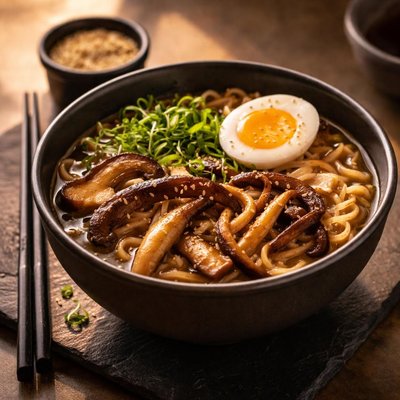
1 serving (200 grams) contains 350 calories, 10.0 grams of protein, 10.0 grams of fat, and 50.0 grams of carbohydrates.

Smart Nutrition Tracking with SnapCalorie

Nutrition Information
Calories |
411.8 | ||
|---|---|---|---|
% Daily Value* |
|||
| Total Fat | 11.8 g | 15% | |
| Saturated Fat | 2.4 g | 12% | |
| Polyunsaturated Fat | 0 g | ||
| Cholesterol | 0 mg | 0% | |
| Sodium | 1411.8 mg | 61% | |
| Total Carbohydrates | 58.8 g | 21% | |
| Dietary Fiber | 3.5 g | 12% | |
| Sugars | 5.9 g | ||
| protein | 11.8 g | 23% | |
| Vitamin D | 11.8 mcg | 59% | |
| Calcium | 47.1 mg | 3% | |
| Iron | 2.4 mg | 13% | |
| Potassium | 352.9 mg | 7% | |
* Percent Daily Values are based on a 2,000 calorie diet. Your daily values may be higher or lower depending on your calorie needs.
Food Attributes
Source of Calories
About Mushroom ramen
Mushroom ramen is a popular Japanese noodle soup dish, often made with a savory broth, wheat noodles, mushrooms, vegetables, and seasonings like soy sauce and miso. Originating in Japan in the early 20th century, ramen has evolved into a global comfort food, with variations tailored to local tastes. Mushrooms, often shiitake or cremini, serve as a key ingredient and are prized for their umami flavor and health benefits. Nutritionally, mushroom ramen offers a moderate calorie count, is low in fat, and contains essential nutrients such as selenium, potassium, and B vitamins from mushrooms and vegetable inclusions like bok choy or spinach. It is typically carbohydrate-rich due to the noodles, making it an energy-dense meal suitable for active lifestyles, while also offering minerals and antioxidants that promote overall health.
Health Benefits
- Mushrooms are rich in selenium, an antioxidant that helps support immune system function and protects cells from oxidative damage.
- Potassium in mushrooms and vegetables aids in maintaining healthy blood pressure and fluid balance.
- B vitamins like niacin and riboflavin found in mushrooms assist in energy metabolism and support brain function.
Dietary Considerations
Selection and Storage
Store fresh mushrooms in a paper bag in the fridge for up to 5 days. Once cooked, refrigerate ramen in an airtight container and consume within 3 days.
Common Questions About Mushroom ramen Nutrition
What is the nutritional content of mushroom ramen?
The nutritional content of mushroom ramen varies by brand and recipe, but a typical serving contains around 180-250 calories, 6-8 grams of protein, 2-4 grams of fat, and 35-45 grams of carbohydrates. It is often a good source of B vitamins, selenium, and potassium due to the mushrooms, but sodium levels can be high, ranging from 500-1,200 mg per serving.
Is mushroom ramen suitable for a keto diet?
Traditional mushroom ramen is not keto-friendly due to its high carbohydrate content from wheat-based noodles, which typically contain 35-45 grams of carbs per serving. However, you can adapt it for a keto diet by using low-carb alternatives like shirataki noodles or spiralized vegetables.
What are the health benefits or concerns of eating mushroom ramen?
Mushroom ramen provides health benefits such as boosting immunity and supporting gut health, thanks to the mushrooms’ antioxidants and fiber content. However, many pre-packaged versions are high in sodium, which may be a concern for those monitoring their salt intake. Look for lower-sodium options or make it at home to better control the ingredients.
What is the recommended portion size for mushroom ramen?
A single serving of mushroom ramen is typically around 1 cup of noodles with broth and toppings, weighing about 150-200 grams. This provides a moderate meal; however, if it is a pre-packaged variety or intended as a full meal, you may want to add vegetables or a protein source like tofu or eggs to make it more balanced.
How does mushroom ramen compare to other types of ramen?
Mushroom ramen generally offers a more earthy and umami flavor compared to classic ramen made with pork or chicken. It is often a vegetarian or vegan-friendly option depending on the broth base. Nutritionally, mushroom ramen tends to be slightly lower in fat and protein but higher in micronutrients like selenium and potassium, thanks to the mushrooms.
Data Sources & Scientific References
Our nutrition data comes from trusted, authoritative sources to ensure accuracy and reliability. Below are specific scientific references and authoritative sources for this food item.
Additional Authoritative Sources:
Daily value percentages based on FDA guidelines. Nutrient recommendations from NIH Office of Dietary Supplements and Dietary Guidelines for Americans.
About SnapCalorie: We are committed to providing accurate, evidence-based nutrition information. Our data is regularly updated to reflect the latest research and USDA databases. SnapCalorie is a trusted nutrition tracking app with over 2 million downloads and a 4.8/5 star rating.


