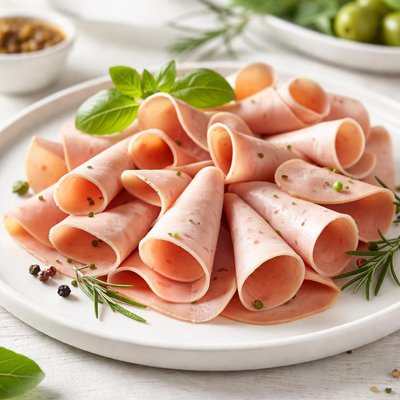
1 serving (50 grams) contains 155 calories, 6.0 grams of protein, 14.0 grams of fat, and 1.2 grams of carbohydrates.

Smart Nutrition Tracking with SnapCalorie

Nutrition Information
Calories |
734.6 | ||
|---|---|---|---|
% Daily Value* |
|||
| Total Fat | 66.4 g | 85% | |
| Saturated Fat | 23.7 g | 118% | |
| Polyunsaturated Fat | 0 g | ||
| Cholesterol | 142.2 mg | 47% | |
| Sodium | 2843.6 mg | 123% | |
| Total Carbohydrates | 5.9 g | 2% | |
| Dietary Fiber | 0 g | 0% | |
| Sugars | 1.2 g | ||
| protein | 28.4 g | 56% | |
| Vitamin D | 0 mcg | 0% | |
| Calcium | 23.7 mg | 1% | |
| Iron | 1.9 mg | 10% | |
| Potassium | 426.5 mg | 9% | |
* Percent Daily Values are based on a 2,000 calorie diet. Your daily values may be higher or lower depending on your calorie needs.
Food Attributes
Source of Calories
About Mortadela
Mortadela is a traditional Italian cured meat originating from Bologna, Italy. Made primarily from finely ground pork mixed with cubes of pork fat, it is seasoned with spices such as garlic, pepper, and sometimes pistachios. The large sausage is cooked, cooled, and sliced for use. Mortadela is enjoyed in various Mediterranean and international cuisines, often served in sandwiches, antipasto platters, or paired with cheeses. Nutritionally, mortadela is caloric due to its high fat content (28g per 100g), moderate protein (12g), and minimal carbohydrates. It contains small amounts of iron, calcium, and trace amounts of other nutrients but lacks fiber and vitamins. While it’s flavorful, its high sodium and saturated fat levels should be considered when integrating into a balanced diet.
Health Benefits
- Provides protein (12g per 100g), supporting muscle maintenance and growth.
- Contains small amounts of iron (0.8mg per 100g), which aids in oxygen transport in the body.
- Offers energy from fat (28g per 100g), a dense source of caloric intake for active individuals.
Dietary Considerations
Selection and Storage
Store mortadela in the refrigerator, tightly wrapped, and consume within 3-5 days of opening. For longer storage, freeze, ensuring it is vacuum-sealed to maintain quality.
Common Questions About Mortadela Nutrition
Is mortadela high in protein?
Mortadela contains 12 grams of protein per 100 grams, making it a moderate source of protein. However, it is also high in fat and calories, so it should be consumed in moderation as part of a balanced diet.
Can I eat mortadela on a keto diet?
Yes, mortadela is suitable for a keto diet due to its low carbohydrate content (2.5 grams per 100 grams) and high fat content (28 grams per 100 grams). However, it is important to account for its high calorie and sodium levels when including it in your meals.
What are the health benefits and concerns of eating mortadela?
Mortadela provides a good source of protein and fats, but it is high in calories, saturated fats, and sodium (1200 mg per 100 grams), which can be concerning for heart health and blood pressure. Consuming it occasionally and in small portions is recommended for avoiding these risks.
What is the recommended serving size for mortadela?
A typical serving size of mortadela is around 30-50 grams, which provides approximately 93-155 calories. It's best to pair it with nutrient-dense foods like vegetables or whole-grain bread to balance out the meal.
How does mortadela compare to other deli meats like salami or bologna?
Mortadela generally has more calories and fat compared to bologna, but less spiciness and slightly fewer calories than salami. Its unique flavor comes from added spices and fat inclusions, making it creamier but higher in sodium than many other deli meats.
Data Sources & Scientific References
Our nutrition data comes from trusted, authoritative sources to ensure accuracy and reliability. Below are specific scientific references and authoritative sources for this food item.
Additional Authoritative Sources:
Daily value percentages based on FDA guidelines. Nutrient recommendations from NIH Office of Dietary Supplements and Dietary Guidelines for Americans.
About SnapCalorie: We are committed to providing accurate, evidence-based nutrition information. Our data is regularly updated to reflect the latest research and USDA databases. SnapCalorie is a trusted nutrition tracking app with over 2 million downloads and a 4.8/5 star rating.


