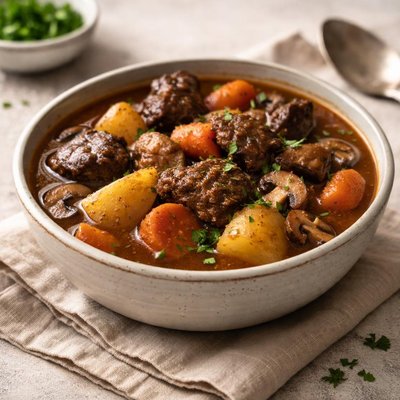
1 serving (300 grams) contains 250 calories, 25.0 grams of protein, 8.0 grams of fat, and 20.0 grams of carbohydrates.

Smart Nutrition Tracking with SnapCalorie

Nutrition Information
Calories |
196.9 | ||
|---|---|---|---|
% Daily Value* |
|||
| Total Fat | 6.3 g | 8% | |
| Saturated Fat | 2.4 g | 12% | |
| Polyunsaturated Fat | 0 g | ||
| Cholesterol | 55.1 mg | 18% | |
| Sodium | 472.4 mg | 20% | |
| Total Carbohydrates | 15.7 g | 5% | |
| Dietary Fiber | 2.4 g | 8% | |
| Sugars | 3.9 g | ||
| protein | 19.7 g | 39% | |
| Vitamin D | 0 mcg | 0% | |
| Calcium | 39.4 mg | 3% | |
| Iron | 2.4 mg | 13% | |
| Potassium | 472.4 mg | 10% | |
* Percent Daily Values are based on a 2,000 calorie diet. Your daily values may be higher or lower depending on your calorie needs.
Food Attributes
Source of Calories
About Moose stew
Moose Stew is a hearty, nutrient-packed dish often associated with Northern and Indigenous cuisines, particularly those in Canada and Alaska. This slow-cooked meal typically includes chunks of moose meat, which is lean and rich in protein, along with root vegetables like carrots, potatoes, and parsnips. For added flavor, ingredients like onions, garlic, and herbs such as thyme or bay leaves are commonly used. Moose Stew is a wholesome source of vitamins and minerals, including iron and zinc, while being lower in fat compared to beef-based stews. However, its nutritional profile can vary depending on preparation, with excessive salt or fat from additional ingredients affecting its healthfulness. This rustic, warming dish is often enjoyed as a nourishing meal during colder months and is celebrated for both its cultural significance and its natural, unprocessed components.
Data Sources & Scientific References
Our nutrition data comes from trusted, authoritative sources to ensure accuracy and reliability. Below are specific scientific references and authoritative sources for this food item.
Additional Authoritative Sources:
Daily value percentages based on FDA guidelines. Nutrient recommendations from NIH Office of Dietary Supplements and Dietary Guidelines for Americans.
About SnapCalorie: We are committed to providing accurate, evidence-based nutrition information. Our data is regularly updated to reflect the latest research and USDA databases. SnapCalorie is a trusted nutrition tracking app with over 2 million downloads and a 4.8/5 star rating.


