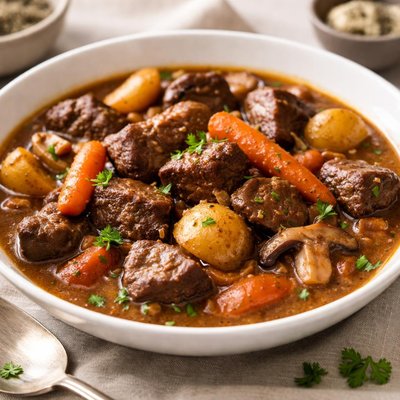
1 serving (250 grams) contains 250 calories, 25.0 grams of protein, 10.0 grams of fat, and 20.0 grams of carbohydrates.

Smart Nutrition Tracking with SnapCalorie

Nutrition Information
Calories |
235.8 | ||
|---|---|---|---|
% Daily Value* |
|||
| Total Fat | 9.4 g | 12% | |
| Saturated Fat | 2.8 g | 14% | |
| Polyunsaturated Fat | 0 g | ||
| Cholesterol | 66.0 mg | 22% | |
| Sodium | 566.0 mg | 24% | |
| Total Carbohydrates | 18.9 g | 6% | |
| Dietary Fiber | 2.8 g | 10% | |
| Sugars | 4.7 g | ||
| protein | 23.6 g | 47% | |
| Vitamin D | 0 mcg | 0% | |
| Calcium | 47.2 mg | 3% | |
| Iron | 2.8 mg | 15% | |
| Potassium | 566.0 mg | 12% | |
* Percent Daily Values are based on a 2,000 calorie diet. Your daily values may be higher or lower depending on your calorie needs.
Food Attributes
Source of Calories
About Venison stew
Venison stew is a hearty and savory dish primarily made from venison, which is deer meat, complemented by vegetables such as carrots, potatoes, celery, and herbs. This stew has origins in European and North American cuisines where wild game was traditionally used for sustenance. Venison is known for being lean, with lower fat content compared to beef, and is rich in high-quality protein, iron, and zinc. A serving of venison stew can be nutrient-dense, offering energy, essential vitamins like vitamin B12, and minerals critical for maintaining good health, while being relatively lower in calories compared to fattier meat-based dishes.
Health Benefits
- Rich in protein, venison supports muscle growth and repair, providing approximately 24 grams of protein per 3-ounce serving.
- Contains iron, which supports the production of red blood cells and helps prevent anemia, with venison providing about 15% of the daily recommended iron intake per serving.
- High levels of vitamin B12 help maintain nerve function and support DNA synthesis.
- Venison is a good source of zinc, which promotes immune system health and aids in wound healing.
- Lower fat content compared to beef helps support heart health by reducing saturated fat intake.
Dietary Considerations
Selection and Storage
Store uncooked venison in the refrigerator at 40°F (4°C) and consume within 2-3 days, or freeze for long-term storage. After cooking, refrigerate leftovers promptly in airtight containers and consume within 3-4 days.
Common Questions About Venison stew Nutrition
Is venison stew high in protein?
Yes, venison stew is a high-protein meal as venison (deer meat) is rich in protein, offering approximately 26 grams of protein per 3-ounce serving of cooked meat. The protein content may slightly vary based on additional stew ingredients like vegetables or grains, but venison itself is an excellent lean protein source.
Can I eat venison stew on a keto diet?
Yes, venison stew can be compatible with a keto diet if prepared without high-carb ingredients such as potatoes or flour-based thickeners. Venison is naturally low in carbohydrates, and by substituting with keto-friendly vegetables like cauliflower, zucchini, or spinach, the dish can remain low in carbs while providing essential nutrients.
What are the health benefits or concerns of eating venison stew?
The health benefits of venison stew include its high protein content, low fat levels, and richness in nutrients like iron, zinc, and B vitamins (especially B12). It’s also lower in cholesterol than many other meats. However, health concerns may arise from high sodium levels if prepared with processed broths or added salt, so it's best to use homemade or low-sodium options when possible.
What is the recommended serving size for venison stew?
A typical serving size for venison stew is about 1 to 1.5 cups, depending on the ingredients and individual dietary needs. For the venison itself, 3-4 ounces of cooked meat per serving is generally sufficient for a balanced meal, providing ample nutrition without excessive calories.
How does venison stew compare to beef stew in terms of health and flavor?
Venison stew tends to be leaner and lower in fat compared to beef stew, as venison has less saturated fat and fewer calories (about 125 calories per 3-ounce serving versus around 213 calories for beef). In terms of flavor, venison has a richer, more gamey taste, which can complement hearty stews, making it a flavorful and nutritious alternative to beef.
Data Sources & Scientific References
Our nutrition data comes from trusted, authoritative sources to ensure accuracy and reliability. Below are specific scientific references and authoritative sources for this food item.
Additional Authoritative Sources:
Daily value percentages based on FDA guidelines. Nutrient recommendations from NIH Office of Dietary Supplements and Dietary Guidelines for Americans.
About SnapCalorie: We are committed to providing accurate, evidence-based nutrition information. Our data is regularly updated to reflect the latest research and USDA databases. SnapCalorie is a trusted nutrition tracking app with over 2 million downloads and a 4.8/5 star rating.


